Fleet Tracking Guide: Reduce Fuel Costs with Real-Time Vehicle Monitoring
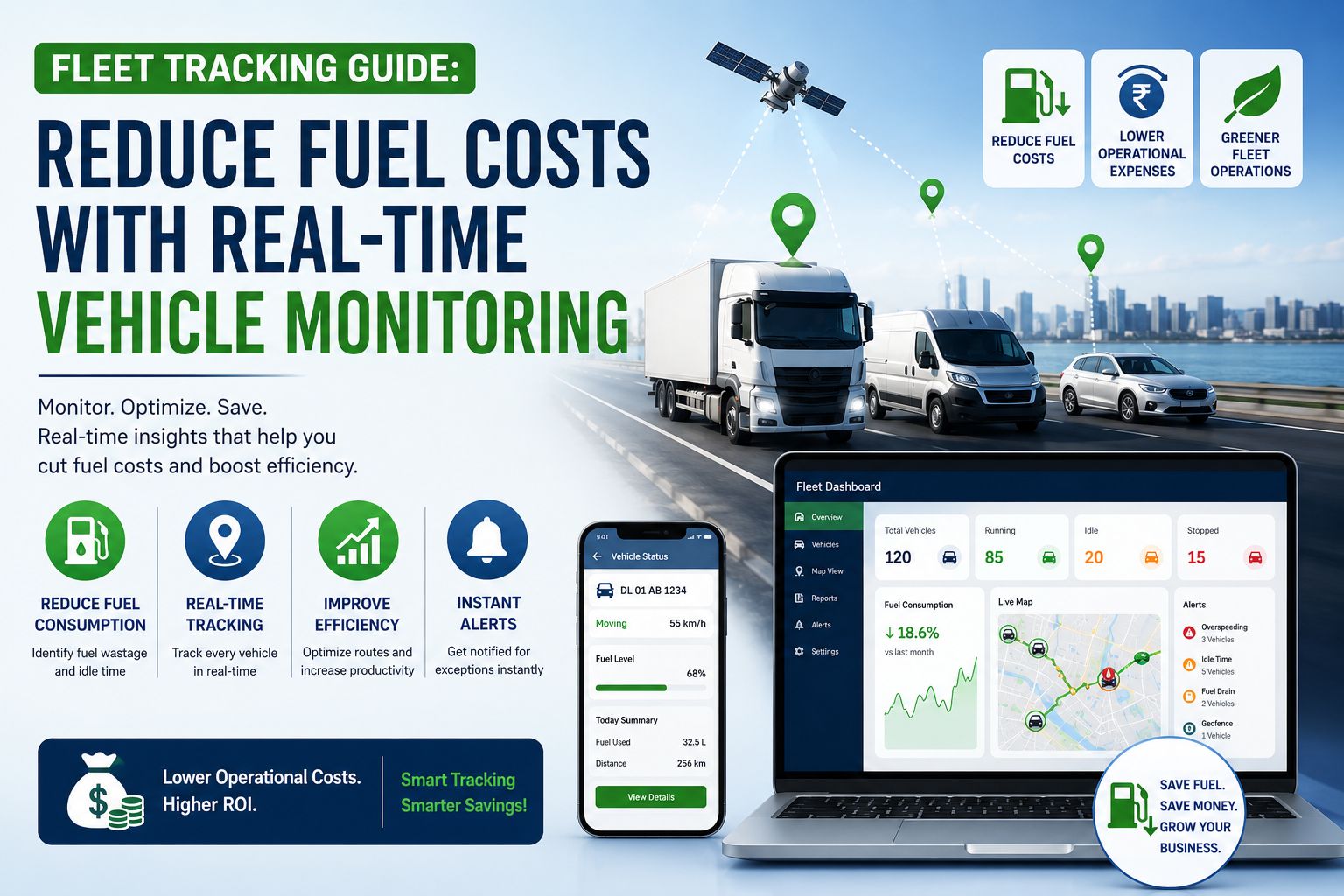
Fleet Tracking Guide: Reduce Fuel Costs with Real-Time Vehicle Monitoring
A fleet manager sees a fuel budget spike every quarter, often without a clear cause. The disconnect between vehicle location data and actual fuel consumption creates a blind spot where idling, unauthorized detours, and route inefficiency drain margins daily. Real-time vehicle monitoring closes that gap by feeding live telemetry into operational decisions, but only when the data stream is free of delay. A fleet tracking guide must start with the problem of signal latency because a ten-second gap in location data can hide five minutes of engine runtime, and that adds up across a hundred trucks.
What Real-Time Monitoring Means for Fuel Cost Control
Real-time vehicle monitoring delivers GPS position updates, engine status, and speed data at intervals short enough to act on, usually every few seconds. In practice, this means a dispatcher sees a truck stopped at a customer site for forty minutes instead of the scheduled twenty. Without real-time data, that discrepancy appears as a normal delivery. With it, the fleet manager identifies the idle event, calculates the fuel burn at roughly one gallon per hour for a heavy-duty diesel engine, and addresses the cause. The key is that the data must arrive without significant signal delay. Many systems experience GPS signal delay due to obstructions like tunnels or dense urban canyons, and that delay can cause fleet tracking failure by reporting a vehicle as stationary when it is actually moving, or as moving when it is idling. A fleet tracking guide must therefore emphasize data integrity as the foundation of fuel cost reduction.
How Data Delays Undermine Fuel Savings at Scale
When a fleet scales beyond twenty vehicles, the margin for data error shrinks. A delayed geofence alert might show a truck leaving a depot ten minutes after it actually departed. During those ten minutes, the driver may take a non-optimized route or engage in excessive idling, and the fleet manager sees none of it. The real operational cost is not just the wasted fuel but the cascading effect on compliance logs and route planning. Vehicle telematics systems that rely on GPS signal delay compensation often introduce interpolation, which creates a synthetic view of vehicle location rather than a true one. That interpolation can mask idling events entirely, making the fleet appear efficient on a dashboard when actual fuel consumption tells a different story. A fleet tracking guide must address this scale constraint because the cost of delay multiplies with each additional asset.
The Mistake of Tuning Parameters Without Fixing Data Quality
A common misunderstanding among fleet managers is that increasing the frequency of GPS polling solves data quality issues. Polling faster only captures more inaccurate data if the underlying signal suffers from latency or dropouts. Signal jitter in tunnels or under heavy cloud cover introduces erratic position fixes that make a stationary vehicle appear to move or a moving vehicle appear to stop intermittently. Tuning thresholds for idle alerts or route deviation warnings without first resolving the signal delay problem leads to alert fatigue and missed events. A fleet tracking guide must caution against this workflow dependency where operators blame the software for false positives when the root cause is the data channel itself. The boundary condition where tuning stops working is when the network infrastructure lacks adequate coverage in the fleet's operating region. At that point, no amount of parameter adjustment recovers the lost data fidelity.
Decision Help: When to Reconfigure, Redesign, or Replace Your System
If your current system shows a consistent latency of more than fifteen seconds between vehicle position and dashboard update, the first decision is to tune the existing setup by adjusting polling intervals, checking firmware versions, and verifying network signal strength at common operating locations. If latency persists after tuning, the next step is to reconfigure the telemetry architecture by moving from a centralized server model to an edge-processing approach that filters data before transmission. This reduces the load on the network and improves real-time accuracy. If edge processing still leaves gaps during critical compliance audits or fuel reconciliation reports, the decision boundary has been crossed. At that point, redesign the system by evaluating telematics hardware with better GNSS receivers or cellular fallback options. If redesign proves cost-prohibitive or fails to close the data gap within your operational geography, replace the system entirely. One boundary condition where internal fixes are insufficient is when the fleet operates across regions with inconsistent cellular coverage and the hardware lacks offline data buffering. In that scenario, no amount of software tuning recovers the lost signal. A fleet tracking guide should make clear that fuel cost reduction depends on data fidelity, not just feature count, and that a system from gps controller can provide the reliable real-time monitoring necessary for accurate fuel tracking.
FAQ
Question: How does real-time vehicle monitoring reduce fuel costs?
Answer: Real-time monitoring reduces fuel costs by exposing idling events, unauthorized route deviations, and inefficient driving patterns that traditional reporting misses, allowing fleet managers to correct them immediately.
Question: What causes GPS signal delay in fleet tracking systems?
Answer: GPS signal delay is caused by physical obstructions like tunnels and dense urban areas, atmospheric interference, and network latency in data transmission from the vehicle to the server.
Question: Can increasing GPS polling frequency fix data delays?
Answer: No. Increasing polling frequency captures more data points but does not improve data quality if the underlying signal is delayed or inaccurate, and it may overload the network.
Question: How do delayed geofence alerts affect fuel management?
Answer: A delayed geofence alert can hide unauthorized site visits or prolonged stops, leading to unreported fuel consumption and inaccurate compliance logs that undermine cost control.
Question: What is the first step to fix fuel tracking inaccuracy?
Answer: The first step is to tune the existing system by updating firmware, adjusting polling intervals, and verifying cellular signal strength at fleet operating sites.
Question: When should a fleet manager replace the entire tracking system?
Answer: Replace the system when latency exceeds fifteen seconds consistently, internal tuning and redesign fail to close the data gap, and fuel losses remain unaccounted for during audits.
Question: How does signal jitter affect fuel consumption reports?
Answer: Signal jitter causes erratic position fixes that can report a vehicle as moving when it is stopped, masking idle fuel burn and generating false route efficiency metrics.
Question: Can a fleet tracking guide help with compliance audits?
Answer: Yes. A fleet tracking guide that addresses data quality helps ensure that compliance logs accurately reflect vehicle activity, reducing audit risk and supporting fuel cost reconciliation.


Comments
Post a Comment