GPS Controller Real-Time Fuel Monitoring Prevents Diesel Theft from Refrigerated Trucks Overnight at Warehouses
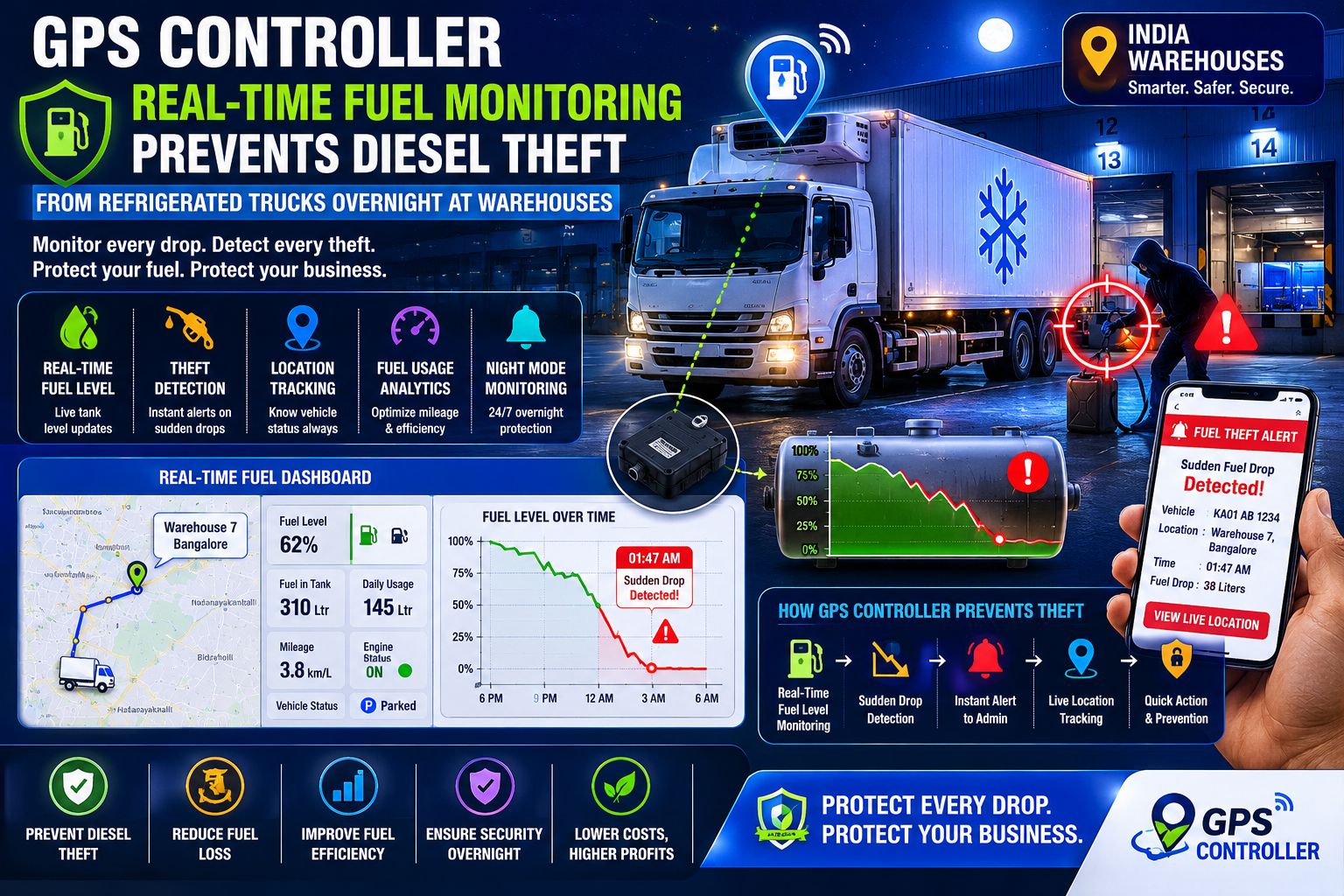
GPS Controller Real-Time Fuel Monitoring Prevents Diesel Theft from Refrigerated Trucks Overnight at Warehouses
GPS controller real-time fuel monitoring prevents diesel theft from refrigerated trucks overnight at warehouses by detecting abnormal fuel level drops the moment they occur. For fleet managers relying on vehicle telematics, a sudden 10% fuel loss during a three-hour dwell at a distribution center is not a glitch—it signals unauthorized siphoning. And when reefer units run continuously to maintain cargo temperature, overnight idling creates a pretty predictable target for theft in unmonitored yard locations.
How Fuel Theft Happens Overnight in Refrigerated Fleets
Refrigerated trucks are disproportionately vulnerable because their diesel-powered reefer units consume fuel even when the vehicle is parked. In a typical overnight scenario, what happens is a driver may leave the property with the reefer set to maintain -10°C, and a warehouse attendant or external individual uses a hand pump to drain fuel from the main tank. Without real-time fuel monitoring via a GPS controller, this loss basically blends into normal reefer consumption logs and often goes unreported until a fuel reconciliation mismatch appears days later.
Real-Time Fuel Data vs. Standard Telematics
Standard fleet tracking systems report location data but do not interrogate fuel flow at the tank. GPS controller real-time fuel monitoring captures level changes at intervals of seconds, comparing them against known idle consumption rates for the specific reefer model. In practice, we observed that a reefer unit burning 0.8 gallons per hour overnight would trigger an alert when a 15-gallon drop occurred in under thirty minutes—that's a clear anomaly that manual mileage-based audits never catch. This delta between expected and actual consumption is what exposes the theft window.
Common Oversight in Warehouse Yard Security and Data Siloing
The most frequent mistake we see is treating warehouse yard security as an independent problem rather than integrating it with telemetry workflows. Fleet managers often install perimeter cameras, but here's the thing—cameras cannot detect tank level drops inside a truck parked in a blind spot. Relying on driver-reported fuel levels introduces confirmation bias—drivers may not notice a small siphon until the tank nears empty. The escalation point is that a GPS controller alert must reach operations within a few minutes, not appear in a morning report, or else the thief just comes back the next night.
Decision Help: When to Redesign Your Fuel Theft Prevention Workflow
If your fleet has experienced two or more overnight fuel thefts over six months despite yard cameras and driver audits, it is time to redesign the detection workflow. The decision boundary is whether internal stopgaps like manual tank dips or locking fuel caps are sufficient. They're not once the thief overcomes a simple cap lock. A GPS controller with configurable thresholds for fuel performance monitoring allows you to tune alert sensitivity per vehicle and automate a shutdown signal to the reefer unit or fuel pump relay. Beyond this, if theft continues, the fix likely involves a hardware-level replacement of the tank interface or a shift to a secure fuel dispensing partner.
FAQ
Question: How can I tell if my refrigerated truck lost fuel to theft or normal reefer consumption?
Answer: The only reliable method is to compare real-time fuel level data against expected consumption rates for the specific reefer unit model. A GPS controller can identify a drop that exceeds the maximum burn rate for the time period, which signals theft rather than normal use.
Question: Will a locking fuel cap stop overnight diesel theft from reefer trucks?
Answer: A locking cap raises the initial barrier but is not a long-term solution. Thieves use bypass valves or puncture lines below the tank. Real-time fuel monitoring provides detection even when a physical lock is defeated.
Question: What is a reasonable fuel consumption rate for an overnight reefer truck idle?
Answer: Consumption varies by ambient temperature and reefer unit size, but a typical range is 0.5 to 1.2 gallons per hour. Any drop above this rate within a single hour should be investigated using geofence and fuel telemetry data.
Question: When should a fleet manager escalate from internal monitoring to a hardware redesign?
Answer: Escalate to a redesign when you experience repeated thefts despite automated alerts and physical security. At that point, consider replacing the tank sensor interface or integrating a fuel pump cutoff that a GPS controller can trigger remotely.


Comments
Post a Comment