GPS Controller Real-Time Engine Diagnostics Minimize Unplanned Downtime for E-Commerce Delivery Fleets
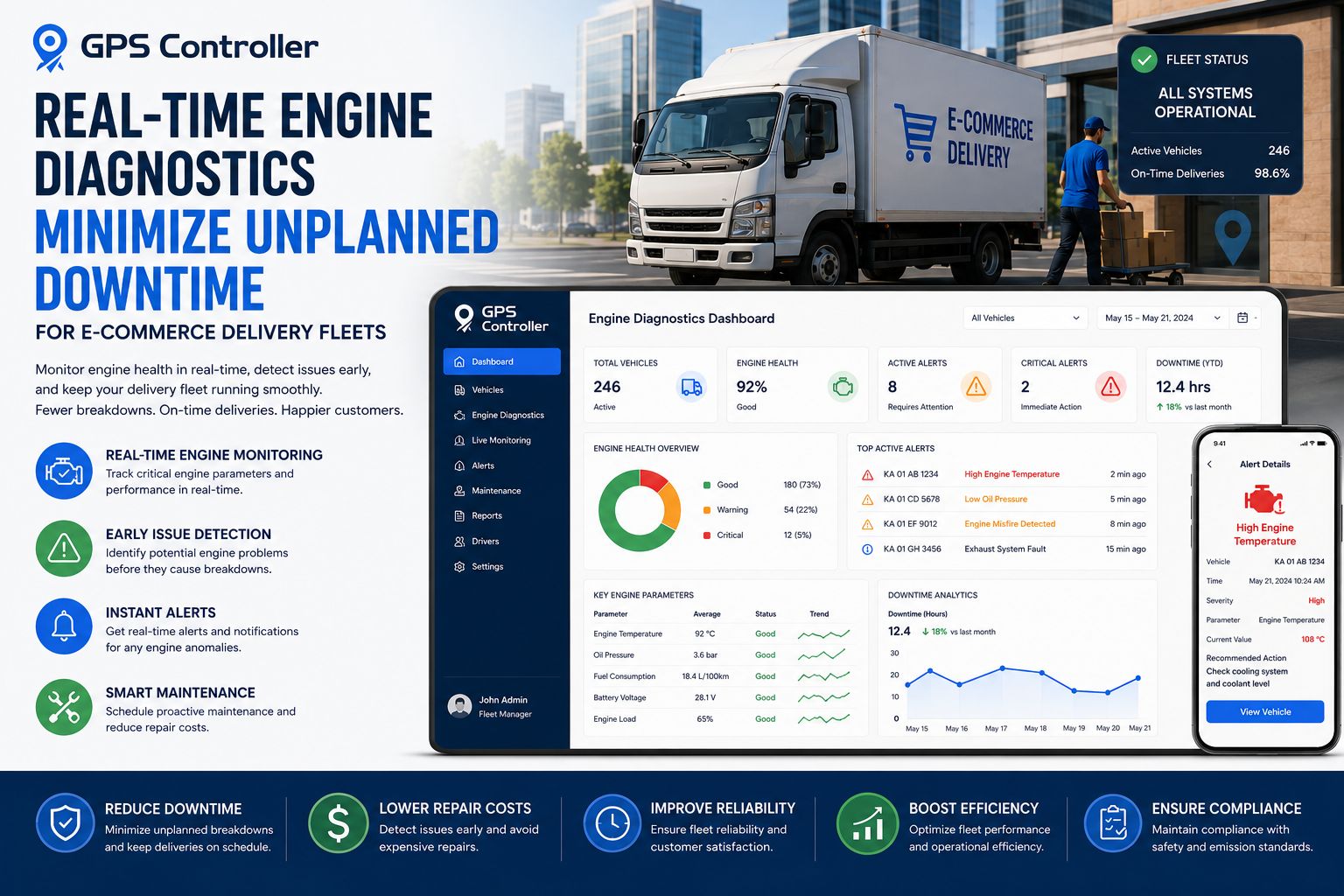
GPS Controller Real-Time Engine Diagnostics Minimize Unplanned Downtime for E-Commerce Delivery Fleets
Real-time engine diagnostics direct from your GPS controller minimize unplanned downtime for e-commerce delivery fleets by detecting data anomalies before they become breakdowns. In live fleet tracking, a delayed or corrupted diagnostic reading is often the first sign of a deeper mechanical failure, and catching that signal early—well, it can save hours of lost route time. Possibly more.
What Real-Time Engine Diagnostics Actually Monitor in Fleet Tracking
Real-time engine diagnostics in a GPS controller read directly from the vehicle telematics bus to capture live engine parameters like coolant temperature, battery voltage, and fuel pressure. This isn't the same as a simple location data point; the diagnostic stream continuously checks for out-of-range values that indicate a developing issue, such as voltage drift that can precede a starter failure in a delivery van. It's a constant low-level scan, not a one-off snapshot.
Why Diagnostic Delays Lead to Revenue Loss at Scale
When real-time engine diagnostics suffer from signal latency or data error, an e-commerce fleet cannot react to trouble until the vehicle is already stopped. At scale, a single delayed geofence alert tied to a diagnostic fault can cascade into missed delivery windows on multiple routes. Then you get compliance logs showing repeated violations, which erodes customer trust and—depending on your contracts—incurs penalties. It's not just one van off the road; it's a domino effect.
Common Diagnostic Misreading That Escalates Downtime
A frequent misunderstanding among fleet operators is that a healthy location data stream guarantees accurate engine diagnostics. But the two data paths are separate—completely. Signal jitter in tunnels or interference from aftermarket devices can corrupt the telematics bus reading, causing a false fuel pressure alarm that triggers unnecessary repairs. Or worse, it masks a real overheat condition until the engine seizes mid-route. The data looks clean on the map, but under the hood it's a different story.
Decision Help: When to Tune vs. Replace Your Diagnostic Workflow
The operational boundary is fairly clear: you can tune your alert thresholds and reconfigure geofence triggers to ignore minor voltage drops. But if the GPS controller reports repeated data packet corruption or persistent idle engine inaccuracies that you cannot filter out, you must redesign your telematics pipeline. Internal fixes stop working once hardware-level signal loss occurs; at that point, replacement of the controller unit or its network interface becomes the only viable step to restore diagnostic reliability. No amount of software tweaking will fix a busted connection.
FAQ
-
Question: Can real-time engine diagnostics prevent all unplanned downtime in my fleet?
Answer: Real-time engine diagnostics significantly reduce unplanned downtime by alerting you to developing mechanical issues, but they cannot catch sudden catastrophic failures or external factors like road debris damage. Their value lies in early signal detection that gives you time to schedule preventive intervention—but it's not a magic shield.
-
Question: What is the most common diagnostic signal issue e-commerce fleets face?
Answer: The most common diagnostic signal issue is data error caused by intermittent connection loss between the GPS controller and the vehicle telematics bus, often due to aftermarket equipment interference. This produces false readings or gaps that can mislead operators into ignoring real faults. Basically, you get noise that looks like signal.
-
Question: How quickly should I act on a low battery voltage diagnostic alert?
Answer: A low battery voltage alert in a delivery fleet's real-time engine diagnostics should be investigated within the same shift, because voltage drift often precedes starter failure within the next 10 to 15 ignition cycles. Delaying investigation risks a dead vehicle at the next stop—and probably a late delivery to go with it.
-
Question: When should I replace my current GPS controller to get better engine diagnostics?
Answer: You should replace your GPS controller when you experience persistent data packet loss or idle engine inaccuracies that cannot be resolved by reconfiguring alert thresholds or replacing the telematics cable. At that point, internal fixes are exhausted and hardware redesign is required. Don't keep throwing software at a hardware problem.


Comments
Post a Comment