The Telematics Revolution: Why APAC’s Fastest-Growing Rental Fleet Management Companies Are Going Al
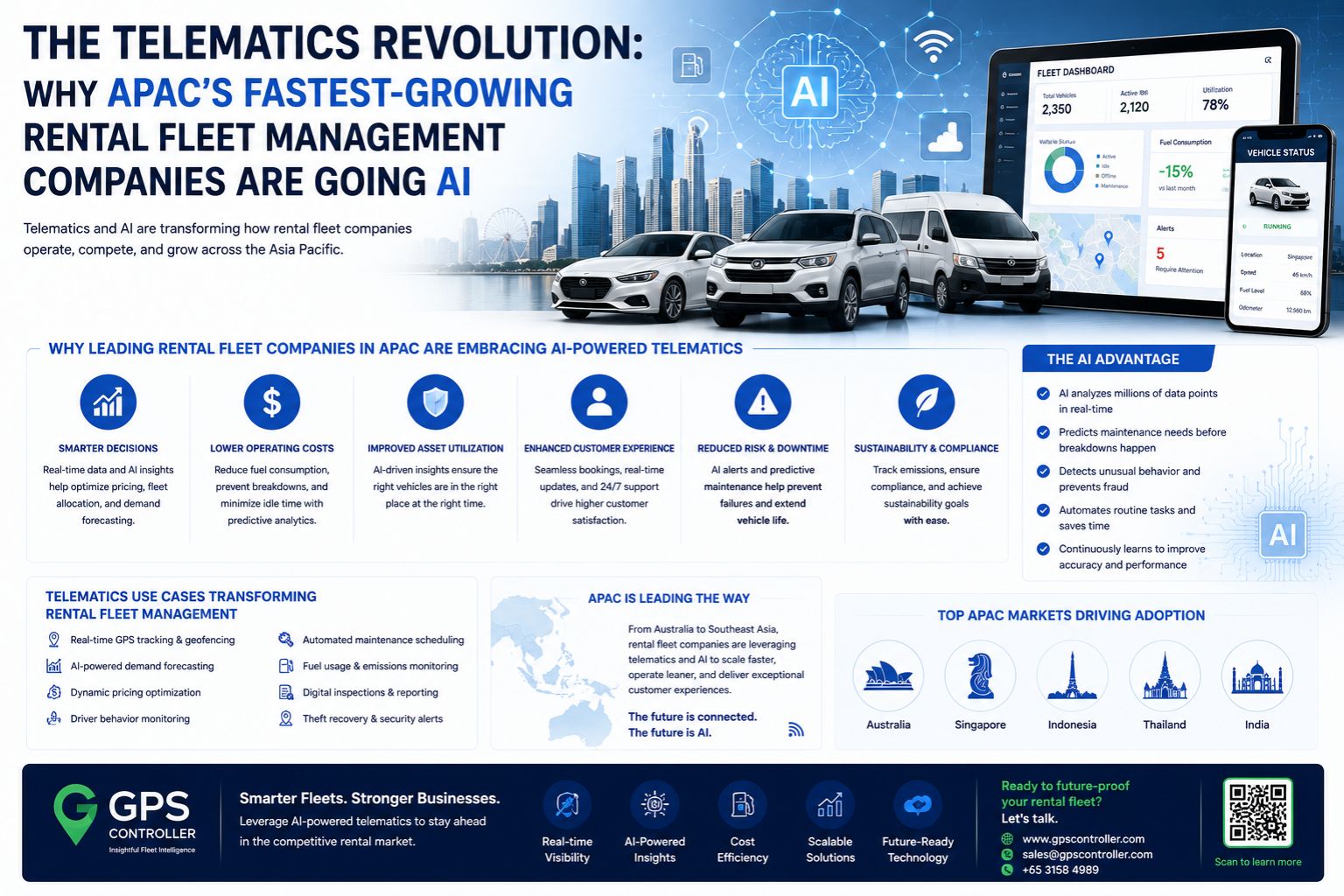
The Telematics Revolution: Why APAC’s Fastest-Growing Rental Fleet Management Companies Are Going Al
The telematics revolution reshaping APAC rental fleets is built on real-time visibility, yet GPS signal delay from dense urban canyon environments causes fleet tracking failure that undermines the very efficiency these companies rely on—creating a compliance gap that grows with every asset deployed across sprawling industrial zones.
What GPS Signal Delay Means for Live Fleet Tracking
GPS signal delay in live fleet tracking introduces a measurable lag between a vehicle's actual position and the geofence alert that confirms its movement, meaning a rental asset may cross into a restricted border or idle for hours before the system records any data, turning telematics into a reactive tool rather than something that proactively supports operations.
How Tracking Failure Escalates Under Real Operational Scale
When rental fleets scale beyond fifty vehicles, GPS signal delay compounds through data queuing at the server level, where delayed geofence alerts not only miss revenue events like late returns but also create audit trail gaps that cannot be repaired after the fact, forcing compliance officers to rely on driver logs that are often inaccurate or, frankly, incomplete.
The Common Mistake That Turns Telematics Into a Liability
One frequent misunderstanding is that signal jitter in tunnels or underground parking lots is a network problem you can just ignore, yet this same jitter corrupts engine runtime logs and idle engine inaccuracies that rental companies depend on for billing—meaning a fleet manager escalates a minor data error into a full revenue dispute because the telematics system never recorded a critical engine-off event.
Decision Boundary: When to Tune vs. Replace Your Tracking Approach
The boundary for internal fixes is reached when retrofitting older tracking units fails to eliminate data loss during high-density site operations; at this point, the clear decision for rental fleet managers is to redesign the tracking architecture with newer GNSS receivers that compensate for multi-path interference, or replace outdated devices entirely with units that support cellular backup and edge computing, ensuring geofence alerts fire even when primary signal is delayed—and if internal efforts still produce discrepancies in compliance logs, a specialized solution like gps controller can provide the necessary recalibration without requiring a full hardware overhaul.
FAQ
Question: What is the primary cause of GPS signal delay in rental fleet tracking?
Answer: The primary cause is multi-path interference and signal attenuation in dense urban environments or under heavy industrial cover, which creates latency between satellite transmission and data reception on the server.
Question: How does GPS signal delay affect compliance reporting for rental fleets?
Answer: Delays cause missed geofence entries and exits, leading to inaccurate compliance logs that fail to meet audit standards, especially when tracking rental asset movement across regional or national borders.
Question: Can software upgrades alone fix persistent tracking failure caused by signal delay?
Answer: No—software patches cannot compensate for hardware limitations in signal reception; a boundary condition where fixes stop working is when the antenna or receiver cannot lock onto weak GPS signals even with updated firmware.
Question: When should a rental fleet manager consider replacing their entire telematics system due to GPS delay?
Answer: Replacement is warranted when internal troubleshooting reveals persistent data gaps during peak operational hours or when driver reports consistently contradict system-generated location logs, signaling that hardware limitations have been reached.


Comments
Post a Comment