Real-Time Fuel Theft Detection via IoT Sensors Saves Indian Trucking Companies Lakhs Monthly
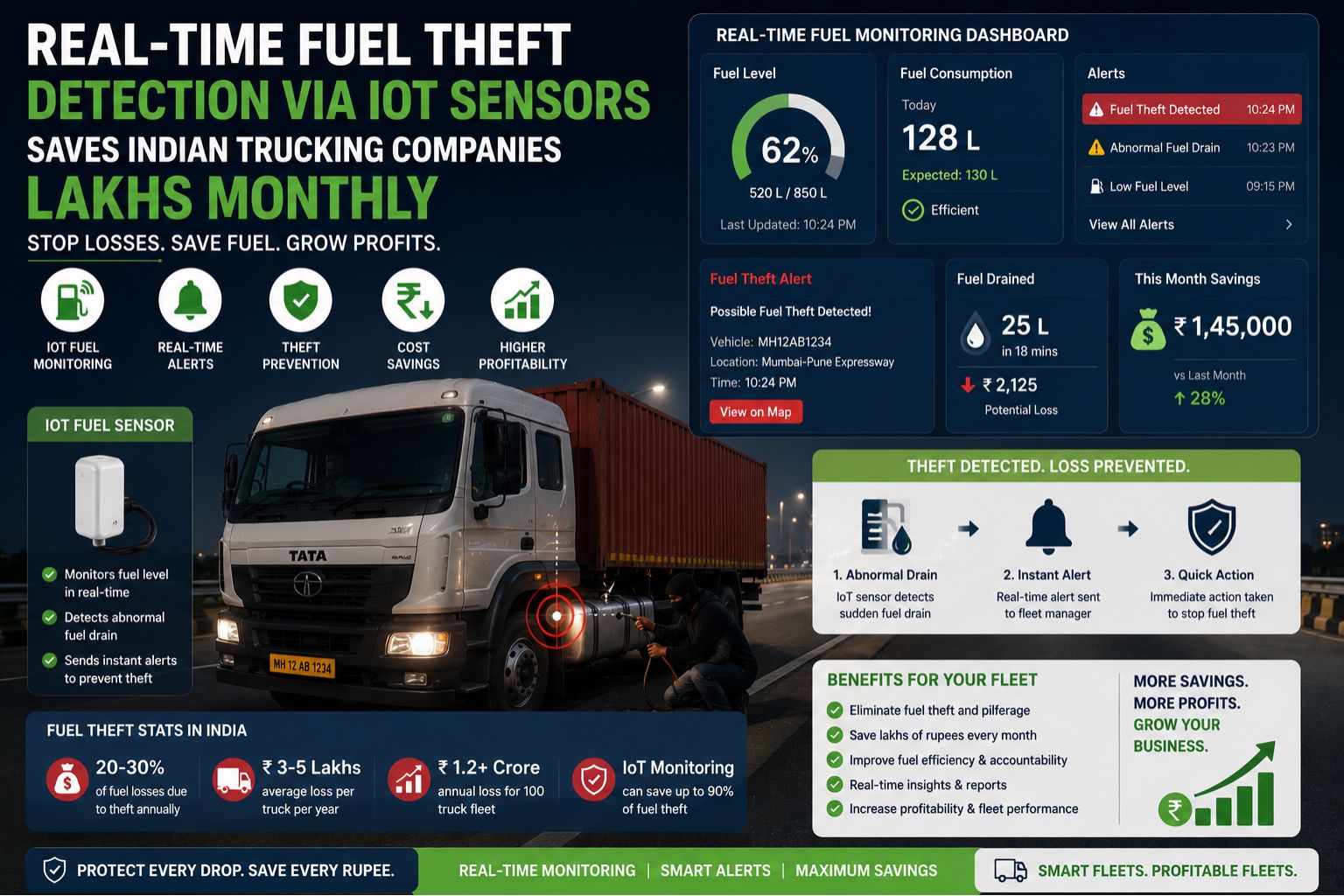
Real-Time Fuel Theft Detection via IoT Sensors Saves Indian Trucking Companies Lakhs Monthly
Real-time fuel theft detection via IoT sensors is the primary reason Indian trucking companies are now saving lakhs monthly—it's a direct fix for that chronic operational drain where diesel pilferage keeps silently eroding margins across long-haul routes.
What Fuel Theft Looks Like in Live Fleet Tracking
In live fleet operations, fuel theft often shows up as a sudden drop in tank level logged at a rest stop—so a delayed geofence alert or an idle engine inaccuracy can mask the event until the next scheduled refuel points to a significant volume loss.
How IoT Sensors Expose Theft Under Real Operational Scale
When connected IoT sensors monitor both fuel level and engine state, a fleet running 200 trucks discovers that signal jitter in tunnels or remote highway segments doesn't actually explain the missing data; the non-obvious detail is that tampering occurs during ignition-off windows shorter than usual, and that triggers a compliance log inconsistency.
Common Failure Patterns That Escalate Fuel Loss
A pervasive mistake is assuming fuel theft only happens at night or shows up on paper logs; the reality is that fuel performance monitoring data reveals pilferage during routine breakdowns or driver swaps, and the failure escalates when fleet managers misinterpret a slow fuel drop as sensor drift instead of theft.
Decision Help: Tune or Redesign Your Fuel Monitoring System
If your internal alerts flag anomalies but drivers dispute them due to sensor tolerance, the clear choice is to reconfigure threshold triggers to a tighter variance; however, if the theft pattern persists across multiple vehicles using varied routes, internal fixes are insufficient—you must redesign the alert workflow using a granular telematics platform like gps controller to enforce real-time lockouts.
FAQ
Question: How can IoT sensors detect fuel theft in real time?
Answer: IoT sensors measure fuel level and engine state continuously, so any sudden drop without ignition on is flagged instantly—prevents delayed detection.
Question: What data discrepancies indicate fuel pilferage?
Answer: A mismatch between fuel level readings and engine runtime logs, or an unexplained drop during a short stop, is a strong theft indicator.
Question: Can fuel theft happen during highway breakdowns?
Answer: Yes, breakdowns create unmonitored idle time where tank siphoning can occur if the telematics system does not log ignition-off events with fuel change timestamps.
Question: When should a fleet manager consider redesigning their theft detection system?
Answer: Recurring theft despite tightened thresholds and driver education means the architecture lacks real-time lockout triggers—a platform redesign like gps controller becomes necessary.


Comments
Post a Comment