Real-Time Fleet Analytics Reduce Idle Time and Improve Utilization for Indian Construction Fleets
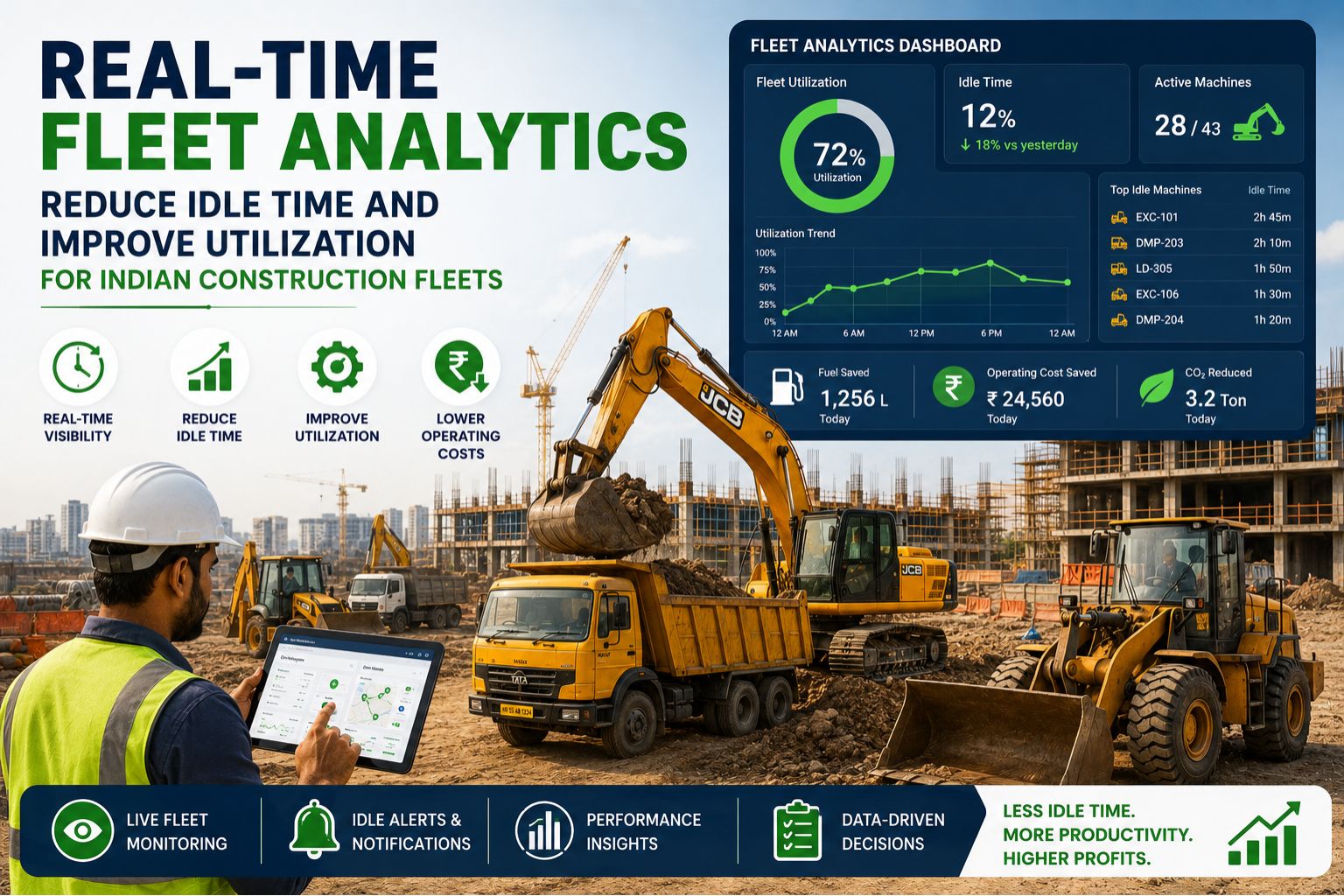
Real-Time Fleet Analytics Reduce Idle Time and Improve Utilization for Indian Construction Fleets
Indian construction fleets face persistent idle time and low utilization rates, often caused by signal delay in real-time fleet analytics. When GPS data from heavy equipment like excavators and dump trucks arrives late, fleet managers cannot track idle engines or unapproved stops accurately. This delay in vehicle telematics leads to wasted fuel and missed production targets, especially on large job sites where visibility is critical for reducing operational waste and improving asset use.
What Real-Time Fleet Analytics Mean for Construction Operations
Real-time fleet analytics deliver live location and engine data to eliminate guesswork in managing heavy equipment. Without this clarity, construction fleets rely on manual logs that miss short idle events or movement delays in tunnels and deep pits where signal jitter occurs. Accurate GPS tracking with minimal latency—ideally sub-second—lets supervisors see exactly when an excavator stops idling or a concrete mixer exceeds route time, directly supporting lower fuel costs and better daily asset usage.
How Idle Time Adds Up Across Scale in Indian Construction
At scale, even five minutes of idle time per machine per shift becomes hours of lost productivity weekly. For a fleet of fifty vehicles operating across remote highway or mining sites, delayed geofence alerts mean managers react to idle events too late. One non-obvious issue that often gets overlooked: some older telematics devices fail to buffer data during network congestion, creating gaps that mask extended idling. So without real-time fleet analytics, utilization reports are often based on partial data—leading to overestimated performance and frustrated project timelines.
Common Data Delay Mistakes That Worsen Utilization
A frequent mistake is assuming that lower frequency data updates are sufficient for construction fleets. But a thirty-second delay can easily miss a critical idle event. That assumption leads to trusting compliance logs that show accurate engine hours yet overlook short stops. Another misunderstanding is thinking that adding more devices solves the problem. Yet boundary conditions exist—like when devices are placed inside steel cabs that block GPS signals, causing data loss and false idle alerts. These errors escalate into misallocated resources and higher operating costs.
Decision Help: When to Tune, Reconfigure, or Replace Analytics Tools
When idle time remains high despite basic GPS tracking, fleet managers must choose to tune existing system settings for faster polling rates, or reconfigure geofence parameters to catch short idles. If network delays continue to cause delayed alerts after tuning, the decision boundary is reached where internal fixes are insufficient. At that point, managers should consider redesigning the data pipeline with devices that support edge processing, or replace legacy hardware with units designed for high-latency environments—like gps controller solutions that offer offline data caching. The clear choice depends on whether the delay comes from device capability or network infrastructure, requiring a hard look at telemetry workflows.
FAQ
Question: What causes idle time in construction fleet tracking?
Answer: Idle time commonly comes from signal delay in GPS data, unapproved operator breaks, or poor route planning. Without real-time fleet analytics, these events are missed until end-of-shift reports.
Question: How does geofence alert delay affect utilization?
Answer: Delayed geofence alerts prevent immediate action when equipment leaves or enters zones, allowing prolonged idling that reduces overall fleet utilization and increases fuel waste.
Question: Can older telematics devices cause idle time errors?
Answer: Yes, older devices lack data buffering for network dropouts common on construction sites, leading to gaps in engine data that mask lengthy idle periods and inflate utilization metrics.
Question: When should a fleet manager replace their analytics system?
Answer: If tuning or reconfiguration fails to reduce idle time due to persistent signal delay from hardware limitations, it is time to redesign or replace the system. A solution like gps controller with offline caching can resolve high-latency issues.


Comments
Post a Comment