Predictive Fuel Theft Detection via IoT Sensors Saves Lakhs Monthly for Indian Trucking Operators
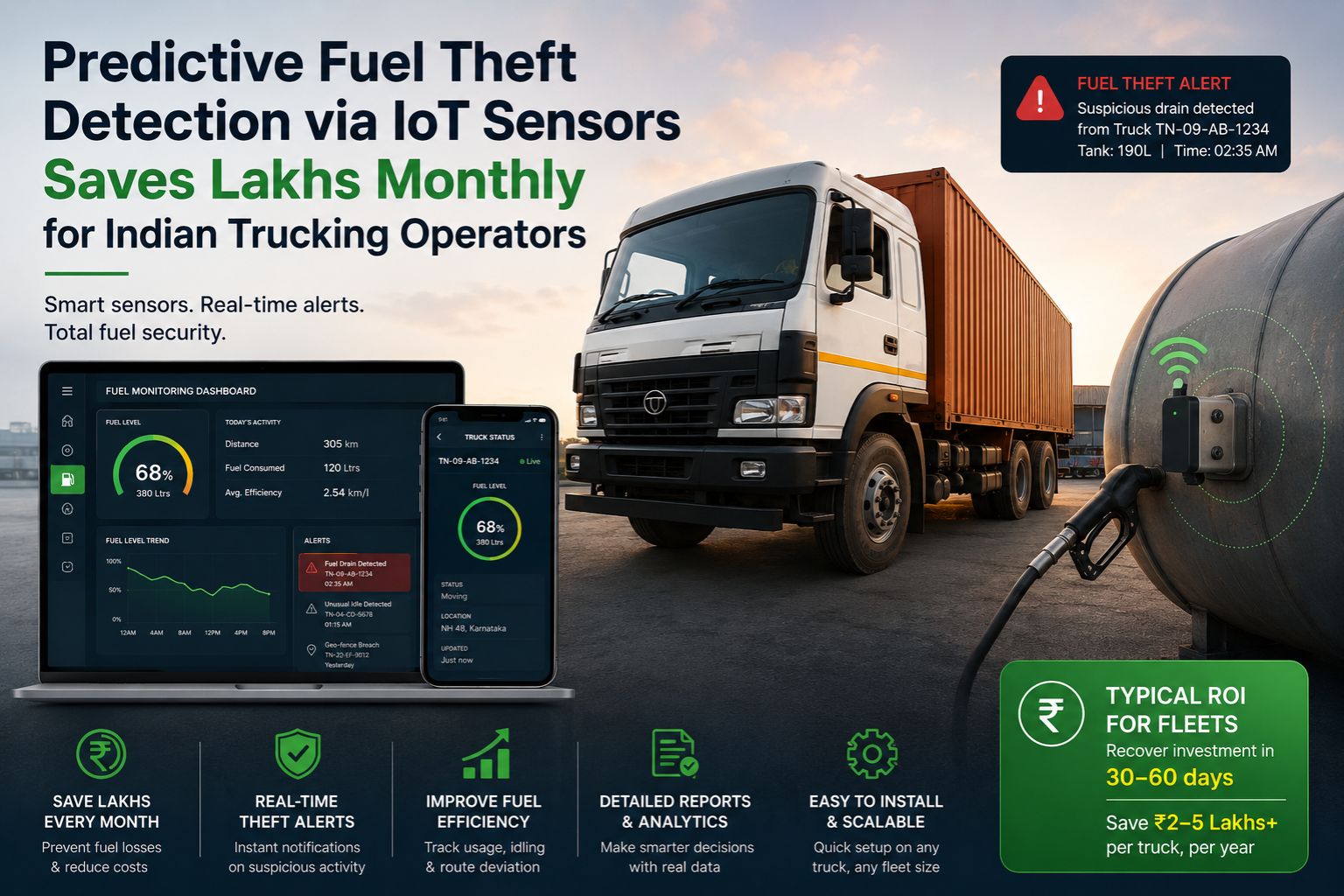
Predictive Fuel Theft Detection via IoT Sensors Saves Lakhs Monthly for Indian Trucking Operators
Predictive fuel theft detection via IoT sensors saves lakhs monthly for Indian trucking operators, or so the pitch goes. But it's real: it shifts fleet management from reactive loss tracking to proactive prevention. It uses real-time telemetry and anomaly detection—flags even the smallest divergence from expected fuel consumption curves. Before a significant pilferage event occurs, you get a heads-up. That's the difference between catching it and just tallying it.
What Fuel Theft Looks Like in Live Fleet Operations
In daily Indian trucking operations, fuel theft often presents as subtle signal anomalies. You'd be tempted to dismiss them. Like a sudden 0.5% drop in tank level during a driver rest break. That gets buried in bulk refueling logs, or maybe it's a brief ignition-off sensor fluctuation a standard tracking dashboard won't flag as a threat. So operators stay unaware, until the monthly loss report reveals a pattern costing over a lakh rupees. By then it's too late.
How IoT Sensors Catch Pilferage at Scale
When you deploy these across a fleet of fifty or more trucks—running routes between Delhi, Mumbai, and Chennai—IoT fuel sensors continuously sample tank levels. They compare consumption against engine runtime data and GPS position history. That way, the system can distinguish between normal idle engine draw and an unauthorized drain event. An alert fires within seconds of the anomaly, not after an end-of-shift manual dip check. That's the advantage of timeliness.
Common Missteps That Turn Small Leaks Into Big Losses
A frequent operational mistake is treating fuel level inaccuracies as normal sensor jitter—especially on older trucks where a delayed geofence alert might mask a side-tank siphon event. Fleet managers sometimes recalibrate thresholds upward as a workaround, until only extreme theft events trigger a response. Meanwhile, small daily losses compound across vehicles, creating a crippling monthly expense. Internal monitoring processes just can't catch that without an automated predictive layer. It's a slow bleed that gets expensive fast.
Decision Boundary: Tune, Reconfigure, or Replace Your Fuel Monitoring Approach
When your current fleet tracking system shows a consistent 2% fuel variance across all trucks—and manual audits can't explain it—you have a decision. Tune existing sensor calibration parameters? Reconfigure alert logic to catch sub-one-liter anomalies? Or redesign the entire monitoring workflow by integrating dedicated fuel probes with GPS controller telematics? That boundary appears once internal adjustments fail to reduce loss below a cost-effective threshold for further manual intervention. At that point, doing nothing costs more.
FAQ
Question: How does predictive fuel theft detection actually work on an Indian truck?
Answer: The system uses IoT sensors installed inside the diesel tank that report volume changes every few seconds, comparing those readings against engine fuel consumption data and GPS location to identify when fuel leaves the tank without the engine running, triggering an immediate alert to the fleet manager.
Question: Can these sensors differentiate between normal fuel use and theft during long hauls?
Answer: Yes, because the algorithm cross-references engine runtime, vehicle speed, and slope data from the GPS controller to build a consumption baseline, so a drop during a mandatory rest break on a highway is flagged as suspect while the same drop during active driving on an incline is treated as normal consumption.
Question: What happens if the sensor fails or gives a false reading on a Delhi-Mumbai route?
Answer: The system logs a tamper event or signal loss to the compliance audit trail, and the fleet manager receives a diagnostic alert prompting a manual verification at the next scheduled stop, preventing the false reading from corrupting the monthly fuel cost analysis.
Question: When should a trucking operator stop relying on manual checks and install an IoT-based system?
Answer: Once monthly pilferage losses exceed the cost of sensor deployment across the fleet, which for most Indian operators happens when theft surpasses five thousand rupees per truck per month, manual processes no longer provide the detection speed needed to stop organized theft networks operating across multiple states.


Comments
Post a Comment