How to choose a fleet dash camera for commercial fleets in Southeast Asia
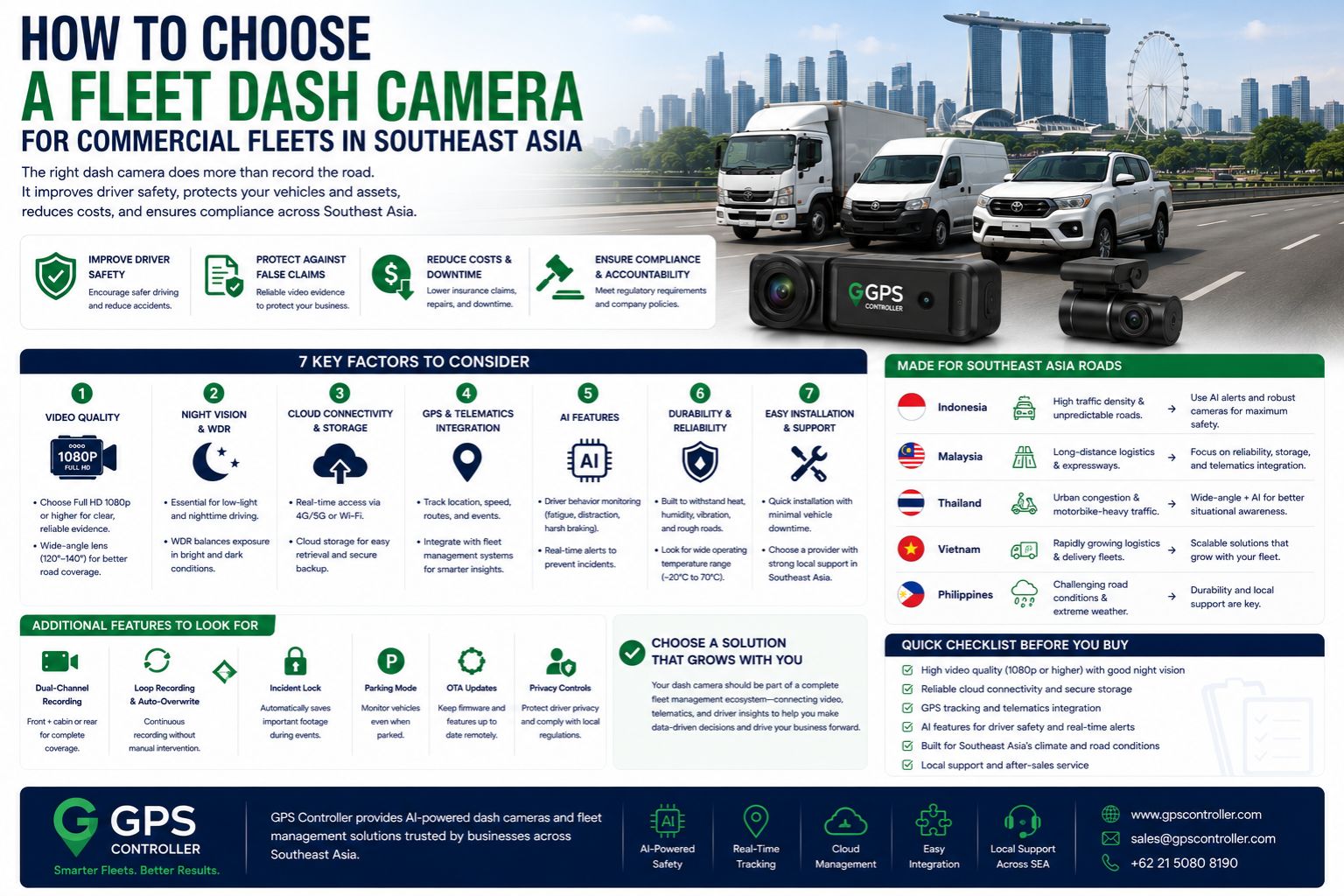
How to choose a fleet dash camera for commercial fleets in Southeast Asia
Choosing the wrong fleet dash camera for commercial fleets in Southeast Asia introduces blind spots in telemetry data, especially when relying on GPS tracking and vehicle telematics for driver accountability and compliance reporting.
What fleet dash camera performance requires in tropical climates
In Southeast Asia, a fleet dash camera must handle high humidity and heat without inducing signal latency in geofence alerts. A field observation we saw — cameras overheating in cab units — created a three-second delay in triggering departure notifications. That’s not negligible.
How real-world scale exposes dash camera integration failures
Under operational scale, a dash camera that cannot correctly log a delayed geofence alert across fifty trucks creates compliance gaps in audit trails. This exposes a workflow dependency where fleet managers assume video and GPS tracking match, when in practice they often do not.
Common mistakes when selecting a dash camera for fleet tracking
One common misunderstanding that causes escalation: choosing a camera based on resolution alone while ignoring time synchronization with location data delay. That results in non-obvious device drift — the video timestamp and GPS tracking diverge by up to five seconds at idle, with engine inaccuracies in congested urban zones.
Decision boundary for dash camera selection in Southeast Asia
When internal fixes like adjusting recording intervals fail to resolve data gaps, the clear choice is to redesign your data pipeline. Switch to a camera system that syncs with your fleet management software. The boundary where internal fixes are insufficient is when temperature extremes cause consistent storage failures that no software tune can correct — that’s when you need a hardware replace.
FAQ
Question: What dash camera features matter most for fleet tracking?
Answer: The most critical features are real-time GPS synchronization, wide dynamic range for glare, and durable heat-rated components that prevent signal jitter in tunnels and urban canyons.
Question: Why do dash cameras fail in Southeast Asia fleets?
Answer: They fail because of high heat and humidity which cause memory card failures, corrupted video files, and data gaps that break the connection between dash cam footage and your fleet tracking telemetry logs.
Question: How does a bad dash camera affect compliance logs?
Answer: A bad camera creates gaps in video evidence for accident disputes, leading to compliance audits where your geofence alerts and footage timestamps do not match. That creates a scale constraint that wastes operational hours reconciling data.
Question: When should I replace rather than upgrade my current fleet dash cameras?
Answer: Replace your cameras when they lack API integration with your telematics system or when you cannot tune away continuous overheating errors. Consider how a GPS controller can provide a unified view of your location data and video logs.


Comments
Post a Comment