How Indian Fleets Are Using GPS Controller to Slash Idle Fuel Waste by 30%
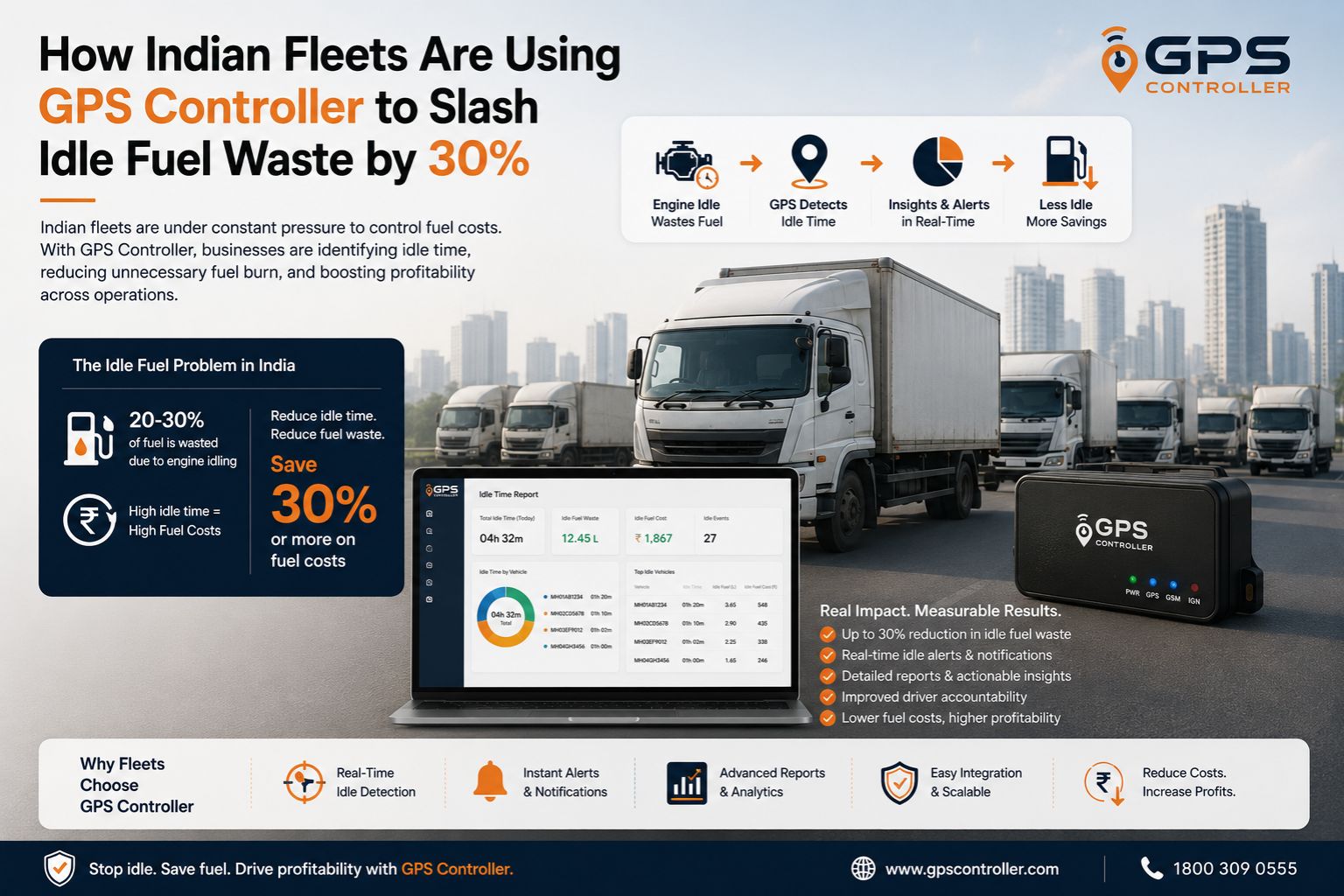
How Indian Fleets Are Using GPS Controller to Slash Idle Fuel Waste by 30%
Indian fleets are using GPS Controller to directly target the root cause of excessive fuel consumption: unnecessary idling. A fleet manager we spoke with noted that their vehicles were idling for an average of 90 minutes per shift, often due to driver waiting periods and traffic patterns. The core issue was a lack of real-time visibility—you just don't know, really, when an engine is running but not moving. GPS Controller's vehicle telematics platform provides the precise data needed to identify and correct these wasteful idling patterns, leading to documented fuel savings of 30%.
What Idle Fuel Waste Means for Fleet Tracking
Idle fuel waste in fleet tracking is not a simple metric; it represents the fuel consumed when a vehicle's engine is running but the odometer shows zero movement. For Indian fleets operating in congested urban centers like Delhi or Mumbai, this can account for 20-40% of total fuel spend. The challenge is that standard GPS tracking can sometimes report a stationary vehicle without distinguishing between a legitimate stop and an idling engine. A common misunderstanding is that all stationary time is idle time—but it's not that simple. Real fuel waste occurs when the engine is on for extended periods beyond operational necessity, such as during lunch breaks or early driver arrivals.
Reality Check Under Real Operational Scale
Under the pressure of real operational scale, small idling issues become massive cost centers. Consider a fleet of 500 trucks covering routes across India; a 10-minute idle per truck per day translates to over 5,000 minutes of wasted fuel annually. Telemetry data from GPS Controller's real-time vehicle tracking reveals that delayed geofence alerts often fail to trigger when a vehicle enters a designated no-idle zone, allowing the behavior to continue undetected. The reality is that without high-resolution engine data, a fleet manager might miss that a vehicle idling for 45 minutes at a depot is burning enough fuel to cover an extra 20 kilometers of route—and that's not even counting wear and tear.
Mistakes and Risk Patterns in Idle Reduction
A major failure pattern is assuming that driver training alone solves idling. One fleet we observed implemented a strict no-idle policy but saw no change—because they lacked violation-proof data, the drivers just ignored it. The risk emerges when a fleet relies on ignition-based tracking instead of engine RPM data, as it cannot differentiate between the engine running for climate control or for required power take-off operations. A boundary condition where internal fixes stop working is when a single geofence alert for idling is not backed by a reporting structure; drivers learn to ignore the alert, and the waste continues. Another common mistake is not accounting for signal latency; a record showing a vehicle stationary for 10 minutes might actually be a 5-minute stop with a 5-minute data delay, leading to inaccurate baseline calculations. You start optimizing the wrong thing.
Decision Help for Reducing Idle Fuel Waste
The decision for a fleet manager is clear: you must either tune your existing telemetry configuration or redesign your alert and reporting workflow. Tuning involves setting tighter geofence parameters for no-idle zones and configuring engine hours versus mileage reports. However, the boundary where internal fixes become insufficient is when the GPS device itself does not support high-frequency engine data logging. In that case, the correct choice is to replace the hardware with a unit that can capture idle RPM and location data simultaneously, such as those from gps controller, to ensure the 30% reduction target is achievable and sustainable. Frankly, if your box can't log RPM accurately, you're guessing.
FAQ
Question: What is the primary cause of idle fuel waste in Indian fleets?
Answer: The primary cause is extended engine running without vehicle movement, often due to driver waiting times, traffic congestion, and a lack of real-time monitoring for idling events.
Question: How does GPS Controller specifically help reduce idle fuel waste?
Answer: GPS Controller helps by providing detailed engine hours data alongside GPS location, allowing managers to create geofences that trigger alerts when a vehicle idles longer than a set threshold, enabling immediate corrective action.
Question: What is a significant risk when trying to reduce fleet idling?
Answer: A significant risk is relying on driver self-reporting or basic ignition data, which can miss short but frequent idle events or fail to differentiate between necessary engine operation and wasteful idling.
Question: What is the decision boundary between tuning a system and needing to replace it?
Answer: The decision boundary is reached when the current GPS device cannot capture high-resolution engine RPM data, making it impossible to create accurate idle reports or automate compliance-related actions, requiring a hardware upgrade.


Comments
Post a Comment