How Does GPS Tracking Reduce Fuel Cost for Commercial Vehicles India 2026
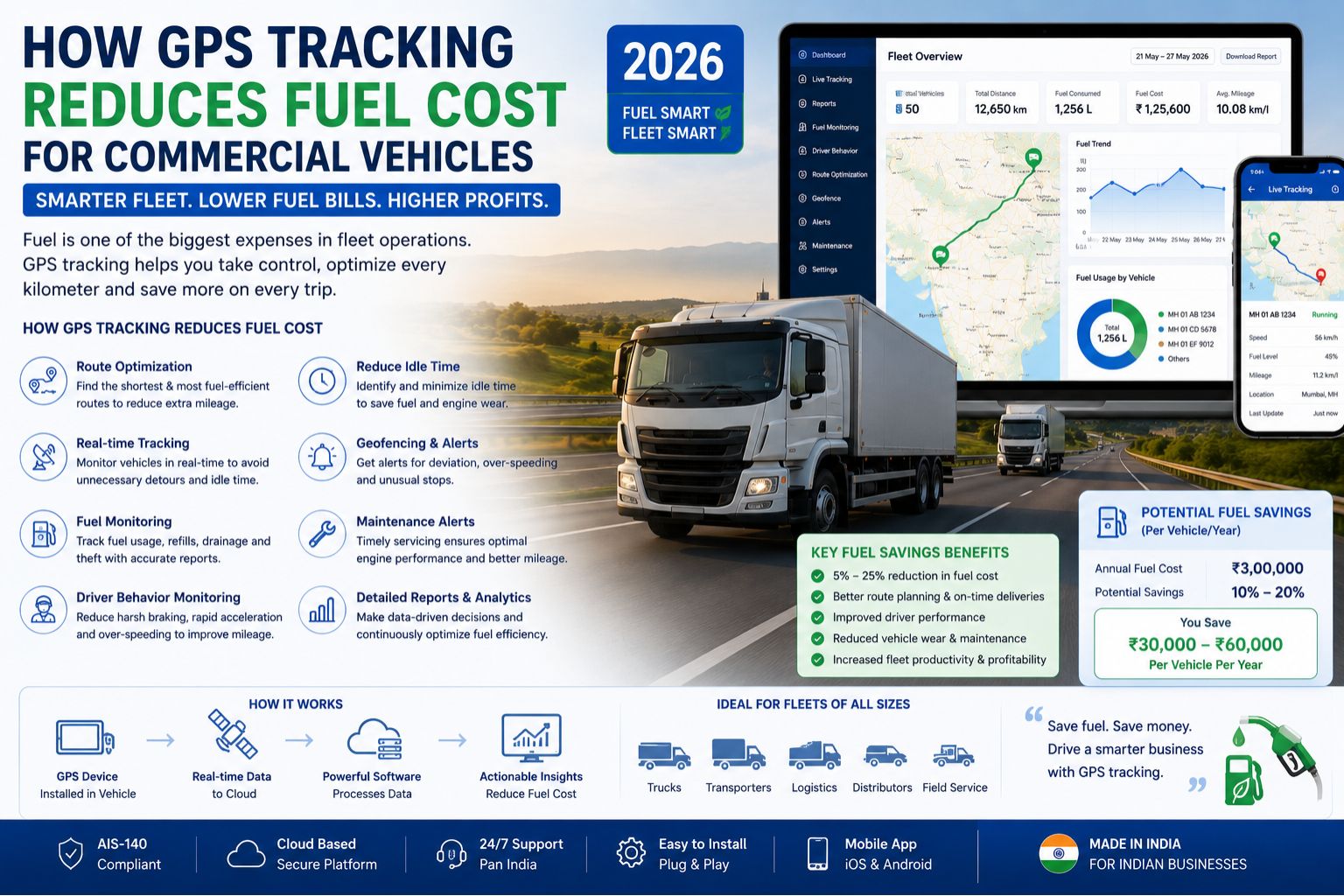
How Does GPS Tracking Reduce Fuel Cost for Commercial Vehicles India 2026
GPS tracking reduces fuel cost for commercial vehicles in India by 2026 only when the data is precise and immediate, not delayed or corrupted by signal loss common in urban canyons and mountainous routes. When a fleet manager checks real-time fuel consumption, they rely on clean telemetry from vehicle telematics sensors—a single second of location data delay can cause the system to miscalculate idle time, leading to inaccurate cost reports and missed opportunities to correct wasteful driver behavior.
What Signal Delay Means for Fuel Data Accuracy in Fleet Tracking
In live fleet tracking, signal latency transforms accurate fuel consumption readings into unreliable estimates, especially when a truck passes under a bridge or through a tunnel where the GPS signal is lost. A driver idling for five minutes after a delivery might not be logged correctly if the device fails to update its position quickly enough—so the fleet tracking software reports zero idle cost, hiding the fuel burn. This hidden waste accumulates across a fleet of fifty trucks over a month, meaning the savings promised by GPS tracking never really materialize because the underlying data is flawed.
How Data Gaps from Jitter Create Real Operational Scale Risk
Under real operational scale in India, signal jitter causes delayed geofence alerts, so a vehicle leaving a depot at 6 AM might not trigger an exit notification until 6:05 AM, creating a gap in the compliance logs and forcing the dispatch team to guess when the trip actually started. During that five-minute gap, the engine might have been running, consuming fuel without being tracked, and when multiplied across hundreds of daily trips the fuel cost discrepancy becomes a significant compliance risk for logistics companies. This isn't just a theoretical issue—it's a daily reality for fleet managers who rely on telemetry data to enforce fuel policies and route optimization.
Common Misunderstanding About Fuel Savings and Wrong Assumptions
A widespread mistake among fleet operators is assuming that simply installing a GPS device automatically cuts costs, but the reality is that if the device provides inaccurate location data due to network coverage issues, the fleet management software cannot generate reliable insights. Many managers invest in route optimization expecting immediate fuel reductions, yet they overlook the boundary condition where signal interference near industrial zones causes the system to recalculate routes based on old positions, sending drivers on longer paths. Another common error is ignoring idle engine inaccuracies that arise when a vehicle is parked on a slope and the motion sensor interprets slight movement as driving, skewing fuel usage reports and leading to misguided cost-cutting decisions.
Decision Help: When Internal Fixes Stop Working and What to Do Instead
When your fleet experiences persistent fuel tracking failures due to signal delays, you must decide whether to tune the current device settings, reconfigure the network parameters, or redesign the entire telemetry workflow. If after tuning the update frequency and reconfiguring the geofencing alerts you still see significant data gaps, the boundary where internal fixes are insufficient has been reached, and it's time to replace the hardware with a unit that has better signal sensitivity and redundant connectivity options like GPS controller modules that maintain data transmission even in weak coverage areas. Without this decision, fuel cost reduction remains a theoretical benefit rather than a measurable operational improvement.
FAQ
Question: How does GPS tracking reduce fuel cost for commercial vehicles in India?
Answer: GPS tracking reduces fuel cost by monitoring idle time, optimizing routes, and detecting aggressive driving patterns, but only if the reported data is accurate and free from signal latency. Delayed location updates can hide real fuel consumption and prevent savings.
Question: What is the main risk of using GPS tracking for fuel cost reduction in 2026?
Answer: The main risk is data reliability: signal loss in tunnels or congested urban areas leads to incomplete telemetry, causing the fleet tracking system to underestimate fuel usage and miss opportunities for corrective action.
Question: Can GPS tracking still save fuel if the device has signal delay problems?
Answer: No, because signal delay creates gap reports that make geofence alerts and compliance logs inaccurate, so the fleet manager cannot trust the data. Without accurate data, decisions based on fuel cost reduction are likely to fail.
Question: What should a fleet manager do when internal fixes fail to improve fuel tracking accuracy?
Answer: When tuning and reconfiguring the system no longer helps, the fleet manager should consider replacing the hardware with a more robust unit that avoids signal loss, such as a GPS controller designed for challenging environments, to restore reliable fuel cost tracking.


Comments
Post a Comment