Go Beyond the Dot: Why This Telematics Platform is the Future of Your Fleet Management System
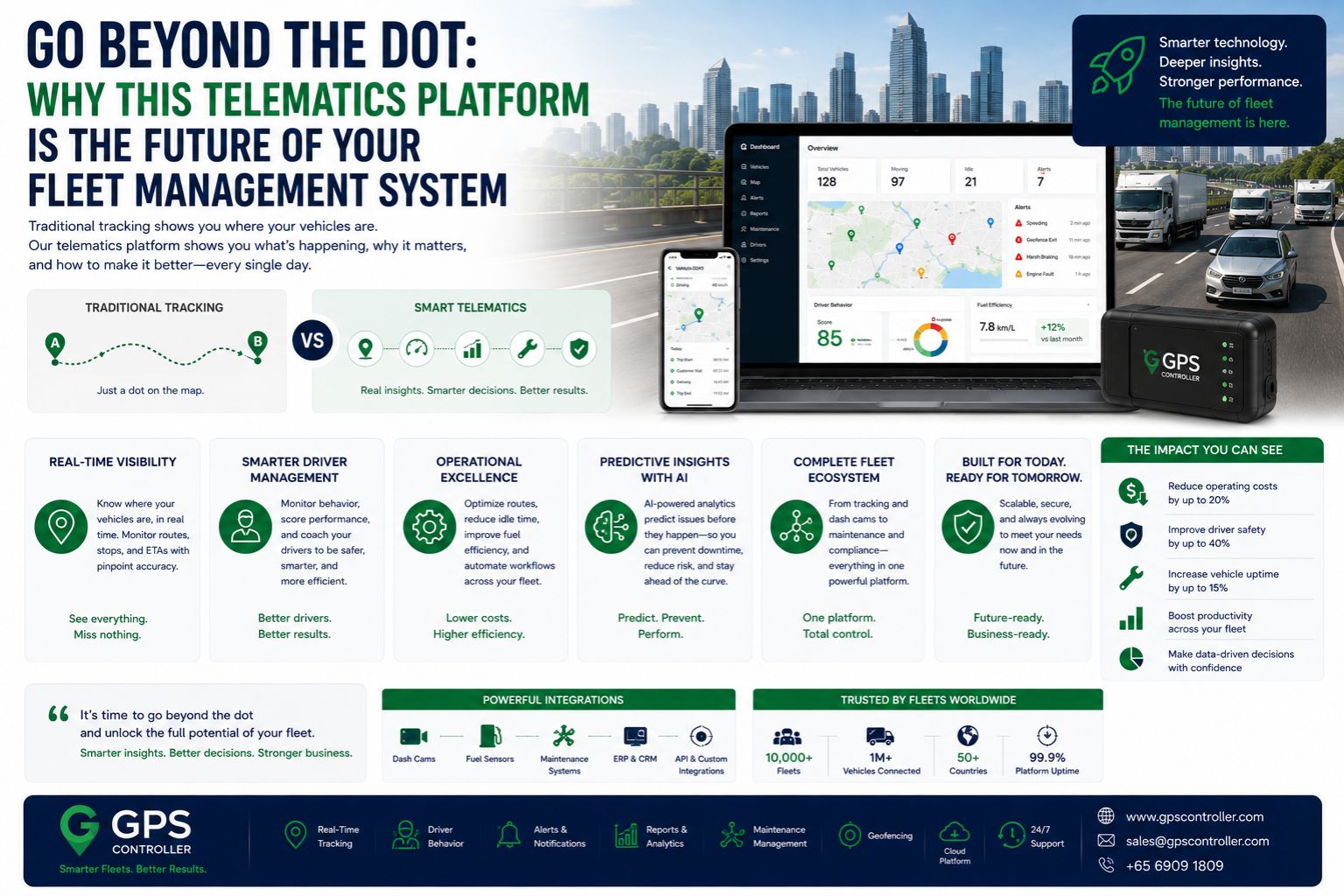
Go Beyond the Dot: Why This Telematics Platform is the Future of Your Fleet Management System
A fleet tracking platform that only shows a static dot on a map is a liability. When your fleet management system relies on outdated telematics, you lose visibility into real-time vehicle location, engine status, and driver behavior. The gap between a moving truck and a delayed dot on your screen is where operational failure begins.
When Location Data Loses Sync with Reality
In live fleet operations, signal latency creates a delay between where a vehicle actually is and where the fleet tracking system reports it. This lag can range from a few seconds to several minutes—sometimes longer if you're unlucky—causing geofence alerts to fire late or not at all. A driver crossing a state line might not trigger a compliance alert until the truck is already miles past the boundary, making audit logs unreliable.
Scale Exposes the Weakness of Simple Telematics
As your fleet grows beyond fifty vehicles, the strain on a basic telematics platform becomes obvious. Vehicle telematics data arriving with jitter or dropped packets forces dispatchers to guess vehicle positions. Idle engine inaccuracies and delayed fuel readings create false cost reports. At scale, these errors compound into scheduling conflicts, missed delivery windows, and lost revenue. It’s not a maybe—it’s a pattern.
The Hidden Mistake of Ignoring Telemetry Workflows
Many operations teams assume that upgrading hardware alone fixes latency. But the real failure is in the telemetry workflow — how data flows from the device through the network and into your dashboard. Signal latency inside tunnels or dense urban areas is a boundary condition where most internal tuning attempts stop working. Without a platform designed to buffer and re-sequence data, you lose event order and compliance logs become worthless. Worthless in an audit, that is.
When to Reconfigure and When to Replace Your Telematics Platform
If your current system cannot deliver location data delay under ten seconds across a mixed fleet of long-haul and local vehicles, you face a clear decision boundary. You can tune your existing setup by adjusting polling intervals, but that often drains battery life and increases data costs. Redesigning your data pipeline internally is a temporary fix. At a certain point, replace the entire telematics layer with a platform that handles variable network conditions, buffers data, and syncs real time vehicle tracking without workflow collapse. The choice is between patching a broken system and deploying a proven infrastructure.
FAQ
Question: What causes a telematics platform to show a wrong location?
Answer: Signal latency from the GPS device, poor network coverage, or a data error in the telemetry pipeline can all cause a wrong location. The system may hold onto a stale GPS fix while the vehicle has already moved.
Question: How does delayed telematics data affect geofence alerts?
Answer: Delayed geofence alerts mean a vehicle can enter or exit a zone before the system fires a notification. This causes compliance gaps, missed billing opportunities, and inaccurate audit trails.
Question: Can poor telematics cause routing delays across a large fleet?
Answer: Yes. Routing delay occurs when dispatchers rely on stale location data to assign jobs. They send trucks to the wrong depot or reroute vehicles that have already passed a stop, wasting fuel and time.
Question: When should I replace my telematics platform instead of fixing it?
Answer: When internal tuning — changing polling intervals or adding cellular backups — no longer reduces latency under ten seconds, replace the platform. GPS Controller offers a stable telemetry pipeline that handles network jitter and delivers accurate fleet management data even under real-world boundary conditions.


Comments
Post a Comment