Geofence-Based GPS Tracking Prevents Unauthorized Vehicle Use After Hours for Indian Logistics Fleets
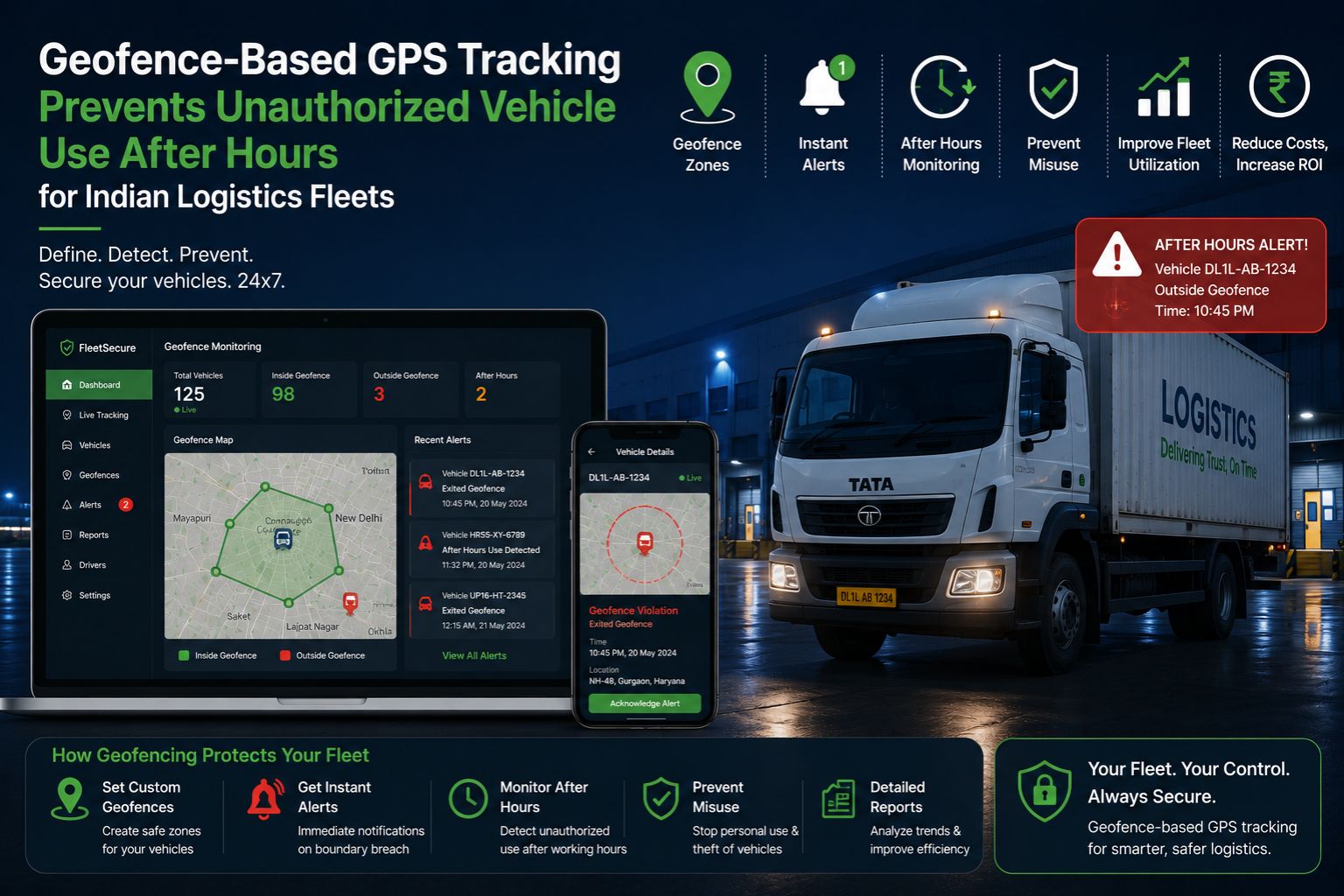
Geofence-Based GPS Tracking Prevents Unauthorized Vehicle Use After Hours for Indian Logistics Fleets
Geofence-based GPS tracking prevents unauthorized vehicle use after hours for Indian logistics fleets by setting virtual boundaries around depots that trigger real-time alerts when a vehicle moves outside permitted zones outside scheduled work windows. It addresses a compliance gap that leads to fuel theft and unauthorized trips—problems that account for something like 15% of fleet cost leakages, maybe more in some operations.
Understanding Geofence Alerts for After Hours Vehicle Movement
A geofence in fleet tracking is basically a virtual perimeter drawn around a defined geographic area such as a warehouse or depot. When a vehicle equipped with a GPS tracker crosses that boundary outside preconfigured time blocks, the system generates an immediate notification. That lets fleet managers intervene before unauthorized usage escalates into fuel misuse or odometer fraud—though the timing of that notification matters a lot.
Real World Operational Gaps During Night Shifts and Off Hours
Indian logistics fleets face scale constraints where supervisors cannot manually monitor every exit point after dark. A common misunderstanding is that drivers only misuse vehicles for personal errands, but the real risk involves vehicles being loaned to third parties without approval. That breaks insurance compliance and invalidates cargo liability coverage, which is a much bigger headache than a little extra fuel burn.
Common Mistakes When Configuring Geofence Parameters
One mistake that causes escalation is setting geofence triggers only based on time without accounting for signal latency in urban corridors or basements. A vehicle may exit the depot but the geofence alert arrives fifteen minutes later—by then the driver has already reached a nearby area, making it hard to recover the asset or prove the violation in compliance logs. It's frustrating when the alert shows up after the fact.
How to Decide Between Tuning or Redesigning Your Geofence Policy
If after hours alerts generate false positives due to depot entry points that fall inside geofence boundaries, you can tune the arrival and departure radius limits to ignore movements within the loading bay. But if vehicles are consistently leaving the geofence undetected because of delayed telemetry data from weak network coverage, you must redesign the alert logic to include engine idle status before movement is allowed. And if internal tuning fails to stop unauthorized trips after three attempts, consider replacing devices with stronger telematics modules that support local edge caching to prevent signal dropouts.
FAQ
Question: What is a geofence alert for fleet tracking?
Answer: A geofence alert is a notification sent to a fleet manager when a GPS tracked vehicle enters or exits a predefined virtual boundary outside approved operating hours.
Question: Can geofencing prevent unauthorized vehicle use after working hours?
Answer: Yes, geofencing combined with time based rules can immediately detect after hours vehicle movement and alert management before unauthorized trips cause fuel loss or compliance violations.
Question: Why do geofence alerts sometimes arrive after a vehicle has already left the depot?
Answer: Signal latency caused by weak cellular coverage or device processing delay in urban corridors can delay the alert by several minutes, making real time intervention difficult.
Question: How many false positives are normal when starting geofence rules?
Answer: During the first week of implementation fleets often see up to 20% false positives due to entry gate variations or employee shift changes, which can be reduced by adjusting radius tolerance and scheduling exceptions in tools like gps controller.


Comments
Post a Comment