Fuel Theft Detection with IoT Sensors Reduces Losses for Indian Trucking
Fuel Theft Detection with IoT Sensors Reduces Losses for Indian Trucking
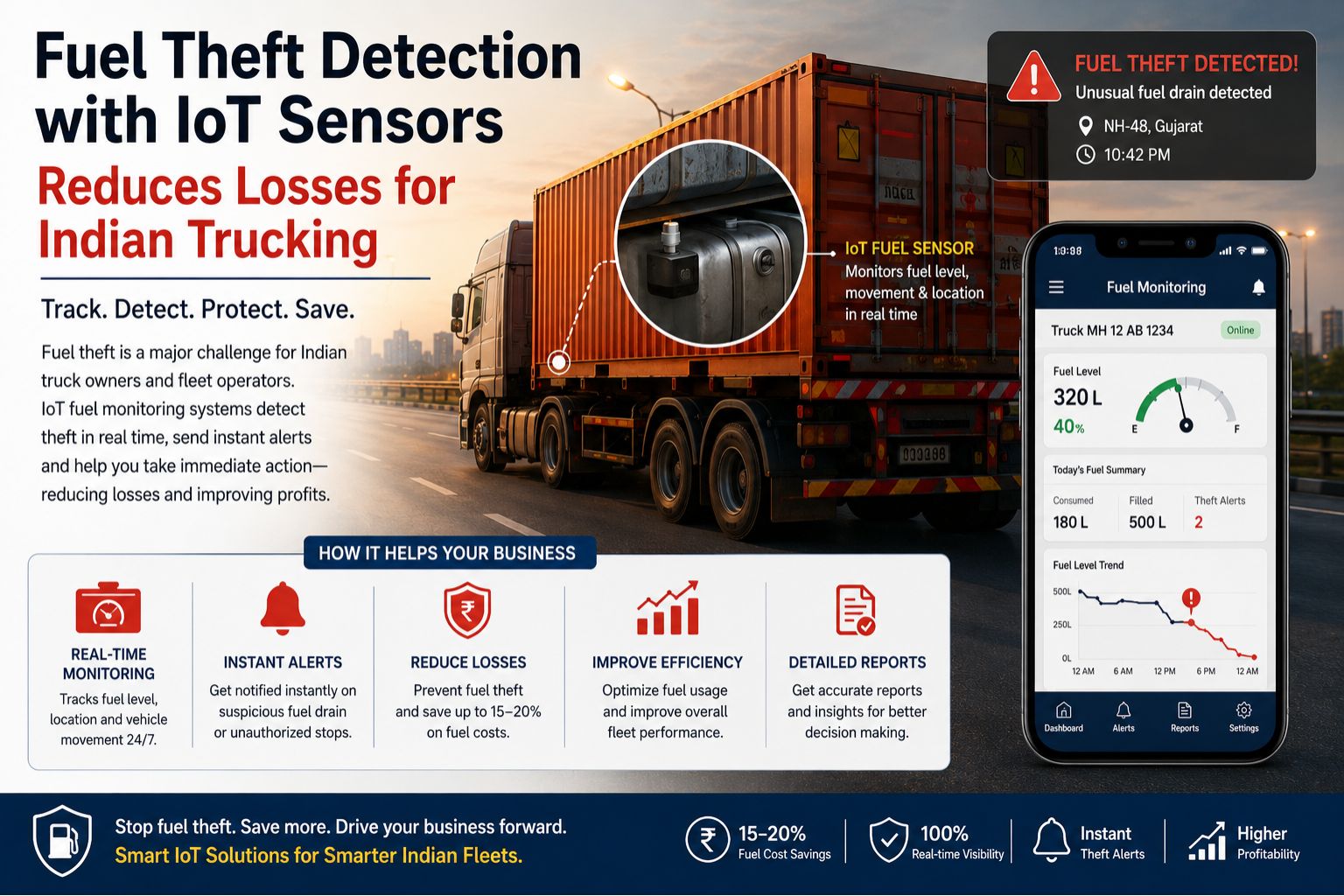
Fuel theft detection with IoT sensors is now a primary tool for Indian trucking fleets looking to reduce operational losses. Real-world fleet data shows that unauthorized fuel siphoning often occurs during scheduled halts at unmonitored loading points, where manual logs fail to capture the exact volume of loss. IoT-based monitoring provides immediate alerts when tank levels drop unexpectedly, enabling fleet managers to intervene before a single trip's margin is erased—assuming someone is actually watching the dashboard.
What Constitutes Fuel Theft in Fleet Operations
Fuel theft in fleet operations refers to any unauthorized removal of diesel from a vehicle's tank, often occurring during driver shifts, at unauthorized stops, or through tampering with the vehicle telematics system. One fleet observed a pattern of small siphoning events that collectively accounted for a 15 percent monthly increase in fuel expenditure, a loss that remained undetected without continuous sensor data. The delay between the theft event and the next refueling check meant that recovery was nearly impossible, turning minor losses into a persistent compliance gap—and honestly, most operators only catch this after months of bleeding.
How IoT Sensors Detect Fuel Theft in Real-Time
IoT sensors detect fuel theft by monitoring tank level changes, ignition status, and vehicle location simultaneously, triggering geofence alerts when levels drop outside of authorized refueling windows. A common non-obvious detail is that signal latency from a GPS tracking device can delay the alert by several seconds, but the IoT sensor data remains accurate to within one percent of actual volume. This precision allows fleet managers to distinguish between normal engine consumption and unauthorized siphoning, even when the vehicle is parked in a location with poor network coverage—though you might miss a quick siphon if the alert comes late.
Common Mistakes in Fuel Theft Prevention for Indian Trucking
One common misunderstanding is that installing a GPS tracker alone prevents fuel theft. In reality, tracker data without IoT-based fuel level monitoring only shows location, not the moment of loss. A trucking operator who relied solely on route optimization to reduce idle time overlooked the fact that fuel theft often happens during extended waits at checkpoints, where engine-off periods are normal and location data provides no alert. Without IoT sensor integration, the fleet remained blind to the theft until the end-of-month audit, by which time the responsible driver had already left—and honestly, that audit probably left a lot of questions unanswered.
Decision Help: Choosing a Fuel Theft Detection Solution
When deciding between tuning an existing fleet management software platform or redesigning the entire monitoring workflow, the critical boundary is the accuracy of the fuel level data. If your current GPS device reports fuel levels indirectly through engine diagnostics, you may need to reconfigure the sensor setup with dedicated IoT tank sensors. However, if the fleet operates across regions with inconsistent cellular coverage, no amount of sensor tuning will fix the data voids, and you must consider a redesign that includes offline storage and delayed upload capability. Internal fixes like schedule changes or driver training are insufficient if the sensor data itself is unreliable—so don't start with training, start with the hardware.
FAQ
Question: What is the most common method of fuel theft in Indian trucking?
Answer: The most common method is direct siphoning from the tank during unauthorized stops or while the truck is parked at unmonitored warehouses, often involving collusion between drivers and third-party fuel resellers.
Question: How accurate are IoT sensors for detecting fuel theft?
Answer: Dedicated IoT fuel level sensors can detect volume changes as small as one percent of the total tank capacity, providing alerts within seconds of an unauthorized drop, which is significantly more accurate than engine diagnostics data.
Question: Can fuel theft detection work with older trucks in the fleet?
Answer: Yes, IoT sensors are retrofitted directly onto the fuel tank and do not depend on the vehicle's electronic control unit, making them compatible with older trucks that lack modern telemetry capabilities.
Question: What should a fleet manager do when an IoT sensor triggers a fuel theft alert?
Answer: The manager should immediately cross-reference the alert with the vehicle's location data and driver logs, then dispatch a supervisor to the site if the vehicle is stationary. This workflow depends on real-time notification systems and clear escalation protocols to be effective at scale. A platform like gps controller can support this cross-referencing, but the decision to act remains with the fleet team—and that's often where it breaks down if no one's trained to follow through.


Comments
Post a Comment