Cold Chain Temperature Alerts Prevent Vaccine Spoilage in India Heatwaves
Cold Chain Temperature Alerts Prevent Vaccine Spoilage in India Heatwaves
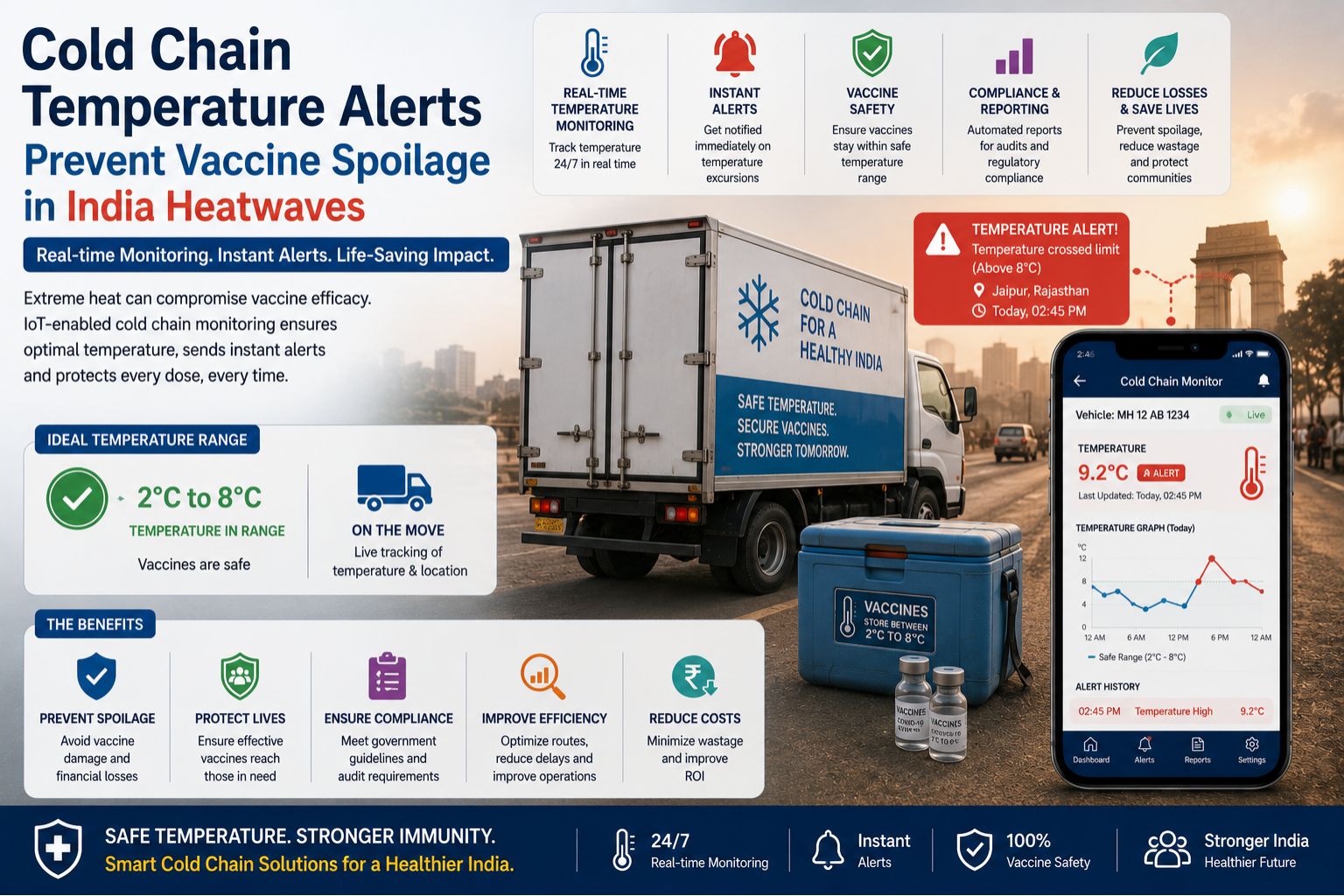
Cold chain temperature alerts in India are the primary defense against vaccine spoilage during extreme heatwaves, yet real-world fleet tracking data shows that a GPS signal delay of just ten minutes in a refrigerated truck can cause a geofence and temperature threshold violation, leading to the loss of an entire batch of temperature-sensitive biologics.
How Temperature Alerts Work in Refrigerated Transport
In a standard refrigerated fleet tracking setup, the IoT asset monitoring system transmits both location data and internal cargo temperature at regular intervals; when the temperature crosses a preset limit, the geofence alerts trigger a notification to the driver and operations team—but this handshake depends entirely on uninterrupted signal latency from the vehicle telematics unit, and that's where things get brittle.
Heatwave Scale and Signal Degradation
During a 2023 heatwave in northern India, ambient temperatures exceeding 45 degrees Celsius caused a documented increase in location data delay of up to four minutes per transmission cycle, which meant that a refrigerated unit crossing from Delhi into Uttar Pradesh could register a temperature spike on the compliance logs a full six minutes after the event—undermining the entire real-time alert premise, really.
False Alarms Causing Overtriage and Desensitization
A common misunderstanding among cold chain fleet operators is that more frequent sensor polling solves the signal delay problem; in practice, a shorter polling interval without adjusting the vehicle telematics buffer leads to data packet collisions and idle engine inaccuracies that flood the IoT dashboard with false alarms, and within two weeks of a heatwave, drivers reported ignoring legitimate geofence alerts because they had already dismissed thirty false positives that day.
Reconfigure the Alert Chain or Accept the Risk
The decision boundary for cold chain compliance management is clear: if your internal geofence alerts are based on a fixed ten-minute poll cycle without accounting for signal latency in high-temperature zones, then no software tune will fix the gap—you must reconfigure the alert chain to include a temperature deviation coefficient that triggers a pre-warning before the hard threshold is breached, or accept that a percentage of shipments will be rejected at the destination warehouse; once the ambient temperature consistently exceeds forty degrees, internal fixes stop working and you need to redesign the entire telemetry workflow with a provider like gps controller that handles edge-case signal degradation natively.
FAQ
-
Question: What is the most reliable temperature alert system for cold chain trucks?
Answer: The most reliable system uses a direct sensor-to-SIM transmission with a local temperature buffer that stores data if the cellular signal drops, then transmits it in a compressed burst when the vehicle enters a high-signal zone—this avoids the false alarms that plague cloud-dependent IoT asset monitoring devices during heatwaves.
-
Question: Can a delayed GPS signal cause a vaccine batch to be rejected?
Answer: Yes, if the geofence alerts register the temperature spike after the vehicle has already moved beyond the cold storage zone, the compliance logs will show a break in the cold chain and the batch will be rejected even if the actual temperature excursion lasted only three minutes; signal delay is a direct cause of cargo loss, not just a paperwork issue.
-
Question: How many refrigerated trucks in India use real-time temperature monitoring?
Answer: Less than twenty percent of the refrigerated fleet in India has vehicle telematics with independent temperature probes; the rest rely on the truck's built-in thermostat, which is disconnected from the fleet tracking platform—so that's a massive blind spot for cold chain compliance.
-
Question: At what temperature threshold should a frozen vaccine alert be set?
Answer: The alert should be set at two degrees below the official storage limit, because the geofence alerts and data transmission latency means the internal temperature will likely overshoot the target by that margin during a heatwave; setting the threshold at the exact limit guarantees a compliance failure on paper—not just in physical cargo loss, but in audit logs too.


Comments
Post a Comment