AI Driver Scorecards Improve Safety Compliance and Lower Insurance Premiums for Indian Transporters
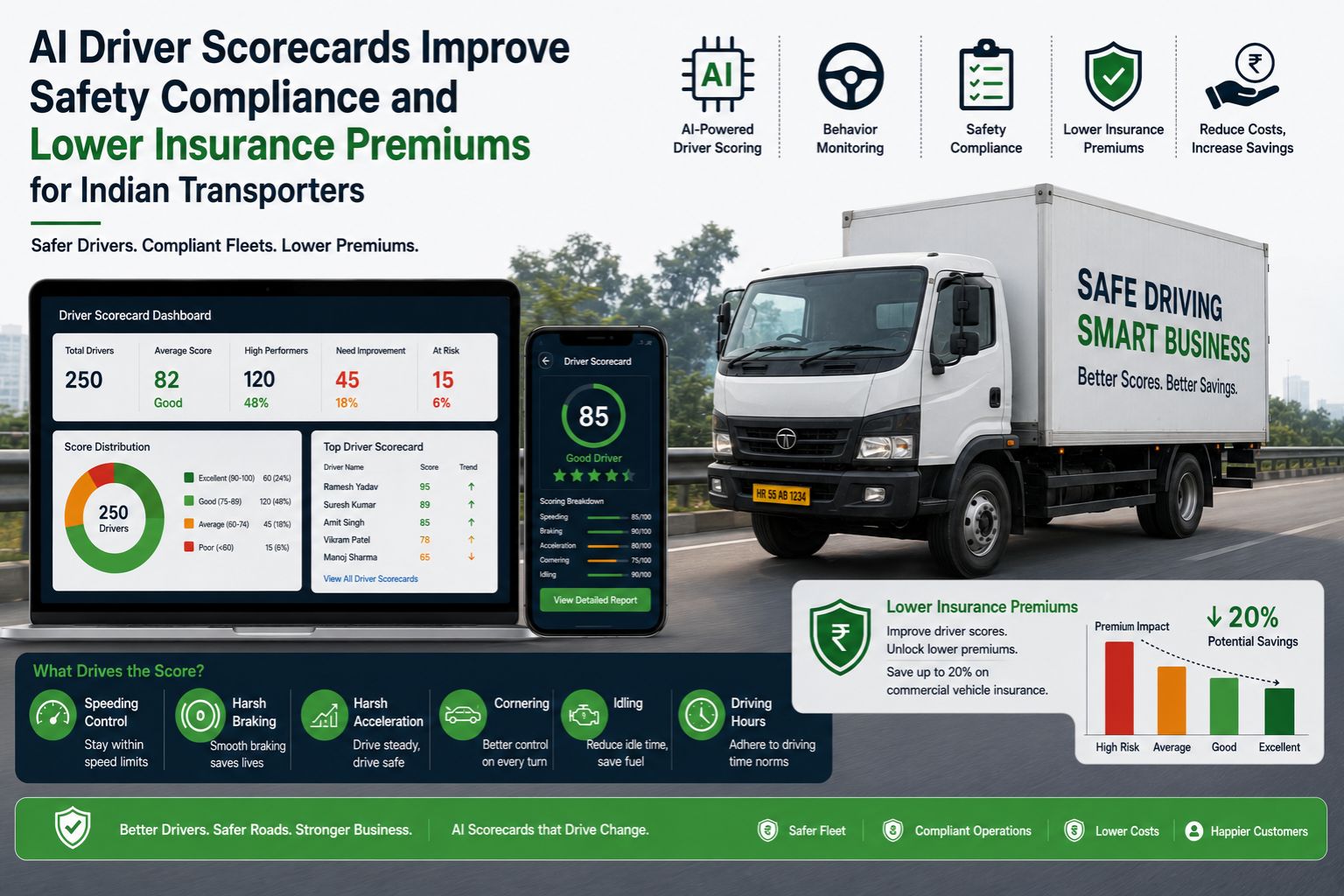
AI Driver Scorecards Improve Safety Compliance and Lower Insurance Premiums for Indian Transporters
AI driver scorecards improve safety compliance and lower insurance premiums for Indian transporters by converting raw telematics data into actionable driver performance metrics, directly addressing the operational and financial risks tied to driver behavior and fleet safety protocols—at least, that's how it works in theory, and increasingly in practice.
How AI Scorecards Define Driver Safety in Fleet Operations
A fleet manager in Mumbai noticed that repeated hard braking events on a particular route were flagged by the AI scorecard system, which automatically adjusted the driver's safety rating and triggered a targeted coaching session before an accident occurred. That's a neat example of how granular behavior data replaces subjective performance reviews with objective, real-time analysis—though not every case is this tidy.
What Happens When Scorecard Data Overrides Manual Safety Logs
At scale, manual safety logs often miss signal jitter in tunnels that causes inaccurate speed readings—something you'd only catch if you're looking closely. AI scorecards cross-reference GPS tracking data with vehicle telematics from the engine control unit to verify actual harsh braking events against false positives, creating a more reliable compliance record that insurance underwriters can trust for premium adjustments, provided the data chain is clean.
Common Misunderstandings About AI Scorecards and Insurance Savings
A common misunderstanding—and I see this a lot—is that simply installing a telematics device automatically lowers insurance premiums. But without a functioning AI scorecard that actively tracks compliance logs and driver improvement trends, insurers see no verifiable change in fleet risk and therefore no reason to adjust rates. It's not magic; it's data they can verify.
Decision Help for Implementing AI Driver Scorecards
When deciding between tuning an existing fleet management system or redesigning the entire safety workflow, you must reconfigure the scorecard thresholds to match your fleet's specific risk profile. But if the internal data analysis team cannot maintain the system or if the telematics hardware is outdated, then internal fixes are insufficient and you must redesign with a provider like gps controller that integrates AI scoring directly into the fleet management software and compliance reporting—otherwise you're just moving the problem around.
FAQ
Question: What is an AI driver scorecard in fleet tracking?
Answer: An AI driver scorecard is a system that uses vehicle telematics and GPS tracking data to automatically evaluate driver behavior, including harsh braking, speeding, and idling, to produce a safety rating for each driver in a fleet. Think of it as a report card, but for driving.
Question: How does an AI driver scorecard reduce insurance premiums?
Answer: AI scorecards provide insurance companies with verifiable, data-backed proof of reduced fleet risk through consistent safety compliance and lower incident rates, which directly supports premium reduction negotiations during policy renewals. It's not an instant discount, but it builds a case.
Question: What data does the AI scorecard use for compliance audits?
Question: The AI scorecard pulls data from location data delay checks, geofence alerts, and real-time engine diagnostics to create detailed compliance logs that satisfy regulatory audit requirements for transporters operating across state lines. It's comprehensive, but only as good as the sensors feeding it.
Question: Can small fleet operators in Tier-2 cities use AI scorecards effectively?
Answer: Yes, AI scorecards are scalable and work with basic telematics hardware, so even small fleets in cities like Nagpur or Coimbatore can implement them to improve safety compliance and start lowering insurance costs within three to six months, assuming the drivers are on board with the change.


Comments
Post a Comment