AI Driver Coaching Improves Safety Scores and Lowers Insurance Premiums for Indian Transporters
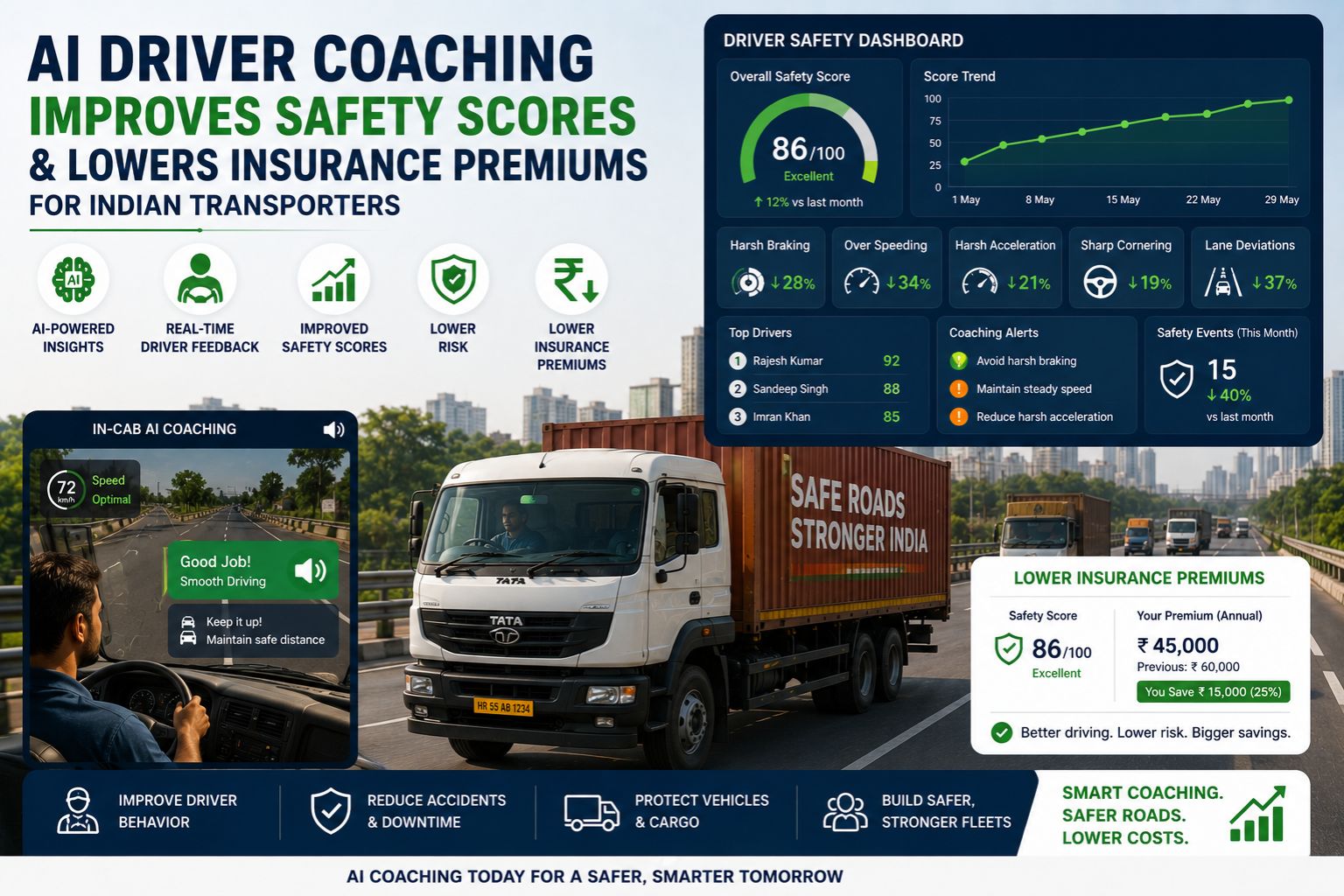
AI Driver Coaching Improves Safety Scores and Lowers Insurance Premiums for Indian Transporters
For Indian transporters operating under tight margins and increasing regulatory oversight, AI driver coaching is shifting from a luxury to a necessity as it improves safety scores and lowers insurance premiums by targeting the root cause of fleet incidents: real-time driver behavior behind the wheel, not just post-trip reports on a dashboard—and honestly, the industry is starting to realize that a weekly report doesn’t help much when a driver is about to rear-end someone on the Mumbai-Pune expressway.
How AI Driver Coaching Works for Commercial Vehicle Fleets
AI driver coaching uses in-cab cameras and vehicle telematics to detect unsafe actions like harsh braking, rapid acceleration, and lane deviations, then provides immediate audio or visual feedback to the driver; this process differs from traditional training because the intervention happens in the moment, not days later during a safety meeting, and that timing—the real-time feedback, not the delayed lecture—is what actually drives measurable safety score improvement for fleet operators across India, but only if the system’s detection thresholds are set sharply enough or drivers don’t just mute the alerts.
What Happens to Insurance Premiums When Safety Scores Improve
When a transporter's fleet safety score improves consistently over a quarter, insurers in India are increasingly applying premium discounts of up to 15% on commercial vehicle policies because the data from AI coaching programs directly reduces the frequency of at-fault accidents, a persistent pain point for fleets running on congested national highways and unpredictable urban routes where a single serious collision can erase months of operating profit; but the discount isn’t automatic—you still have to present the data, and some insurers are slower to trust the new numbers than others.
Critical Mistakes That Undermine AI Coaching Effectiveness in Indian Fleets
A common misunderstanding among fleet managers is that simply installing an AI system will automatically lower premiums, but without consistent driver engagement and a clear coaching feedback loop, the safety scores stagnate; another failure pattern occurs when transporters rely solely on geofence alerts for compliance and ignore the delayed signal latency from devices installed under metal truck cabins, which produces idle engine inaccuracies that skew the coaching data and cause driver frustration during performance reviews, and once that frustration sets in, drivers tune out completely and the whole system becomes noise.
Decision Boundary: When to Reconfigure Your Coaching Program for Insurance Benefits
If your fleet has run an AI coaching program for three months and the safety score remains flat or the insurance broker still shows no premium adjustment, the decision boundary is reached: you must reconfigure the coaching thresholds to focus on the specific behaviors that the insurer weights most heavily in their risk model, or redesign the feedback loop to include daily driver scorecards rather than weekly summaries—and when internal tuning fails to move the score, replacing the telematics hardware with a unit that captures engine data accurately is the only remaining step before the premium reduction opportunity is lost entirely, and given how competitive margins are, that loss hurts.
FAQ
Question: How long does AI driver coaching take to improve safety scores for Indian truck fleets?
Answer: Most Indian fleets see a measurable improvement in safety scores within six to eight weeks of consistent AI coaching implementation, provided the system is configured to address the specific driving patterns common on local routes; but if drivers aren’t engaged in those first weeks, the timeline stretches a lot longer.
Question: Can small transporters with fewer than ten trucks get insurance premium discounts from AI coaching?
Answer: Yes, insurance companies in India now evaluate fleet-level safety scores regardless of fleet size, so even small transporters with a clean score from a fleet management software program can negotiate premium discounts with their insurer, though the discount amount may be smaller for smaller fleets.
Question: What specific driving behaviors lower safety scores the most for Indian commercial vehicles?
Answer: Harsh braking events near toll plazas, overspeeding on highway segments, and lane departure without signaling are the three behaviors that most heavily penalize safety scores under current Indian insurance risk models; but local route conditions can shift these priorities, so check your own data first.
Question: Do insurers actually accept third-party AI coaching data for underwriting decisions?
Answer: Leading Indian insurers now accept verified telematics data from providers like GPS Controller as supporting evidence for safety score improvements, which directly factors into premium calculation during policy renewal negotiations; but not every insurer is on board yet, so ask your broker upfront.


Comments
Post a Comment