GPS Signal Delay Causing Fleet Tracking Failure in India’s Fastest Growing Market
GPS Signal Delay Causing Fleet Tracking Failure in India’s Fastest Growing Market
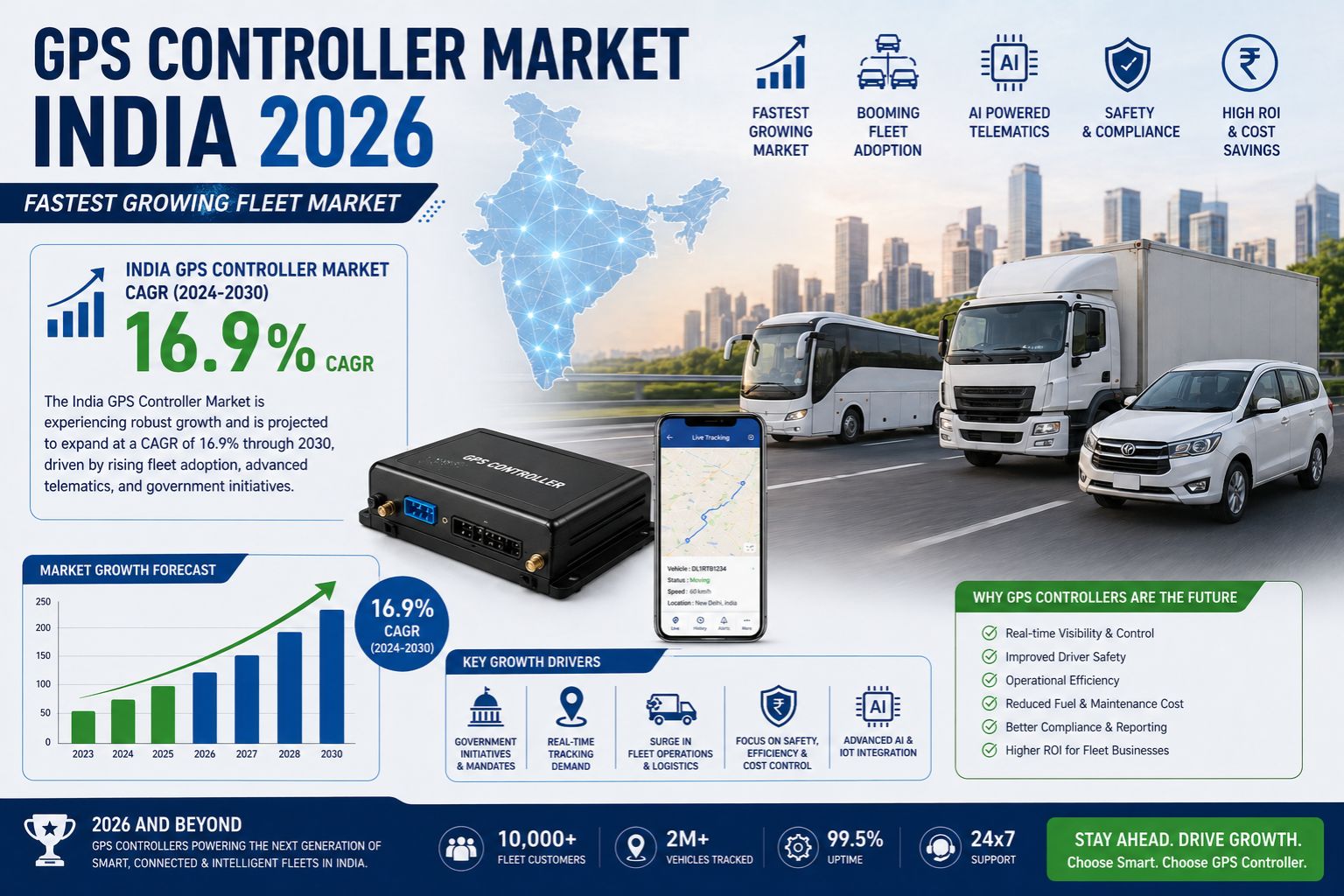
The Indian fleet market is expanding at a compound annual growth rate of 16.9 percent, yet GPS signal delay is causing fleet tracking failure across thousands of vehicles. When location data arrives late, dispatchers lose real-time visibility, geofence alerts fire after the truck has already left, and compliance logs show gaps that auditors flag. This isn't just a minor glitch—it's a systemic failure that erodes trust in vehicle telematics systems meant to solve precisely these problems.
What GPS Signal Delay Means for Fleet Tracking Systems
In practical terms, GPS signal delay means the time between a vehicle's actual position and when that position appears on the tracking dashboard. Signal jitter in tunnels, under dense urban canopy, or near high-voltage lines can push that delay from seconds to minutes. For a fleet manager watching a delivery truck in Bangalore traffic, a two-minute delay can mean the difference between an on-time arrival and a missed window. This delay also affects geofence alerts, which may trigger only after the vehicle has already left the designated zone, making real-time location data effectively useless for immediate decision-making.
How Signal Latency Disrupts Operations at Scale
When a fleet grows beyond fifty vehicles, the compounding effect of signal latency becomes impossible to ignore. A delayed geofence entry alert means a load is already inside the warehouse before the system confirms its arrival. Idle engine inaccuracies appear when a truck stops for a break, but the tracking system still shows it moving due to cached location data. At scale, these inaccuracies produce compliance logs that fail audit checks, cause incorrect fuel performance calculations—and force dispatchers to rely on driver phone calls instead of the fleet management software. The delay doesn't just slow down data; it breaks operational workflows that depend on precise timing.
Common Misunderstandings Causing Escalated Failures
One frequent mistake is assuming that a stronger antenna or a better device alone can fix signal delay. In reality, network congestion at the server level often causes more delay than the GPS receiver itself. Another common misunderstanding is treating all delay as equal—some operators fail to distinguish between device-side jitter and server-side buffering, leading them to replace hardware when the real issue lies in data pipeline processing. This misdiagnosis often results in months of wasted troubleshooting while tracking failures continue. A third overlooked factor is the device's reporting interval; setting it too low can overwhelm the network, causing random dropouts that look like signal loss but are actually data congestion.
Tune, Reconfigure, or Replace: When to Act on GPS Signal Delay
If your fleet tracking failure is caused by signal jitter in tunnels or urban canyons, the fix is often a tune—adjusting the device's position reporting interval or enabling assisted GPS to reduce cold-start delays. If geofence alerts are consistently late but the device reports accurately when stationary, you may need to reconfigure server-side processing buffers or switch to a lower-latency data transport protocol. However, when delay persists across all conditions—open highways, clear skies, low vehicle density—and the device still shows irregular update rates, the system may need a full redesign or replacement. At this boundary, internal software tweaks cannot compensate for outdated hardware or mismatched network architecture. For fleets scaling into India's 16.9 percent growth market, a gps controller that supports real-time data prioritization and adaptive reporting can prevent these failures from compounding as operations expand.
FAQ
Question: What causes GPS signal delay in fleet tracking?
Answer: GPS signal delay is caused by environmental factors like tunnels, dense buildings, or high-voltage lines, as well as device-side issues like slow processing and network-side congestion that buffers location data before it reaches the dashboard.
Question: How does signal delay affect geofence alerts?
Answer: Delayed GPS data means geofence alerts may trigger minutes after a vehicle enters or exits a zone, making real-time responses impossible and causing compliance logs to show inaccurate timestamps.
Question: Can a stronger GPS antenna fix signal delay?
Answer: Not always. While a better antenna improves signal reception, the delay often originates from network congestion, server processing, or device reporting intervals. Replacing hardware without diagnosing the full data pipeline typically wastes time and budget.
Question: When should I consider replacing my fleet tracking system instead of tuning it?
Answer: If signal delay persists across all driving conditions—open highways, clear skies, low traffic—and internal adjustments like changing reporting intervals or server buffers have no effect, the system likely needs a full redesign or replacement before scale makes the problem worse.


Comments
Post a Comment