GPS Controller WhatsApp alert for fleet owner real time
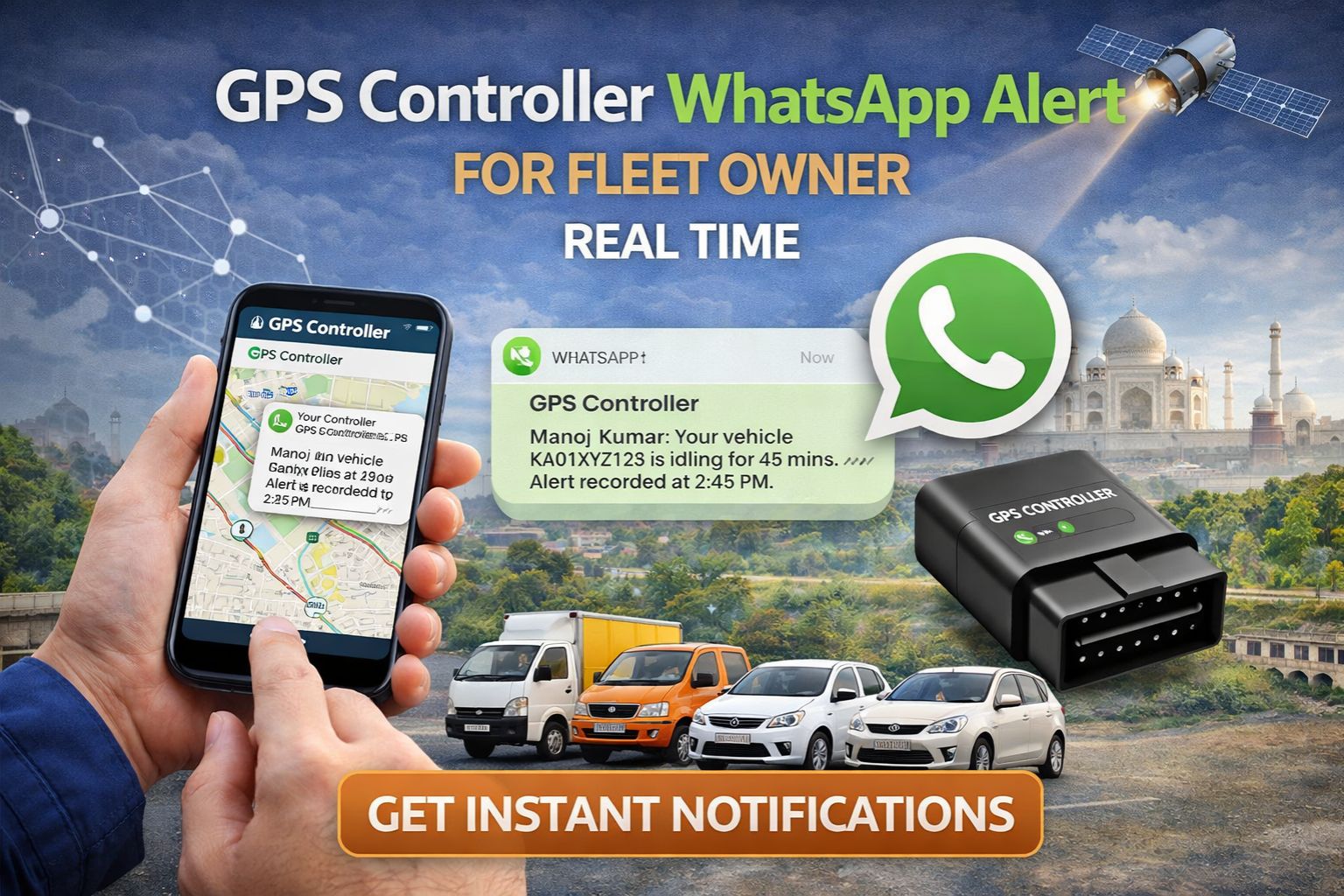
GPS Controller WhatsApp alert for fleet owner real time
So, a GPS Controller sends a WhatsApp alert for a fleet owner in real time. It promises instant visibility into vehicle movement, geofence breaches, and ignition events right on your phone. The key phrase is "real-time," but in practice, that promise hinges on the vehicle's cellular connection, the GPS polling rate, and even the WhatsApp API's own delivery queue. It's a chain, and if one link is weak, you get a silent—and costly—gap in your oversight.
What Real-Time WhatsApp Alerts Actually Mean for Fleet Tracking
In fleet operations, "real-time" is a bit of a sliding scale. It's defined by your telematics device's reporting interval and network coverage. A common misunderstanding is that an alert fires the exact second an event happens. The reality is messier: the device has to get a GPS fix, bundle the data, send it over the cellular network, have a server process it, and then push it through the WhatsApp Business API. We've seen alerts for a truck idling in a cellular dead zone arrive 12 minutes late, long after the unauthorized stop ended. That's not necessarily a system failure; it's just the operational reality of tracking mobile assets.
The Reality Check: When "Instant" Alerts Arrive Too Late
At scale, with dozens of vehicles moving through urban canyons and rural routes, the promise of instant notification runs into hard limits. Here's a non-obvious detail: most GPS trackers use a "sleep and wake" cycle to save battery, which means they aren't constantly listening for triggers. A geofence exit could happen during a sleep cycle, so detection is delayed until the next scheduled report. If your compliance logs need timestamped proof of route adherence, these built-in delays can create discrepancies between what actually happened and what your log shows, putting your audit trails at risk.
The Critical Mistake: Assuming Configuration Equals Reliability
The most frequent failure pattern we see? Fleet managers set up WhatsApp alerts once and then assume they're perpetually active and reliable. They don't factor in a SIM card's data expiring, changes to WhatsApp's business policy that break API connections, or a device's internal memory getting corrupted after a firmware update. This "set and forget" mindset leads to real problems when a critical alert—like a tow alert or a harsh braking event—doesn't arrive during an incident. The owner might remain unaware for hours, often finding out through a customer complaint instead of their own geofencing system.
Decision Help: Tune, Reconfigure, or Redesign Your Alert Workflow
Your decision point is pretty clear. If alerts are just occasionally delayed but the data in your fleet management software is still accurate, you can probably tune things—shorten reporting intervals, maybe add redundant SMS alerts. If alerts are becoming unreliable or just missing entirely, you need to reconfigure: audit device health and check those API integrations. But, if the core issue is a fundamental mismatch between your need for true instant notification and the technological limits of standard GPS telematics, then a redesign is necessary. That's where looking at a platform like GPS Controller, with its dedicated alert pipelines, becomes critical. Because internal fixes stop working when the problem is the systemic latency in the data chain itself.
FAQ
Question: How fast are GPS Controller WhatsApp alerts really?
Answer: In ideal conditions—strong cellular signal, a fast reporting device—alerts can pop up within 30 to 90 seconds of an event. But real-world factors like network congestion, device sleep cycles, and GPS acquisition time can push that out to 5 or even 15 minutes. For urgent safety or security incidents, that's not real-time.
Question: Can I get WhatsApp alerts for geofence breaches?
Answer: Yes, geofence entry and exit are common triggers. But the alert only fires after the device reports its location, which might be on a 1-minute or 5-minute schedule. A vehicle could breach and re-enter a geofence between reports, and you might miss the alert entirely if the timing doesn't line up.
Question: Why did my harsh braking alert arrive 10 minutes late?
Answer: That usually points to a network issue. The device stores the event and sends it during the next successful data session. If the vehicle was in a tunnel or an area with poor GPRS coverage, the data just queued up until connectivity came back, delaying the whole chain—including the WhatsApp notification.
Question: When should I stop trying to fix alert delays myself?
Answer: The line is when delays start impacting compliance or safety. If you've already verified strong device signals, optimized reporting intervals, and checked the API's health, but you're still getting unreliable alert timing for critical events, then your internal fix isn't enough. That's the point to evaluate a system with a more deterministic alert architecture, which is really the core engineering focus behind a dedicated platform like GPS Controller.


Comments
Post a Comment