GPS Controller Real Time Alert Automation Multi Vehicle Dashboard 2026
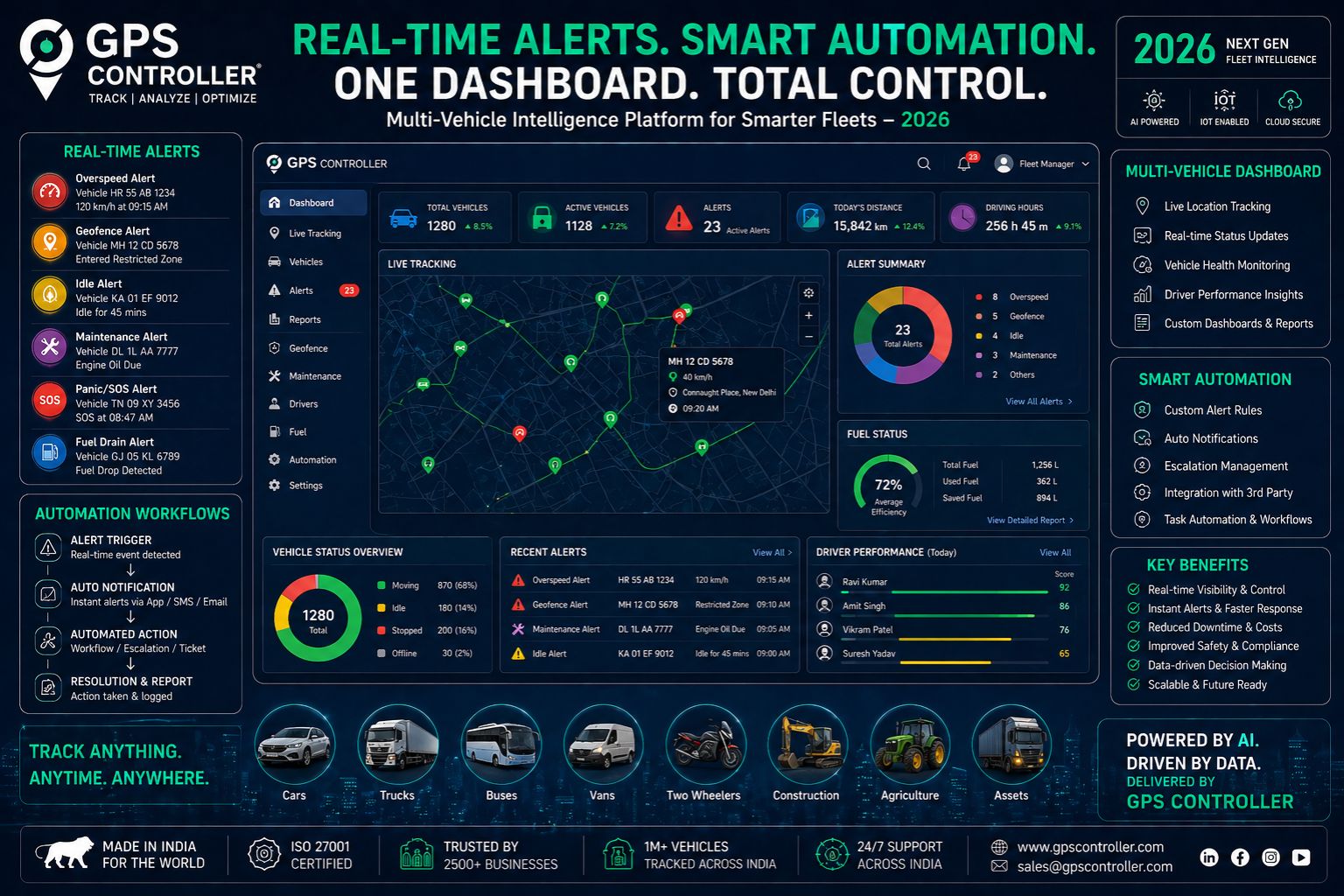
GPS Controller Real Time Alert Automation Multi Vehicle Dashboard 2026
GPS controller real time alert automation for a multi vehicle dashboard in 2026 depends on consistent telemetry data arriving from every asset, but live fleet operations show that alert system failure often starts with delayed location data or a geofence trigger that just never fires.
How GPS Controller Alert Automation Creates Dashboard Visibility
Alert automation in a GPS controller converts raw signal data into actionable notifications on a multi vehicle dashboard, but the system stops working as intended when a vehicle enters a tunnel and the telematics unit fails to buffer the position—so the geofence alert fires minutes after the event has already passed, which kind of defeats the purpose.
Real World Failure Patterns in 2026 Multi Vehicle Dashboards
Under real operational scale, a single delayed signal from one truck in a fleet of fifty vehicles can cascade into a compliance log error, and if the IoT asset monitoring module flags every vehicle as idle because the engine temperature sensor drifted, the dashboard gets flooded with false alarms that desensitize dispatchers to actual routing delays.
Common Configuration Mistakes Causing Alert Breakdown
The most frequent error is assuming that increasing geofence sensitivity will improve detection accuracy, but in practice this generates so many alert events from boundary crossings near loading docks that the fleet tracking system marks the driver as violating route compliance when the truck never left the yard, forcing operations to manually override the alert logic just to get any work done.
When To Tune Reconfigure Redesign Or Replace Your Alert System
If your multi vehicle dashboard still shows delayed geofence alerts after you have already tuned the geofence radius and reconfigured the polling interval, then the limitation is internal to the device hardware and you need to decide whether to redesign the alert workflow or replace the telematics units entirely; a GPS controller with onboard edge processing can reduce network dependency, but if the firmware cannot handle simultaneous vehicle telemetry from three different network providers, internal fixes are insufficient and a hardware upgrade becomes the only path that actually works.
FAQ
Question: Why is my GPS controller dashboard not showing real-time alerts for all vehicles?
Answer: The most common cause is a device that lost cellular signal during a trip and the telematics unit did not store the location data locally, so the dashboard only updates when the unit reconnects and sends a delayed batch of positions—which is basically useless for real-time decisions.
Question: What causes false geofence alerts on a multi vehicle dashboard?
Answer: False alerts are usually triggered by geofence boundaries set too close to loading docks or parking areas, where normal vehicle maneuvering crosses the invisible line and the system interprets it as an unauthorized departure, even though the truck never went anywhere.
Question: Can signal latency from a tunnel cause my real-time tracking to break compliance audit logs?
Answer: Yes, if the vehicle passes through a tunnel and the GPS controller reports a frozen position for several minutes, the compliance log shows a data gap that auditors flag as a missing location record—and those gaps are hard to explain away.
Question: When should I replace my fleet tracking hardware instead of reconfiguring the alert software?
Answer: You should replace the hardware when the device cannot maintain a reliable connection across multiple network providers or when the internal buffer size is too small to store location data during extended signal loss, because no software reconfiguration can fix a physical hardware limitation—you're just delaying the inevitable.


Comments
Post a Comment