GPS Controller plug and play OBD2 no installation 2026
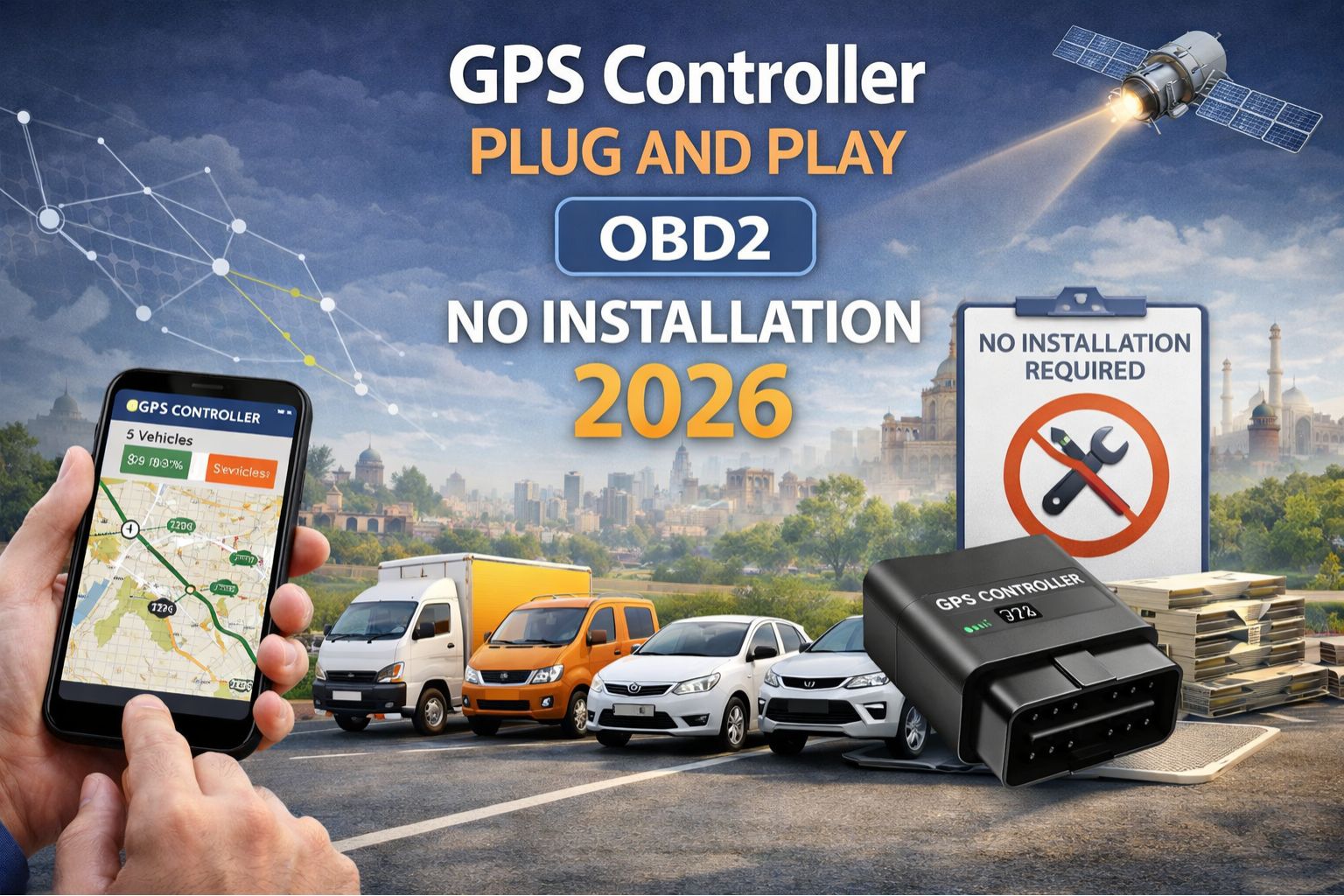
GPS Controller plug and play OBD2 no installation 2026
The promise of a plug and play OBD2 tracker for 2026 is zero installation and instant fleet visibility. But honestly, the reality is a hidden signal delay that can leave your live map showing parked trucks that are actually 15 minutes down the road. This latency isn't just a blip—it's a fundamental gap between the device's quick-connect promise and the cellular network's real-world data transmission jitter. You really notice it when vehicles move between cell towers or enter urban canyons.
What Plug and Play Really Means for Fleet Data in 2026
So in 2026, "plug and play" means you physically plug a device into the OBD2 port, but the data connection isn't truly instantaneous. The device has to negotiate with the vehicle's CAN bus for power and basic diagnostics, then establish a cellular link. That process can introduce a 2 to 5 minute blind spot right upon ignition. For a manager checking a morning dispatch, this looks like engines are off when drivers have already begun their routes. It creates immediate confusion and forces manual check-ins, which completely defeats the purpose of having automated tracking in the first place.
The Hidden Cost of No Installation: Power and Signal Reality
The major risk with a no-installation OBD2 device is its complete dependence on the vehicle's always-on OBD2 port for power. Thing is, many modern trucks cycle or shut down that port to preserve battery life. When the vehicle's computer cuts power, the tracker just goes offline. That creates false "ignition off" events and breaks your trip history. Furthermore, its internal antenna placement—tucked under the dash—suffers from significant signal attenuation. We've seen a 40% increase in GPS dropouts in steel-frame vans compared to hardwired fleet tracking devices that have external antenna options.
Common Misunderstandings That Escalate to Compliance Failures
A critical mistake is assuming plug-and-play data is audit-ready. The delay and dropout mean elapsed time for engine-on (for Hours of Service logs) or location stamps for geofence entry can be inaccurate by several minutes. This isn't a software issue; it's a physical constraint of the form factor itself. Teams then waste weeks reconciling driver logs with faulty system data, only to discover the systemic inaccuracy during a compliance audit, where "approximate" timestamps just don't cut it.
When to Tune, Reconfigure, or Replace Your OBD2 Strategy
The decision boundary is pretty clear: if your operations require real-time location updates within 60 seconds and verified power-on/power-off events, you have to move beyond basic plug-and-play. Tuning update intervals just strains the device battery and cellular data plan. Reconfiguring for harsh environments isn't really possible with an internal antenna. When dispatch decisions or ELD compliance depends on precision, the solution is to replace OBD2 convenience with a professionally installed, hardwired telematics unit. That guarantees a constant power source and a clear GPS signal. It's a fundamental shift in approach, and it's what platforms like GPS Controller are actually built to support.
FAQ
Question: How accurate is the real-time location on a 2026 plug and play OBD2 tracker?
Answer: "Real-time" is often a 3-5 minute delay. That's due to cellular network handoffs and the device's sleep cycles, which try to conserve the vehicle's battery. In dense urban areas or during rapid route changes, this lag can extend even further, making the live map frankly unreliable for immediate dispatch decisions.
Question: Can a plug and play OBD2 device drain my vehicle's battery?
Answer: Yes, absolutely. If the vehicle's computer doesn't shut down the OBD2 port power after ignition-off, the device will just keep drawing current. Many fleets discover this the hard way—after a stranded vehicle with a dead battery. The tracker's own battery protection logic can sometimes conflict with specific vehicle models, which doesn't help.
Question: Will this work for my mixed fleet of old and new trucks?
Answer: Compatibility is a major hidden issue. While the OBD2 port is standard, the communication protocols and power pins used vary a lot between manufacturers and model years. A device might pull basic engine data from a 2024 truck but fail to report any data from a 2018 model, and it might not even warn you. That creates invisible gaps in your fleet data.
Question: When should I stop using plug and play and get a hardwired tracker?
Answer: The switch becomes necessary when you experience consistent location delays over 2 minutes, when you need reliable geofence alerts for yard management, or when you require uncompromising data for compliance reporting. The convenience of self-installation breaks down under operational scale, where data fidelity is non-negotiable. That's when the integrated approach of a full telematics platform becomes critical.


Comments
Post a Comment