GPS Controller OBD II Plug In Self Install No Mechanic Required India 2026
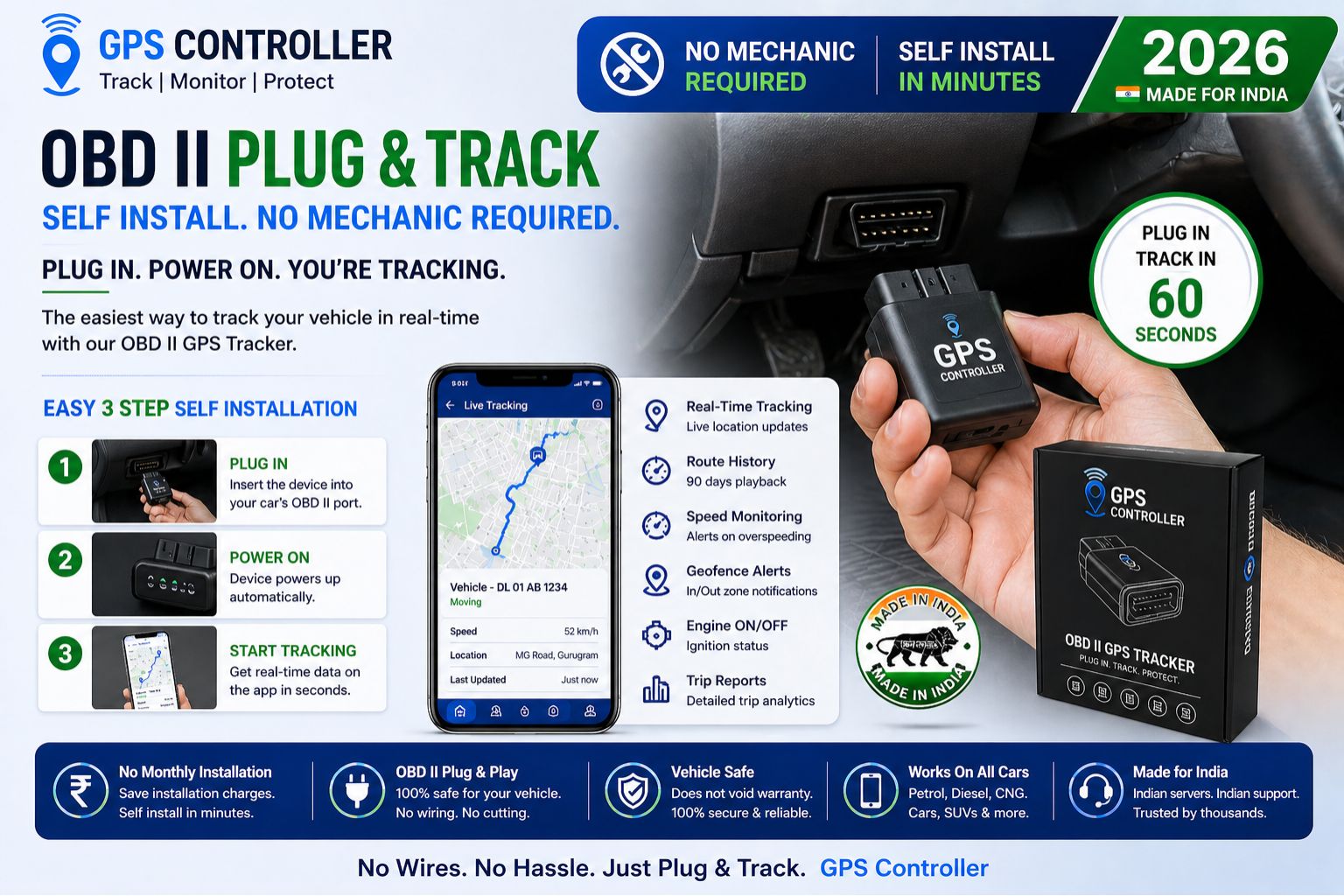
GPS Controller OBD II Plug In Self Install No Mechanic Required India 2026
Self-installing a GPS Controller OBD II plug-in device in India during 2026 removes the need for a mechanic, but operational failures—like delayed engine start detection and signal jitter in tunnels—often show up within the first week of deployment.
How OBD II Plug In Works in Fleet Tracking
An OBD II plug-in device connects directly to a light commercial vehicle's diagnostic port and transmits location data, engine metrics, and fault codes to a fleet management software platform, enabling live tracking of route compliance and idle time without any wiring or professional installation.
Reality of Self Installation at Scale
Fleet operators managing more than ten vehicles in India report that OBD II plug-in fitting takes only about 60 seconds per unit, but network latency combined with signal delay in concrete parking structures means geofence alerts can arrive five to twelve minutes late during peak delivery windows.
Common Mistakes During Self Install That Cause Data Errors
The most frequent error is inserting the device without verifying compatibility with the vehicle's firmware version, which leads to corrupted ignition status readings and compliance logs that fail standard audit checks during regulatory reviews.
Decision Help: When Self Install Stops Working
If route accuracy degrades beyond a three percent error margin or battery voltage reports remain inconsistent after a device firmware tune, the operational boundary for self-managed fixes has probably been exceeded—and a complete device replacement becomes necessary rather than continued troubleshooting.
FAQ
Question: Does the GPS Controller OBD II plug-in work on all Indian commercial vehicles?
Answer: The device works on BS4, BS6, and electric light commercial vehicles sold in India after 2019, but older models with non-standard diagnostic port pin layouts may require an adapter or—in some cases—a return.
Question: Can the OBD II plug-in drain the vehicle battery if left connected for weeks?
Answer: The device draws under 50 milliamps in standby mode and enters deep sleep after 15 minutes of ignition off, which prevents battery drain on vehicles driven at least twice per week.
Question: What happens to tracking data if the OBD II plug-in is removed during vehicle servicing?
Answer: The system logs a disconnection event within two minutes and sends an alert to the fleet manager, but no data is recorded during the removal period—this creates a gap in the compliance logs.
Question: When does self-install of the OBD II device stop being a reliable option for fleet operations?
Answer: Self-install remains reliable until the fleet exceeds 30 devices operating across three different cities, at which point signal interference from local network towers typically requires a gps controller hardware redesign to maintain tracking consistency across urban corridors.


Comments
Post a Comment