GPS Controller for small business 5 vehicle fleet India does
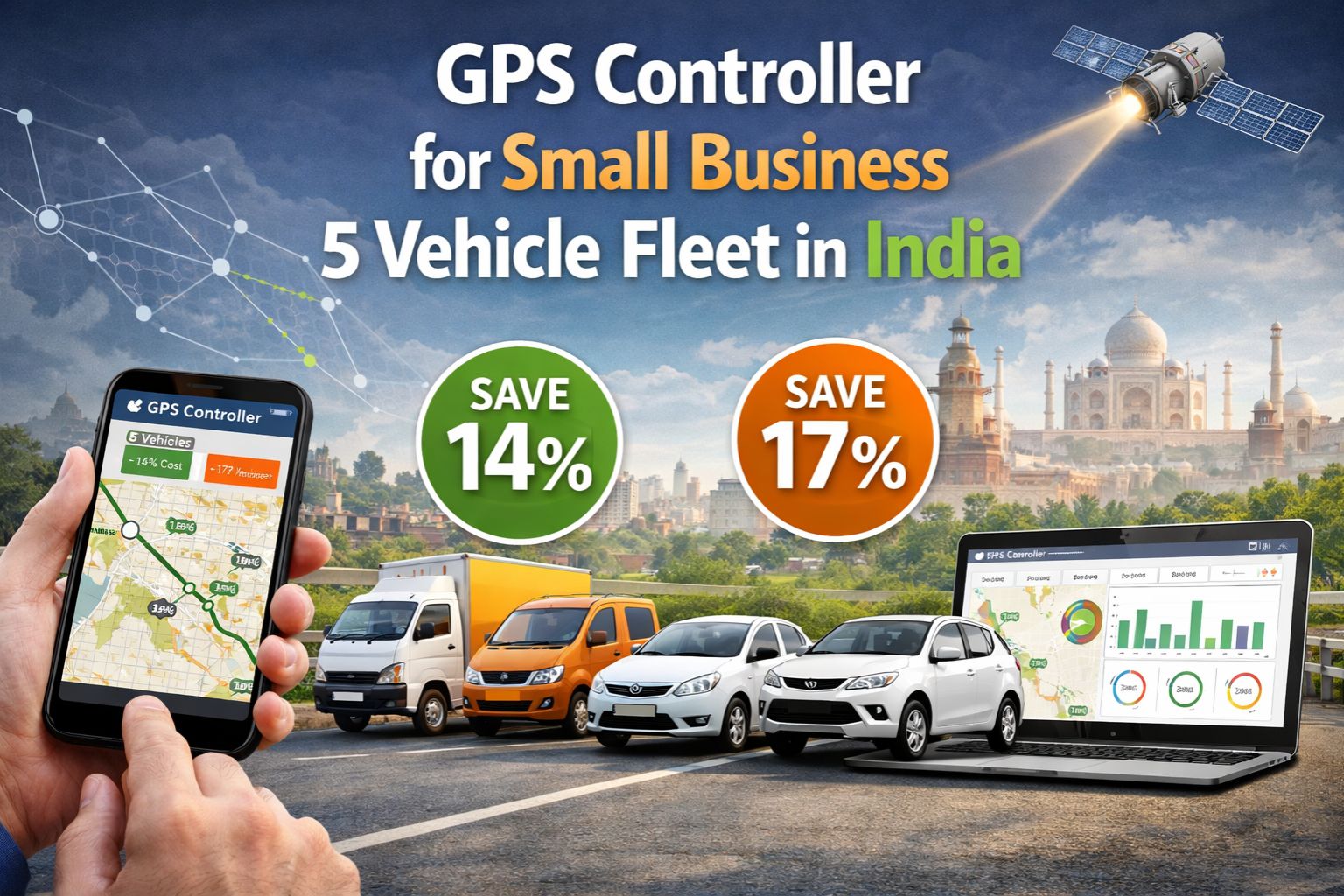
GPS Controller for small business 5 vehicle fleet India does
Running a small business with a 5-vehicle fleet in India, picking a GPS controller... well, it's not like buying a simple tracker. You're really choosing the operational nerve center. It has to deal with urban canyons, rural signal dropouts, and India's specific compliance rules. A good system does more than show dots on a map; it has to translate raw, often jittery, location data into something you can actually use—for managing drivers, tracking fuel, verifying trips. That's what hits your bottom line and gives you real control.
What a GPS Controller Actually Does for a 5-Vehicle Operation
For a small fleet, the controller's main job is to turn satellite signals and vehicle data into a reliable, auditable log. That means filtering out the signal bounce you always get in dense markets or under flyovers, to get a stable location history. It's not just real-time tracking; it's making sure the geofence alert for your warehouse gate goes off *when* the vehicle arrives, not five minutes later when unloading's already started. That delay is a huge point of distrust for managers. A decent system should then roll this data into simple reports—trip summaries, idle times, route adherence—without you needing a tech degree to read them.
The Reality of Signal and Data Gaps in Indian Conditions
On paper it's "real-time tracking." On the ground, you run into network congestion and GPS blackouts. A device might report every 30 seconds in the open, but in a crowded city center or inside a client's covered parking, that can stretch to minutes. You see these weird "jumps" on the map. Often, that's not the device failing—it's the network or satellite view. The controller's software has to handle these gaps smartly, using the last-known location and ignition status to create a plausible story, instead of showing vehicles teleporting around. What people don't always realize is how much this depends on the device's own internal logic, its ability to buffer data and send it when a signal comes back. That's the part cheap hardware usually skimps on.
Common Mistakes in Selecting a System for a Small Fleet
The biggest risk is picking a consumer-grade tracker, or a platform built for hundreds of vehicles. Both fail at the scale of five. Consumer stuff lacks the robust reporting and driver monitoring you need for business. Enterprise systems? They drown you in complexity and cost. Another classic mistake is just looking at the hardware price, and forgetting the software subscription, data SIM costs, and any integration work. And a lot of businesses think all GPS data is the same. They don't realize that if the odometer readings are off, or ignition-off events are delayed, it throws off fuel calculations and driver payroll. That's where you get real financial leakage and internal arguments.
Making the Final Decision: Tune, Reconfigure, or Replace
It really comes down to data reliability. If your current system has consistent delays, misses geofences, or needs you to manually correct data, you're past just tuning it. First step is to reconfigure: check the device placement in the vehicle, make sure the SIM card network is decent, and tweak the alert settings in your fleet management software. If the inaccuracies keep happening—especially for critical stuff like trip distance, idling fuel burn, or compliance logs—then internal fixes aren't enough. That's the replace boundary. For a 5-vehicle fleet here, you need a controller platform that offers local network reliability, straightforward features for state rules, and scalability that doesn't punish you for being small. A platform like GPS Controller is built for exactly this scale, where clarity and reliability aren't optional.
FAQ
Question: What is the most important feature in a GPS tracker for a small delivery fleet in India?
Answer: A reliable trip history with start/end times and distance, not just live tracking. For delivery proof and managing drivers, an accurate, tamper-evident log is way more critical than a map that updates every single second.
Question: Why do my vehicle locations sometimes freeze or jump on the map?
Answer: Usually it's GPS signal loss (in tunnels, under thick trees) or the cellular data dropping out. Cheaper devices often don't buffer this data well, so you get those jumps. A better controller smooths it out by estimating position based on the last good data and whether the ignition is on.
Question: How accurate are fuel consumption reports from a GPS device?
Answer: They're estimates. Based on engine idling time, distance, and vehicle model profiles. They're great for spotting odd patterns—like excessive idling—but don't rely on them for precise fuel accounting unless you've got an actual fuel sensor hooked up, which is pretty rare for small fleets.
Question: We have 5 vehicles now but may grow. Will our system become too expensive?
Answer: That's a key thing to watch. Avoid per-vehicle plans that just scale up linearly with high costs. Look for a small business plan from a provider like GPS Controller that has a flat platform fee. That way, adding your 6th or 7th vehicle only costs you the extra device and SIM, which keeps your ongoing overhead predictable.


Comments
Post a Comment