GPS Controller for delivery van last mile tracking India
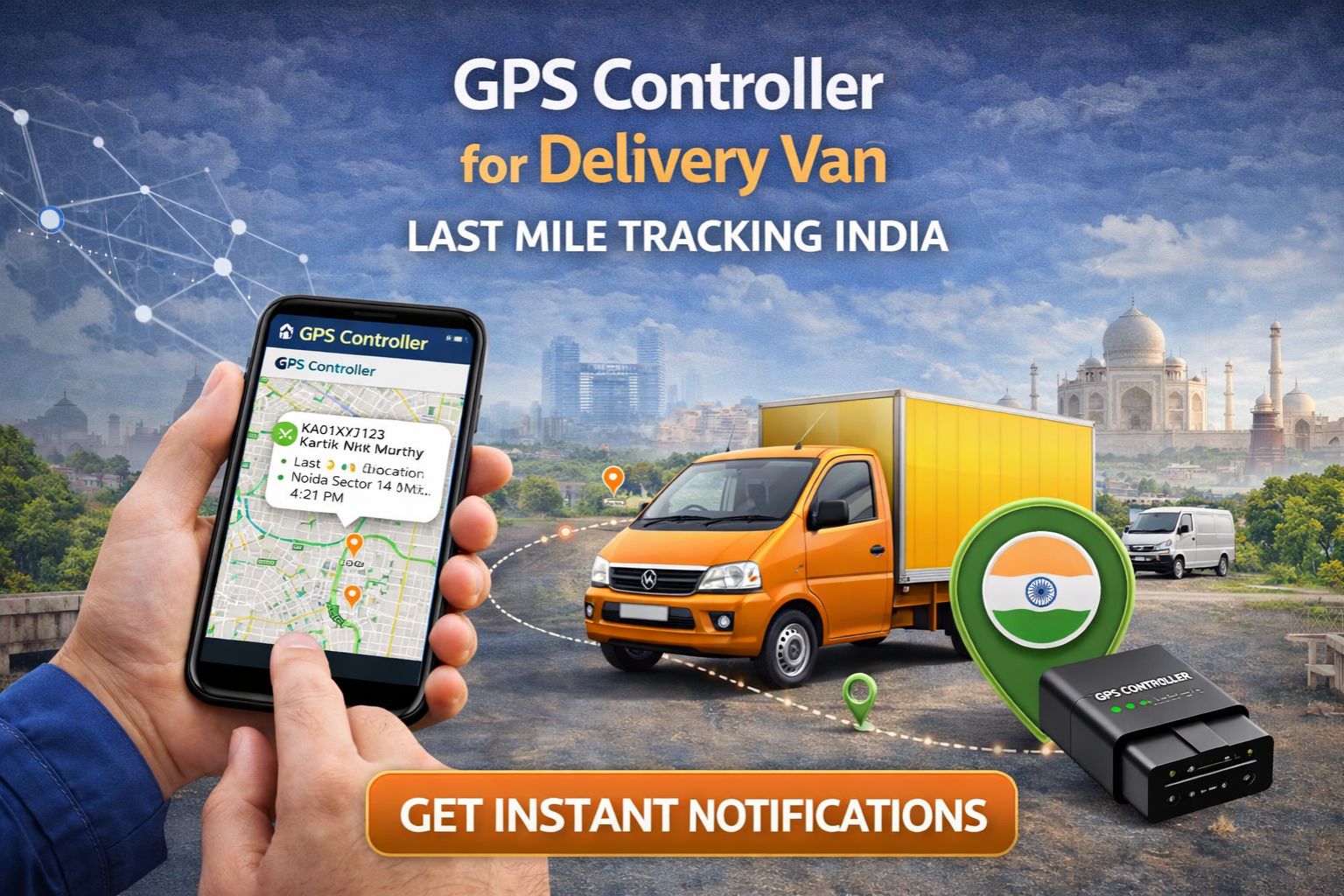
GPS Controller for delivery van last mile tracking India
When your GPS controller for delivery van last mile tracking in India shows a vehicle as stationary for 15 minutes, but the driver is already at the next stop, you're not just seeing a delay—you're losing operational truth. Honestly, that signal gap creates phantom idle time, missed proof-of-delivery windows, and unverifiable route compliance. It directly impacts customer SLA and, almost every time, leads to driver payout disputes.
What Last Mile Signal Loss Really Means
In dense urban corridors like Mumbai or Delhi, last mile tracking failure isn't just about a lost signal icon. It's about the controller failing to report the critical 500-meter approach to a customer's lane. The GPS data arrives, but the timestamp is from when the van was at the previous intersection. That makes geofencing alerts useless for real-time yard management. You end up with dispatchers calling drivers for location updates for places they've already passed.
The Reality at Indian Urban Scale
Under real operational load—say, 50 vans across Bangalore's tech parks during peak e-commerce hours—the problem compounds. Each controller's attempt to re-sync after emerging from an underpass or basement parking creates a data backlog. This jitter shows up in your telematics dashboard as "route deviation" for what was normal last-mile navigation. It triggers false alerts and wastes supervisor time investigating non-issues, while the real problems go completely unseen.
Common Mistake: Assuming It's Just a Weak Signal
The most costly assumption is treating this as a simple GPS reception issue. More often, the real failure is in how the controller's firmware handles assisted-GPS (A-GPS) data or cellular handoff between towers in a crowded market area. Managers can waste weeks upgrading antennas or changing service providers, not realizing the device's internal processing buffer is just too small for India's stop-start last-mile patterns. That causes permanent data loss for those critical final minutes.
Decision Help: Tune, Reconfigure, or Replace
Your decision boundary is pretty clear. If drivers are consistently reaching destinations 8-10 minutes before your system logs arrival, you can try to tune reporting intervals and alert thresholds. If geofence breaches are logged after the van has already left, you probably need to reconfigure the entire location-validation logic. But if you're missing sequential stops entirely, or you can't reconcile delivery proof with tracked location for an audit, then the controller architecture itself is insufficient for Indian last-mile density. At that point, replacement with a purpose-built last-mile tracking device is the only path forward. This is where evaluating a platform like GPS Controller becomes an operational necessity, not just a technical upgrade.
FAQ
Question: Why does my GPS tracker show wrong location for delivery vans in cities?
Answer: Urban canyons and signal multipath reflect GPS signals. That causes the controller to calculate a position from delayed or bounced data, which places the van on a parallel street or its previous location.
Question: How much delay is normal for last mile tracking in India?
Answer: A 30-90 second delay is pretty common, just down to cellular network latency. Delays exceeding 3-5 minutes, though, usually indicate a controller processing bottleneck or chronic signal loss. At that point, the data becomes unusable for real-time dispatch.
Question: Can a GPS controller cause false idle time reports?
Answer: Yes, absolutely. If the controller loses satellite lock but keeps its cellular connection, it may just report the last known location as static. That logs false idle engine hours while the van is actually moving through narrow lanes, which then inflates your fuel consumption reports.
Answer: When over 15% of daily deliveries have a location-time mismatch in your audit logs, or when drivers have to manually confirm arrivals because the automated system fails, the controller is no longer a tracking tool. It becomes a source of operational friction and risk.


Comments
Post a Comment