GPS Controller eUICC SIM compatibility AIS 140 compliant device 2026
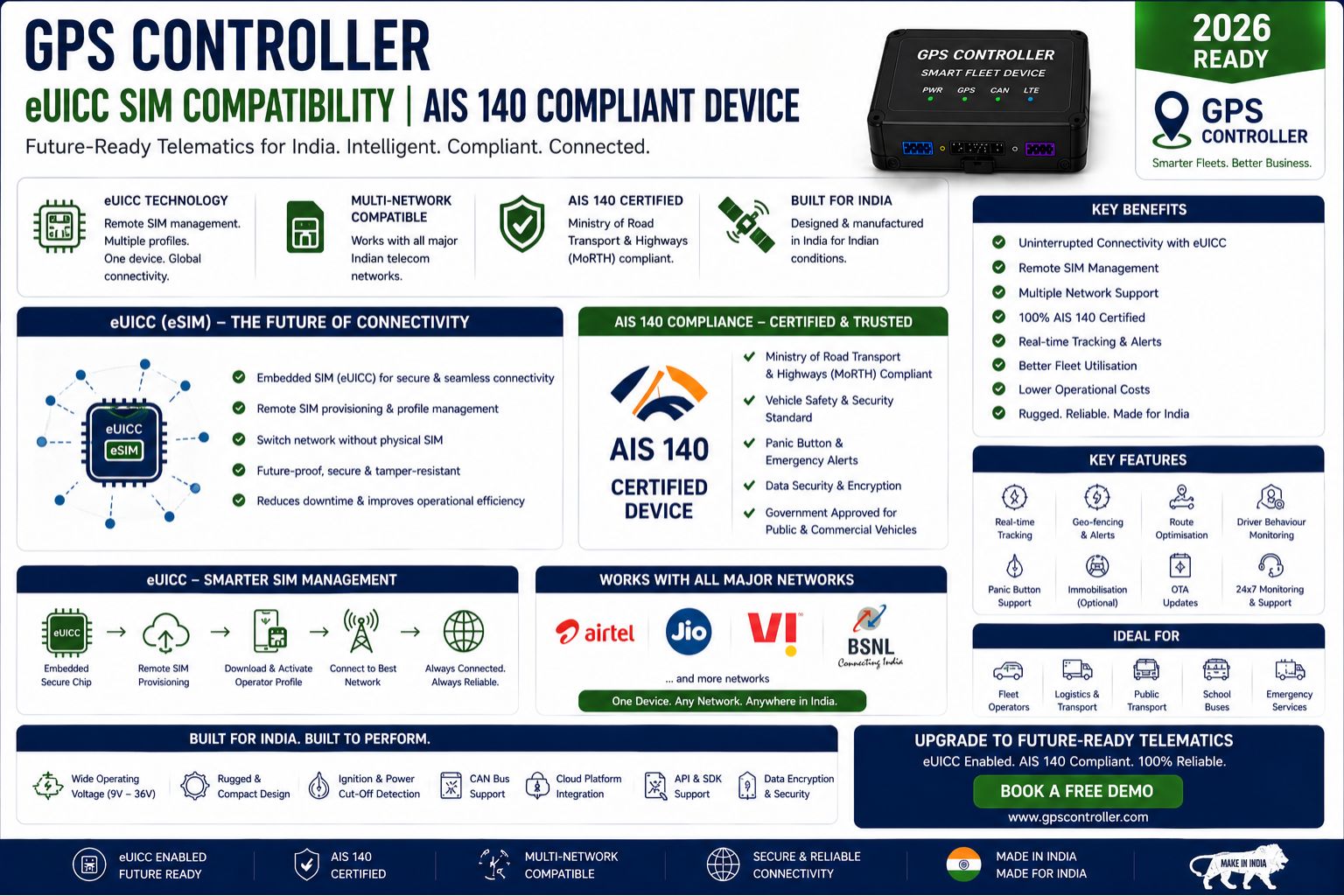
GPS Controller eUICC SIM compatibility AIS 140 compliant device 2026
Integrating a GPS Controller with an eUICC SIM into an AIS 140 compliant device introduces specific signal delay patterns that directly compromise real-time fleet tracking accuracy in 2026. The over-the-air profile switching, while flexible, creates measurable latency spikes during initial network attachment—which can delay the first valid location fix by several seconds after ignition, sometimes more than you'd expect from a standard SIM.
What eUICC SIM compatibility means for AIS 140 fleet tracking
An eUICC SIM allows remote profile changes across mobile networks without physically swapping the card, but this feature requires the AIS 140 compliant device to support a specific SIM toolkit command set. When the vehicle telematics unit fails this handshake—and it does fail more often than vendors admit—the location data delay extends beyond the 10-second AIS 140 reporting window, causing immediate compliance logs to flag missing position reports.
Real operational impact of eUICC SIM and device mismatch
Under real fleet scale, signal jitter caused by incompatible eUICC SIM profiles most frequently appears when a vehicle moves between countries with different carrier profiles stored on the SIM. The device must deregister from one network, download the new profile, and reattach—this process can delay geofence alerts by over 30 seconds, rendering entry and exit notifications useless for security applications. One fleet operator reported idle engine inaccuracies where the device remained attached to a roaming profile hours after the vehicle stopped, causing false fuel burn data in their Fleet Management Software—not a subtle bug.
Common compatibility mistakes causing escalation
The most common misunderstanding—and I see this all the time—is assuming that any eUICC SIM from a major carrier will work with any AIS 140 compliant device because both support the standard. In reality, the SIM supplier must publish the exact applet version and the device firmware must include a matching interpreter—otherwise the device ignores the remote profile switch command entirely and stays locked to a single network. This creates a routing delay where the device cannot fail over to a stronger signal, leading to persistent blind spots in coverage gaps.
Decision help for eUICC SIM and AIS 140 device selection
The decision boundary is clear: you can either reconfigure the device firmware to match the eUICC SIM applet version if the manufacturer supports a field update, or you must replace the SIM with one that uses a simpler profile structure compatible with the device's native interpreter. Internal configuration changes will not fix a mismatch where the device's baseband chipset does not support the required SIM toolkit data download commands—that's a hard limit. A GPS Controller integration test covering all six stored profiles should be performed before scaling deployment beyond ten vehicles, no shortcuts.
FAQ
Question: What is the main problem with using an eUICC SIM in an AIS 140 device?
Answer: The main problem is location data delay caused by the time required for the device to download a new network profile over the air, which can push position reports past the AIS 140 compliance deadline.
Question: How does a profile switch delay affect fleet tracking during cross-border trips?
Answer: During a cross-border trip, the device must deregister from the home network, download the destination carrier's profile, and reattach—this process can delay geofence alerts by 30 seconds or more, causing a gap in fleet tracking visibility.
Question: Can I fix an eUICC SIM compatibility issue by updating the device firmware?
Answer: Yes, if the device manufacturer offers a firmware update that adds an interpreter for the eUICC SIM applet version used by your carrier, a field reconfigure can resolve the mismatch without hardware replacement.
Question: What is the boundary where internal fixes stop working for eUICC SIM issues?
Answer: Internal fixes stop working when the device's baseband chipset lacks the hardware support for the required SIM toolkit data download commands—in this case, the only remaining option is to replace the SIM with one using a simpler profile structure.


Comments
Post a Comment