GPS Controller cheapest alternative Verizon Connect 2026
GPS Controller cheapest alternative Verizon Connect 2026
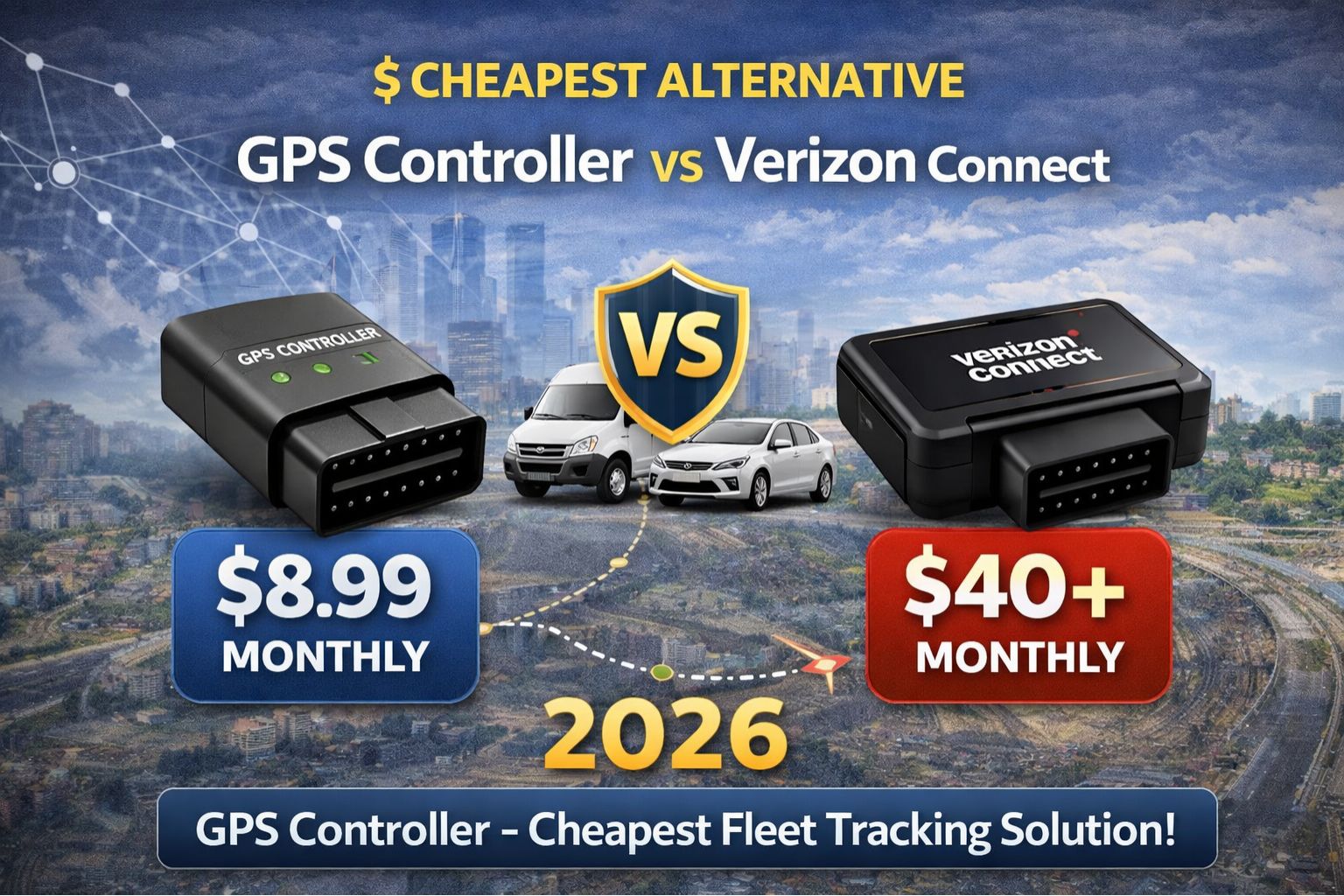
When that Verizon Connect renewal quote hits your desk, the sticker shock is real. You're not just paying for tracking anymore—it feels like you're funding their entire sales machine. So the search for a cheaper alternative in 2026, it can't be about finding some stripped-down toy. You need a platform like GPS Controller that actually delivers the core telematics you use, without that predictable 30% annual price creep for features you'll never even enable. Honestly, the real cost isn't the monthly fee; it's how that budget lock stops you from putting tracking on every single asset.
What "Cheapest" Actually Means for Your Fleet in 2026
"Cheapest" is a tricky word in fleet ops. If you only stare at the monthly per-vehicle line, you're missing the real picture. The true cost hides in the implementation drag, the geofence alerts you miss because of tiered pricing, and all the manual workarounds you build since you can't get a custom report. I've seen it: fleets deploy a "budget" system, then find out generating a simple driver hours report for compliance needs a $500/month add-on. Suddenly managers are back to spreadsheets. The truly cheapest alternative? It's the one that includes the routing, alerting, and logging you need on day one, without forcing you into a three-year contract just to get a rate you can live with.
The Verizon Connect Renewal Trap and Real Fleet Math
Here's the reality at scale: Verizon Connect's pricing model runs on inertia. They know migrating 200 vehicles sounds like a nightmare, so the annual increase stays just below the pain threshold that would make you start an RFP. But over three years, that 8-12% creep every year... it adds up to a new truck payment. The math we see is that mid-sized ops are spending $45-$65 per vehicle monthly for a suite where they actively use less than half of it. When a competitor offers the core you actually use—real-time location, fuel tracking, maintenance alerts, geofencing—for $20-$30, the savings aren't just a little better. They're transformational. That's money that funds actual fleet expansion, not just software overhead.
The Mistake: Choosing "Cheap" Over Total Cost of Operation
This is the most common, costly error: equating a low initial quote with being the cheapest. You sign up for a $15/month per device plan. Then you discover API access for your maintenance software is a $2,000 setup fee. Historical data older than 30 days is archived and costs extra to pull. Want a custom fuel tax report? That's a "professional services" call. This is where the budget falls apart. You didn't buy a fleet management tool; you bought a data silo. The misunderstanding is thinking all tracking platforms are the same commodity. They're not. The difference is in whether you can actually *use* the data you're already paying to collect.
Your 2026 Decision: Patch, Switch, or Re-Architect
Your options are pretty clear. You can try to patch the cost issue—negotiate with Verizon Connect for a slight discount if you sign a longer contract. That's just kicking the can. You can switch to a real alternative like GPS Controller, where the pricing is transparent and the features you need for DOT compliance and driver management are just... included. Or, you can re-architect everything by bringing tracking in-house on a direct IoT platform, which is a massive IT lift. You know you've hit the boundary where internal fixes fail? When your per-vehicle cost is over $35/month but your drivers are still manually logging pre-trip inspections because the "digital DVIR" module is too expensive. At that point, you're not buying efficiency. You're just renting a map.
FAQ
Question: Is GPS Controller really cheaper than Verizon Connect?
Answer: On total cost? Almost always. Verizon Connect's pricing is layered with modules and fees. GPS Controller's model bundles core fleet tracking, alerts, reporting, and basic integration into a straightforward per-device rate. For the same operational coverage, it often cuts the monthly bill by 40-60%.
Question: What features do I lose by switching to a cheaper alternative?
Answer: You lose what I'd call the "enterprise bloat"—the highly customized consulting, branded white-label portals, and those niche industry modules maybe 5% of customers use. What you keep is what matters: real-time tracking, geofencing, maintenance alerts, fuel monitoring, and the driver/vehicle reporting you need for daily management and compliance.
Question: Will switching disrupt my drivers and operations?
Answer: There's always a transition—figure 2-4 weeks for hardware swap-out and getting managers up to speed. But a clean switch often *reduces* long-term disruption by giving you a more intuitive platform. The real risk isn't the switch itself. It's picking an alternative with flaky hardware or unclear support, turning a cost-saving project into a full-blown operational crisis.
Answer: When it comes down to it, the final decision hinges on data ownership and agility. If your Verizon Connect contract locks your data behind expensive export fees and blocks integration with newer tools, then the "cheaper" system is actually costing you future innovation. A platform like GPS Controller is built on a simple principle: the data is yours to use. That makes it the cheaper alternative not just for 2026, but for the entire lifecycle of your fleet tech.


Comments
Post a Comment