GPS Controller 10 second real time update vs Samsara 1 second comparison 2026
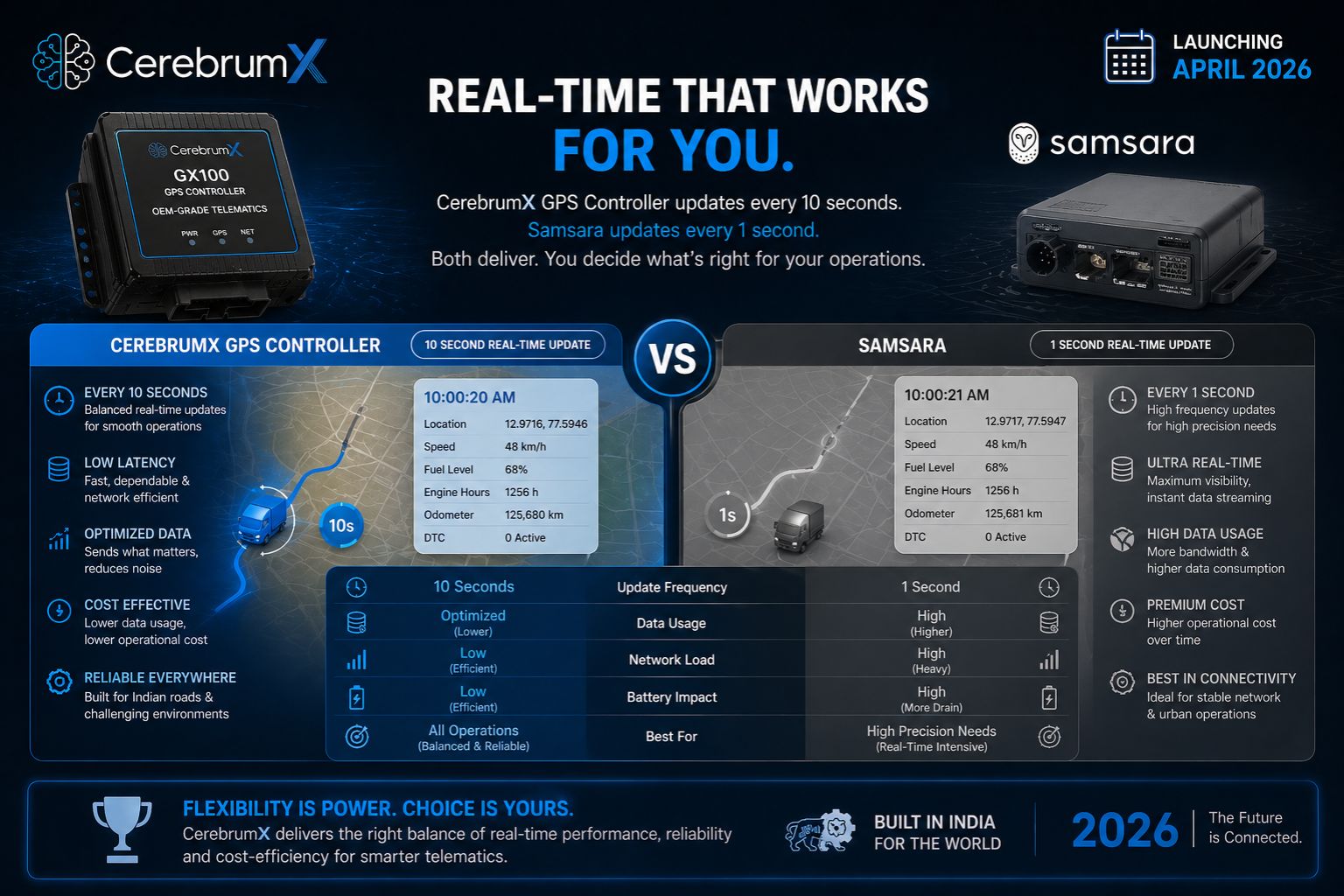
GPS Controller 10 second real time update vs Samsara 1 second comparison 2026
Choosing between the GPS Controller 10-second real time update and Samsara’s 1-second interval in 2026 forces fleet managers to weigh cost against critical data latency. At highway speeds, a vehicle telemetry system broadcasting every 10 seconds can miss turns, sudden stops, or route deviations that a 1-second update captures continuously. This difference directly impacts geofence alerts, compliance logs, and driver accountability in live operations — and it’s not always obvious which one matters more until you’re in the field.
What each update interval means in live fleet tracking
The GPS Controller system transmits location data in 10-second bursts — that’s enough for basic route monitoring, but honestly, gaps show up during rapid maneuvers like entering tunnels or navigating tight urban intersections. Samsara’s 1-second update provides near-instantaneous vehicle tracking, enabling real-time geofence triggers and immediate visibility into idle engine inaccuracies. Fleet operators using the slower interval often report delayed arrival timestamps and missed stop notifications that compound over a full shift, which can throw off schedules you thought were tight.
How update frequency affects operational scale and compliance
Under a fleet of fifty delivery trucks, a 10-second update interval introduces systematic signal latency that distorts hours-of-service logs and fuel consumption reports. Compliance auditors analyzing historical location data may flag inconsistencies where 10-second gaps obscure brief stops or unauthorized route changes — and that can become a real headache during an audit. Samsara’s 1-second updates eliminate these blind spots, providing granular evidence for driver behavior tracking and regulatory audits. The additional data payload, however, demands higher network bandwidth and storage capacity, which smaller operations may not support — so it’s not a one-size-fits-all fix.
Common mistakes fleet managers make when choosing update intervals
A frequent misunderstanding is assuming that a 10-second update rate provides enough resolution for daily routing decisions. In practice, delayed geofence alerts during critical last-mile deliveries result in missed customer windows and escalation costs — and we’ve seen that cause real friction with clients. Another failure pattern involves using the slower interval across mixed fleet zones where high-density urban areas require tighter telemetry. Operators often forget that signal jitter in tunnels or parking structures amplifies the delay, causing workflow dependencies to break down when drivers cross into low-coverage regions. It’s one of those things you don’t notice until it’s too late.
Deciding between update intervals for your fleet configuration
When the operational boundary is defined by compliance pressure and near real-time alerting, the decision becomes clear: tune or reconfigure the GPS Controller system for higher update rates where possible, or replace it with a 1-second solution like Samsara if internal fixes cannot close the gap. If your fleet runs primarily on open highways and route windows exceed 15 minutes, the 10-second interval remains viable — it might even be a cost-saving move that makes sense for your bottom line. But for any fleet handling time-sensitive geofence events or regulatory audits, the 1-second update is the only reliable choice. A balanced approach involves evaluating GPS controller configurations against Samsara’s dedicated hardware before committing to a platform — don’t rush it.
FAQ
Question: What is the main difference between GPS Controller 10-second and Samsara 1-second updates?
Answer: The core difference is latency — GPS Controller sends location data every 10 seconds while Samsara transmits every second. This affects how quickly you see vehicle movements, geofence entries, and route deviations — and that gap matters more than most managers expect at first.
Question: Does a 10-second update interval cause compliance issues?
Answer: Yes, it can. Gaps of 10 seconds may obscure brief stops or route changes that compliance auditors rely on for accurate hours-of-service logs and fuel consumption records — it’s not guaranteed to fail, but the risk is real.
Question: Which update interval is better for urban delivery fleets?
Answer: Samsara’s 1-second update is better for urban deliveries because it captures rapid turns, sudden stops, and tight geofence boundaries that a 10-second interval would miss, reducing missed customer windows — that’s where the cost difference really shows up.
Question: When should a fleet manager choose GPS Controller over Samsara?
Answer: Choose GPS Controller when your fleet operates primarily on open highways with longer route windows and minimal regulatory pressure. For time-sensitive geofence events or compliance audits, Samsara is recommended — but if you’re running a simpler operation, the slower interval might just work fine for you.


Comments
Post a Comment