V2X GPS Integration Software Failure Under Real Traffic Load
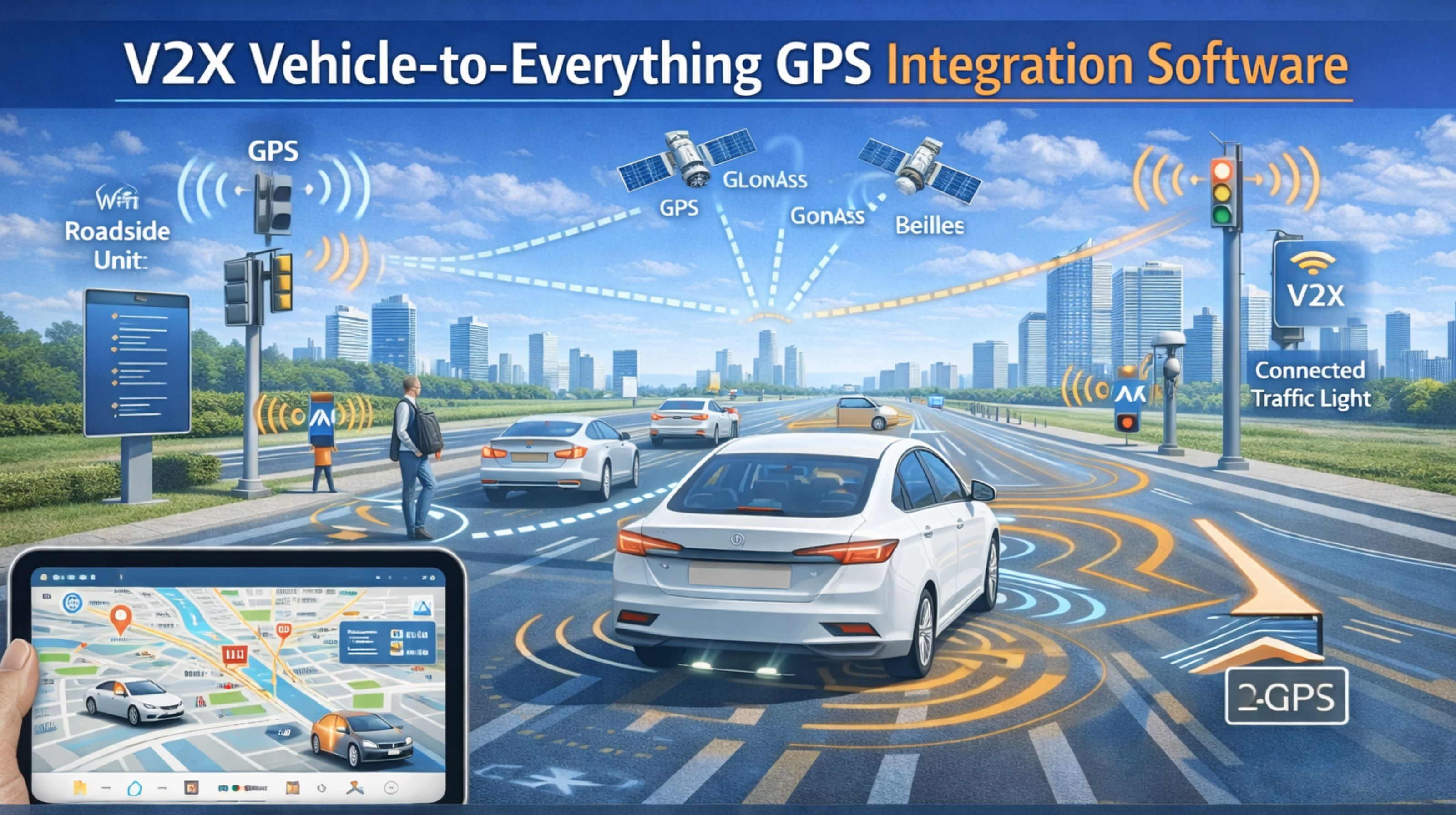
V2X GPS Integration Software Failure Under Real Traffic Load
When V2X vehicle-to-everything software fails to sync with GPS controller data under load, it creates cascading safety and compliance risks that standard diagnostics just don't catch.
What V2X GPS Integration Failure Actually Means
In live fleet tracking, this failure isn't just a data gap—it's the loss of real-time context between your vehicles and infrastructure. What you'll often see is geofence alerts for safety zones triggering minutes late, after a truck has already entered a restricted area, because the V2X message stack was stuck waiting for a GPS position fix that never arrived.
The Reality of V2X at Vehicle Scale
Under real urban traffic with 50+ vehicles, the non-obvious detail is network jitter from C-V2X or DSRC radios. That jitter can delay GPS timestamps by several seconds. The result? Your real-time vehicle tracking overlay shows a vehicle 100 meters behind its actual road position, which completely breaks the predictive collision warnings the entire system is built on.
Common Mistakes and Escalating Risks
A major misunderstanding is blaming the GPS device alone. More often, the failure is in the middleware's inability to handle burst V2X message traffic during peak congestion. This leads teams to waste weeks replacing hardware, while the actual flaw—something like a buffer overflow in the integration layer—goes unfixed. That's how you escalate to audit mismatches where reported safety events don't match the telematics logs at all.
Decision Help: Tune, Redesign, or Replace
The boundary is pretty clear: if position errors exceed 3 seconds during dense V2X chatter, internal tuning has already failed. At that point, you have to decide to either redesign the message queuing architecture or replace the integration software entirely. A functional gps controller platform should handle this load transparently. If yours can't, the core software probably can't be patched into reliability.
FAQ
q What is V2X GPS integration software?
a It's the middleware that merges high-frequency vehicle GPS data with V2X communication signals—from other vehicles, traffic lights, infrastructure—to enable real-time safety and traffic efficiency applications.
q How do I know if my V2X integration is failing?
a Look for delayed hazard warnings, geofence alerts that trigger after the event, and mismatches between your fleet management dashboard and actual vehicle locations, especially during peak traffic periods.
q Can network upgrades fix V2X GPS delays?
a Up to a point. Better cellular or DSRC coverage reduces one variable, but if the software integration layer itself can't prioritize and timestamp incoming GPS data fast enough, network upgrades alone won't resolve the core latency.
q When should we consider replacing the V2X software entirely?
a When latency causes consistent safety protocol violations, when scaling beyond 100 vehicles introduces unmanageable errors, or when audit reports show irreconcilable data gaps that a gps controller system should have closed.


Comments
Post a Comment