two way messaging GPS fleet tracker for remote site workers 2026
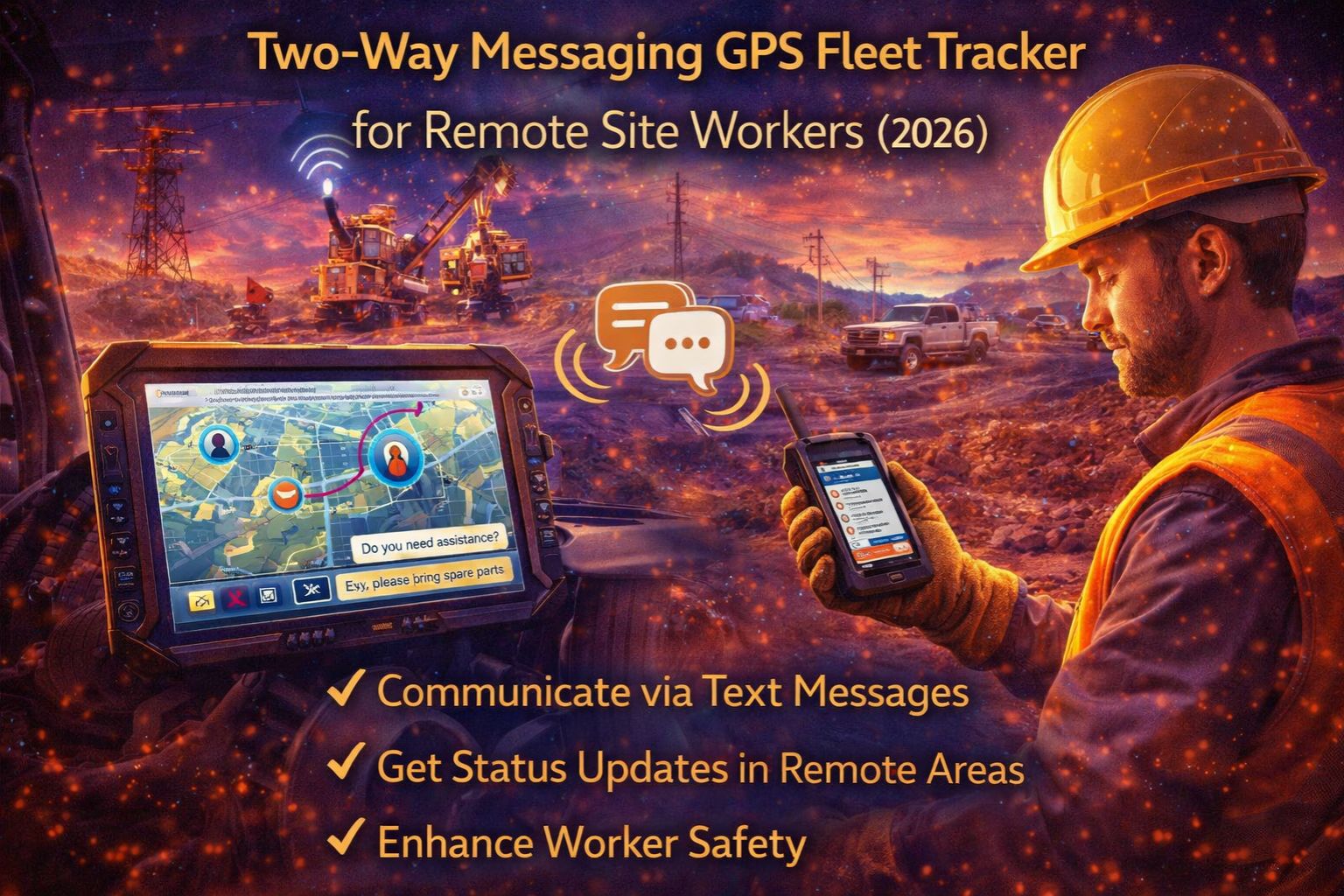
two way messaging GPS fleet tracker for remote site workers 2026
So in 2026, calling a two-way messaging GPS fleet tracker just a communication tool misses the point. It's become the primary lifeline out there. Think sending a safety check-in, or rerouting a delivery because a road just washed out. The sales pitch is all real-time, but what you're actually dealing with are these hidden seconds—the signal latency between a supervisor shouting "stop work" and that device finally buzzing in a worker's hand. That's the gap where a routine instruction can turn into a critical safety event.
What Two-Way Messaging Really Means for Remote Crews
It's more than texting. It's merging location with the message. A foreman can see a tech's exact GPS pin at some remote cell tower and send a warning about a hazard right there. The thing people don't always get is that most of these devices use cellular data, not satellite. So in truly remote spots with no bars, your messages just sit in a silent queue. They can deliver old, now useless instructions hours later, which just confuses everyone on the ground.
The 2026 Reality: Scale Exposes the Latency Gap
When you're managing dozens of teams, the system's refresh rate and delivery confirmations aren't just details—they're everything. You start noticing the "phantom acknowledgment." That's where the fleet management software says a message is "delivered" to the device, but the device itself hasn't actually vibrated or alerted the worker, who might be operating machinery. At scale, you can't possibly follow up on every single message. That's how you get a compliance gap: you assume the instruction was received, but the worker legitimately never saw it.
The Critical Mistake: Treating It Like a Chat App
The biggest risk is assuming it works like your phone's messaging app. It doesn't. Fleet device messaging runs on constrained cellular IoT networks, and that data often gets lower priority. A common trap is thinking "sent" means "read." Reality check: a device in a metal-sided warehouse, or tucked in a glovebox, might have terrible antenna reception. The message might not get retrieved until the next GPS heartbeat, which could be set for 10 minutes later to save battery. That completely defeats the point of a real-time intervention.
Decision Help: Reconfigure or Redesign the Workflow?
So where's your line? You can try to reconfigure things—mess with message priority, set GPS heartbeats to trigger on receipt, force read receipts paired with geofence alerts. But if your crews are always in near-zero-signal areas, and your safety protocol demands verified receipt in under two minutes, then internal tweaks just won't cut it. That's when you need to redesign the workflow. Maybe integrate a secondary satellite messenger, or move critical commands to a dedicated push-to-talk system, using the GPS tracker's messaging just for non-critical logs. Figuring out this boundary is exactly where a platform's integration clarity, like what gps controller offers, really matters.
FAQ
Question: How fast is two-way messaging on a GPS tracker really?
Answer: With perfect 4G/LTE coverage, it can feel instant. But honestly, 30 to 90 seconds of delay is common in rural or congested spots. In true dead zones, messages can be delayed for hours, just sitting in a queue until the device catches a brief signal.
Question: Can I get in trouble if a safety message isn't received?
Answer: Absolutely. Compliance audits are getting sharper on this. If there's an incident and your logs show a message was "sent" but not confirmed as "read" by the device, you could be held liable for not verifying the instruction was actually received.
Question: Will 5G make tracker messaging instant in 2026?
Answer: 5G will help with latency where it exists, but coverage at remote industrial sites will still be patchy. Plus, a lot of fleet devices in the field will still be older 4G/LTE models. Often, the device's own processing power and antenna quality become the real bottleneck, not just the network.
Question: When should I stop relying on tracker messaging for critical alerts?
Answer: The line is pretty clear: when the time it takes to get a delivery confirmation blows past your safe response window. If a "stop work" order needs acknowledgment in under two minutes, but your data shows consistent five-minute delays, you need a backup system. That's an operational design problem—no amount of device tweaking will fix it.


Comments
Post a Comment