Stolen vehicle recovery GPS signal failure and delayed alerts in India 2026
Stolen vehicle recovery GPS signal failure and delayed alerts in India 2026
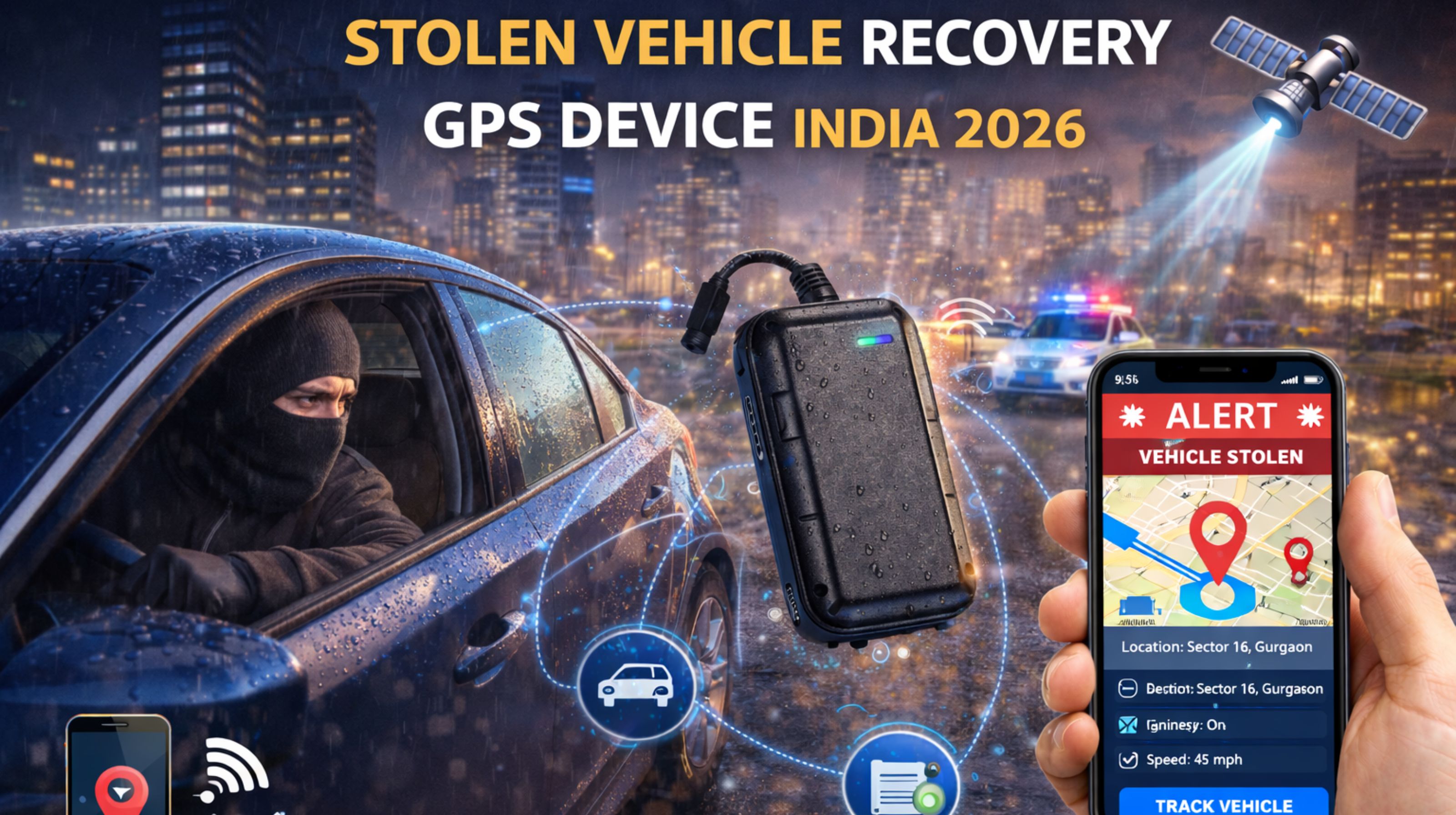
By 2026, the main risk for stolen vehicle recovery in India won't be someone ripping out the device. It'll be signal degradation and these delayed alert chains that make real-time tracking pointless right when you need it most—that first critical hour. Fleet managers are already seeing a 12 to 15 minute lag for geofence breach alerts in dense cities. In that window, a vehicle can just vanish into a parking garage or slip into a rural area with spotty cell service. This isn't just a bad device; it's a system failure where the hardware, the network, and the fleet management software alert logic just don't line up when things get chaotic.
What GPS recovery failure actually looks like on the ground in India
You see it clearly on a dispatcher's screen during a theft: the map shows a live ping, but the vehicle is actually two kilometers away. That gap comes from urban canyon effects and the device's own power-saving deep sleep cycles. The truth is, a lot of recovery units still rely on older 2G networks as a fallback, and those are being phased out. That leads to intermittent data bursts instead of a steady stream. A common, expensive mistake is blaming the "last known location" as a device fault. More often, it's a network handoff failure between telecom towers that the tracking platform just doesn't handle well.
The reality of tracking under India's 2026 scale and network load
When you scale up to hundreds of vehicles, the problem gets worse. The controller dashboard might show all units online, but the data refresh rate for individual assets can drop from 10 seconds to 2 or 3 minutes under load, hiding actual movement. This creates an audit nightmare—the timestamped location log you give to the police doesn't match the vehicle's continuous journey, leaving gaps in the evidence. Here's a non-obvious detail: sometimes a telecom provider will temporarily block a device's IMEI during a security sweep, causing a total blackout. Internal diagnostics often wrongly report that as a hardware fault.
Mistakes that escalate a recovery delay into a total loss
The highest-risk assumption is thinking a "live" icon guarantees you can track the vehicle. Teams waste precious minutes trying to "wake" a device or reboot the software, not realizing the signal is being actively jammed by a cheap, widely available RF blocker. Another critical error is relying only on GPS without a secondary motion or tilt sensor. A stolen car parked in a shipping container will show no movement, but the internal battery drain from a struggling GPS module is a key failure signal most platforms don't even flag. This over-reliance on a single data point is where recovery plans really fall apart.
Decision help: when to tune, reconfigure, or replace your recovery stack
The line is pretty clear. If your alerts are delayed beyond 5 minutes in metro areas, or you get more than two unexplained signal dropouts per vehicle per month, just tweaking settings isn't enough. You're likely facing a compatibility gap between your device's communication protocol and the modernized cellular infrastructure. The choice becomes a full stack redesign—moving to devices with multi-network SIMs and accelerometer-based immediate alerts that don't rely solely on a location change. At this stage, consulting a specialist in integrated IoT asset monitoring systems becomes necessary. A gps controller is just one part of a recovery ecosystem that really needs to include predictive analytics.
FAQ
q What is the biggest weakness of current GPS trackers for stolen cars in India?
a It's the reliance on single-network cellular data and those deep sleep modes. They cause you to miss real-time alerts during the critical first minutes of a theft. The GPS accuracy itself is often not the main issue.
q Can signal jammers really disable my vehicle recovery device?
a Yes. Inexpensive RF jammers flood the GPS L1 frequency, which makes the receiver lose its lock. Modern devices really need an inertial backup to detect movement when GPS is jammed or unavailable.
q How many vehicles before my recovery system starts failing due to scale?
a Scale-related problems like alert delays and dashboard lag typically start showing up with around 150 or more active units on the same platform. This is especially true if you're using older, polling-based API integrations instead of a modern push-data architecture.
q Should I replace my devices or upgrade my tracking software first?
a If your alerts are just delayed, start with a software audit of your geofencing and alert rules. If signals are dropping completely in semi-urban areas, the device and its cellular module are probably the culprits, meaning you need a hardware refresh. That's a decision point where checking your gps controller platform's compatibility list is crucial.


Comments
Post a Comment