School Van GPS Tracker Failure When Parents Can't See Live Location
School Van GPS Tracker Failure When Parents Can't See Live Location
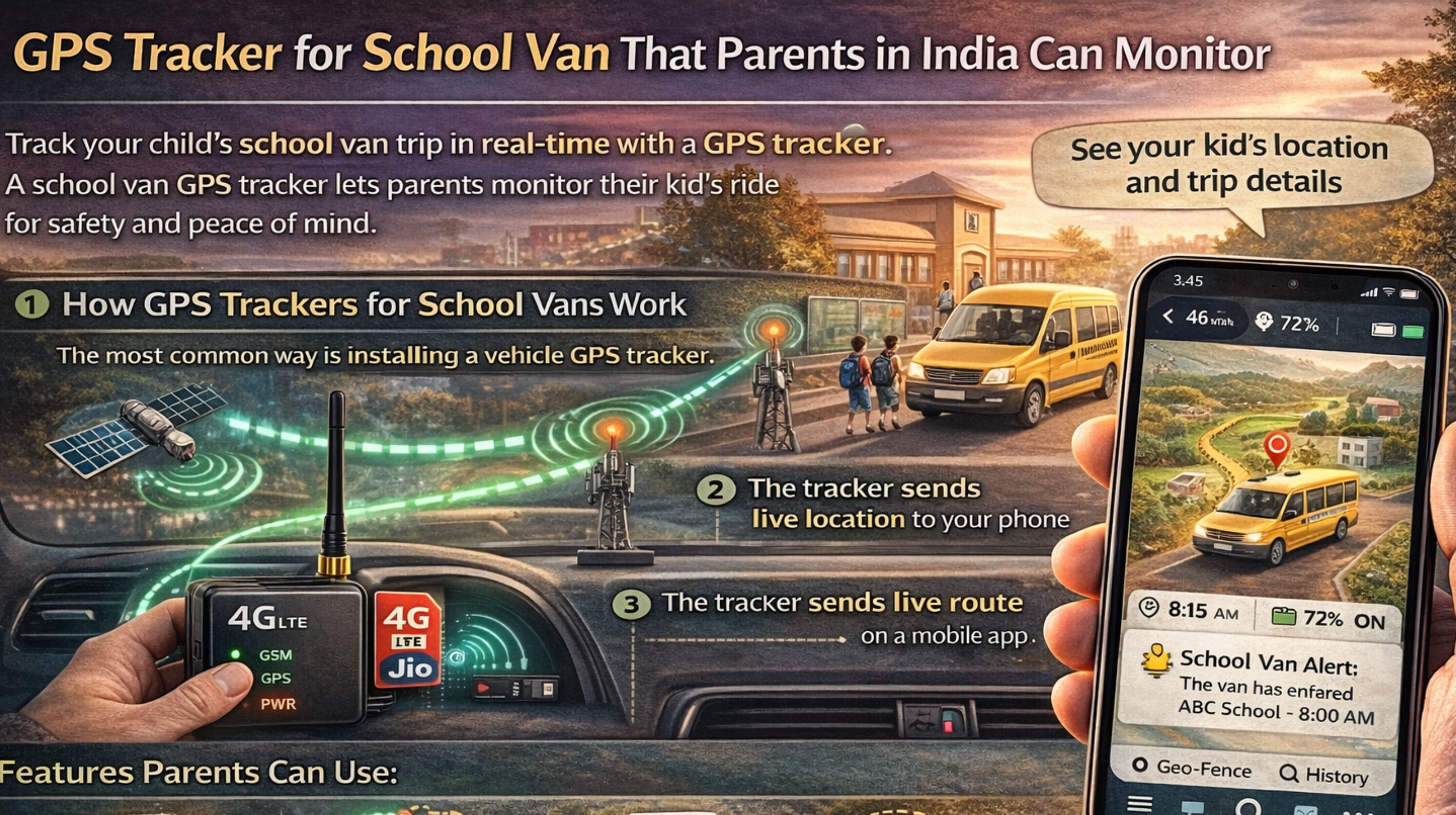
A school van GPS tracker that stops showing live location to parents isn't just a glitch—it's a critical safety and compliance failure that demands immediate diagnosis. In my experience, the problem often isn't the tracker itself, but a breakdown somewhere in the data pipeline from the vehicle to the parent's app. That creates dangerous blind spots right during pickup and drop-off.
What Live Location Failure Means for School Van Tracking
Operationally, "parents can't see the van" means the real-time data stream from the GPS device has been interrupted. Or maybe the application delivering that data to parent dashboards has just failed. This isn't about a few seconds of lag; it's a complete loss of situational awareness. I've seen this happen when a van enters a known cellular dead zone, and the system fails to even buffer the last known location or send a delayed arrival alert. It leaves parents calling the office in a panic, which is exactly what you're trying to avoid.
The Reality Under Real Fleet and Parent Load
There's a common assumption that ten parents checking one van is a low load. That's wrong. Each refresh is a new API call, and during peak dismissal times, this can overwhelm a poorly configured server or even exhaust a cellular data plan. The result? The feed freezes for everyone. The tracker might show a perfect signal in the admin console, but parents are all staring at a stationary icon from 30 minutes ago. This scale issue is a core weakness in a lot of basic real-time vehicle tracking platforms that just weren't built for that kind of concurrent end-user access.
Common Mistakes and Escalating Safety Risks
The biggest mistake is jumping to the conclusion that it's a "bad GPS signal." More often, it's a configuration error—like in geofence alerts or user permission tiers—that accidentally hides live data from parent accounts. Another critical risk is the audit mismatch: the fleet log shows a timely arrival, but five parent apps show the van still en route. That's a liability nightmare waiting to happen. This misunderstanding leads teams to waste days replacing hardware, when the real fix is actually in the software's notification routing.
Decision Help: When to Tune, Reconfigure, or Replace
Here's a simple rule of thumb: if location data is visible in the fleet manager portal but not on parent apps, the problem is almost certainly in the data sharing or API layer. That's a software reconfiguration task. However, if the device itself is reporting sporadically or not at all—even to admins—you've hit a hardware or network boundary. Persistent failures across multiple vehicles, especially ones that start impacting geofencing alerts and compliance reporting, signal that the entire platform might be insufficient. At that point, internal fixes stop working. You need a system designed for dual-audience reliability, where the architecture ensures data integrity for both operators and parents.
FAQ
q Why does my school van tracker show location for me but not for parents?
a This is almost always a permissions or data-sharing setting in the software, not a GPS failure. Parent logins are often on a separate, delayed data feed that can fail independently of the admin map.
q How long of a delay is normal before it becomes a safety risk?
a A 30-60 second delay is typical. A consistent 2+ minute delay or a frozen location during active transit is a high-risk failure. That's starting to violate the duty of care and needs immediate intervention.
q Can too many parents checking the app crash the tracker?
a Yes, it can. If the system isn't architected for concurrent user access, simultaneous logins during dismissal can throttle the data connection. That causes live views to fail for all users—which is a critical scalability flaw.
q When should we stop trying to fix the current tracker and replace it?
a When failures start affecting compliance reporting, cause repeated parent alarm, and persist after you've verified cellular coverage and software settings. At that boundary, the platform itself is the risk. A replacement focused on reliable dual-end-user access becomes necessary.


Comments
Post a Comment