OBD2 CANbus Engine Diagnostics Failure in GPS Vehicle Tracking
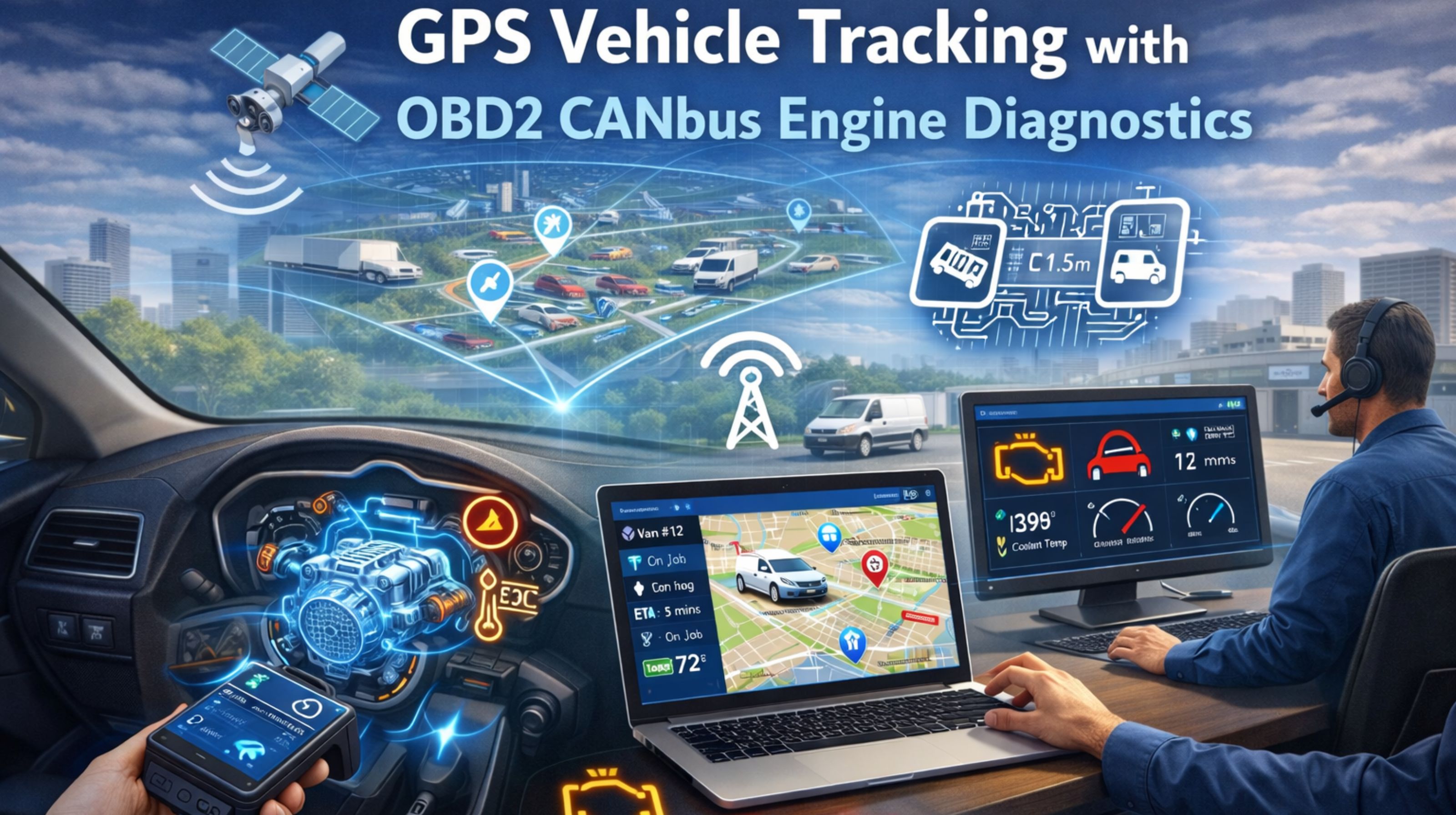
OBD2 CANbus Engine Diagnostics Failure in GPS Vehicle Tracking
When the OBD2 CANbus connection fails in a GPS vehicle tracking system, you lose real-time insight into engine health, fuel consumption, and fault codes. It turns what should be a diagnostic tool into a real blind spot for fleet maintenance and compliance.
What OBD2 CANbus Failure Means for Live Fleet Tracking
In practice, a failed OBD2 link means your fuel performance monitoring dashboard is showing stale or just estimated data. Meanwhile, actual engine misfires or excessive idling go completely unreported. It creates this weird disconnect between the telematics map on your screen and the mechanical reality of each truck.
Reality Check Under Real Vehicle Scale and Load
At scale, intermittent CANbus signal loss—which is pretty common with mixed vehicle ages or aftermarket wiring—causes data gaps that corrupt your whole fleet-wide reporting. You might see one truck reporting perfect MPG while its physical DTCs are stacking up under the hood. That mismatch often only becomes obvious during a surprise DOT audit, or worse, a major breakdown on the road.
Common Failure Patterns and Wrong Assumptions
A major misunderstanding here is just blaming the GPS device itself. Often, the real issue is the CANbus network priority or a vehicle's gateway blocking non-OEM requests. Fleets can waste a lot of time swapping out trackers when the actual failure is protocol incompatibility. Or, it's something simple like a powered-down OBD2 port during ignition-off periods, which means you're missing all that critical idle-time data.
Decision Help: Fix the Link or Redesign the Feed
The clear boundary here is protocol depth versus stability. Sure, you can try to tune polling rates and reconfigure PIDs. But if you need manufacturer-specific parameters—like DEF levels or turbo pressure—and you're facing constant signal jitter, those internal fixes just aren't enough. This is really where integrating a dedicated IoT asset monitoring platform with deep CANbus expertise becomes necessary. A generic gps controller often just can't negotiate with these proprietary vehicle networks.
FAQ
q: Why is my GPS tracker not reading OBD2 engine data?
a: The most common cause is usually one of three things: a vehicle gateway security block, an incompatible CANbus protocol version, or a physical OBD2 port that loses power when the ignition is off. Any of those will stop the data flow.
q: Can bad OBD2 data cause compliance reporting errors?
a: Yes, absolutely. Inaccurate engine hour or idle-time data from a flaky CANbus connection will create mismatches in your ELD logs or maintenance records. That's exactly the kind of thing that raises red flags during a compliance audit.
q: How does fleet size affect OBD2 diagnostic reliability?
a: Scale just multiplies the failure points. Managing consistent OBD2 data across a mixed fleet requires standardized device profiles and central protocol management, which tends to overload basic tracking software pretty quickly.
q: When should I replace my GPS tracker versus fixing the OBD2 setup?
a: If you've already verified the wiring and port power, but you're still missing manufacturer-specific parameters—things like aftertreatment data—then the tracker's CANbus stack is likely insufficient. At that point, upgrading to a system actually built for deep vehicle data integration is the logical next step.


Comments
Post a Comment