Multi-Constellation GNSS Tracker Failure in Indian SME Fleet Operations
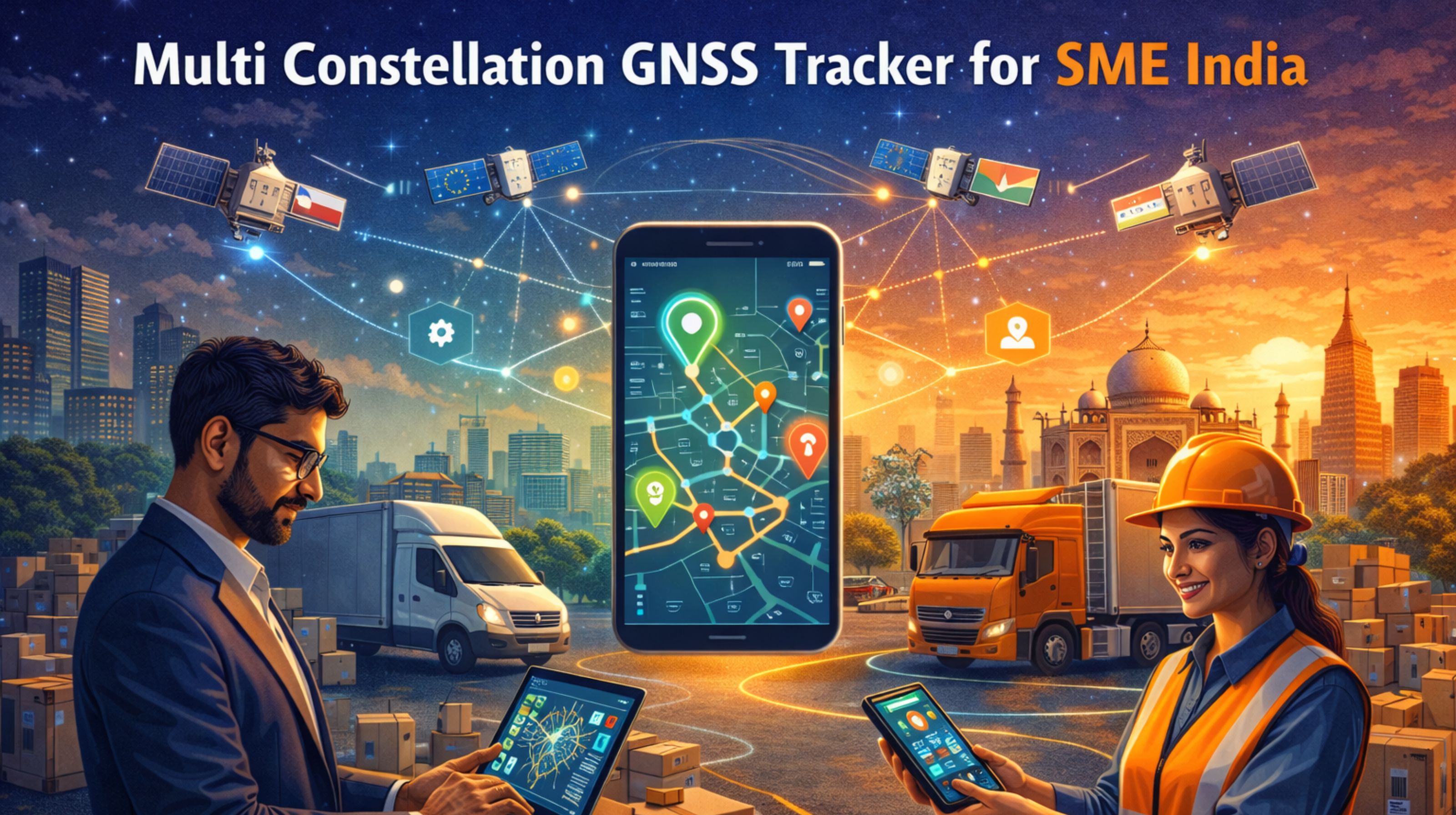
Multi-Constellation GNSS Tracker Failure in Indian SME Fleet Operations
If you're an SME fleet manager in India, you've probably heard the promise of unbreakable signal coverage from a multi-constellation GNSS tracker. But the reality on the ground—especially in those dense urban canyons of Mumbai or Delhi—tells a different story. You'll watch the device status flip to "GPS OK" in your software, while the actual vehicle location on the map jitters or just freezes. It creates a dangerous blind spot right when you need it least, during critical deliveries. And honestly, it's not just a bad signal. It feels more like a fundamental data integrity failure that then cascades into geofence alert delays and idle time reports you can't really trust.
The Promise vs. The Indian Urban Reality
The marketing material is clear: GLONASS, Galileo, or BeiDou backup ensures a fix anywhere. On the road, though, the tracker's chipset ends up constantly hunting between satellite constellations. That consumes more power and can even cause thermal throttling in an unventilated vehicle cabin. In a narrow lane flanked by high-rises, you might get a rapid series of low-quality fixes from different systems. The software then averages them into a location that's... well, just wrong. We've seen reports where a truck appears to jump across a city block, which triggers false speeding alerts and makes route replay during incident audits completely confusing.
Common Missteps That Amplify the Risk
I think the biggest mistake is assuming more satellites automatically mean better accuracy. It leads to complacency. Managers stop questioning the location data, just trusting that "multi-GNSS" badge. In practice, poor antenna placement—like stuck under a metallic dashboard or right next to a DVR—cripples all constellations equally. Another critical error? Not configuring the tracker's reporting logic for when the signal actually drops. Many units default to sending the last known fix, which can make a stationary vehicle look active for hours. That skews fuel performance monitoring and opens up a major compliance gap for state transport logs.
Decision Boundary: Reconfigure, Shield, or Replace
Your choice really hinges on how consistent the failure zones are. If the losses are predictable—like specific market areas or known tunnels—you might get by reconfiguring reporting intervals and setting up secondary Bluetooth beacon validation for those geofences. But if the entire fleet shows chronic, random jitter, the issue is probably hardware-grade: an underperforming antenna or a chipset that just can't handle multi-constellation processing in our local RF noise. At that point, internal fixes tend to fail. You likely need a device designed for the specific multi-path interference profile of Indian infrastructure. Something where the platform, like a gps controller, can evaluate the raw signal data itself, not just the processed coordinates it gets handed.
FAQ
q Does multi-constellation GNSS work during Indian monsoons?
a Heavy cloud cover is actually less of an issue. The real problem is signal reflection off wet surfaces, which causes multi-path errors. Ironically, having more satellites can sometimes make this worse, scattering the calculated position.
q Why does my tracker show good signal strength but wrong location?
a Signal strength (SNR) measures power, not quality. A strong reflected signal from a building gives a high SNR but delivers a false timestamp. That leads to a positional drift which ends up corrupting your analytics reports.
q At what fleet size do these inaccuracies become unmanageable?
a Once you get beyond 25-30 vehicles, manual data reconciliation is pretty much impossible. The systemic error creates a compounding effect on scheduling and compliance, which usually forces you toward a hardware-level solution.
q How do I know if I need new hardware or just a software update?
a Check your diagnostic logs. If they show frequent "constellation switch" events that coincide with location spikes, the firmware might be tunable. But if the logs show consistent low precision—like an HDOP consistently above 2.5 even with 15+ satellites—then the chipset or antenna is probably the limit.


Comments
Post a Comment