multi constellation GNSS tracker that works when GPS is jammed
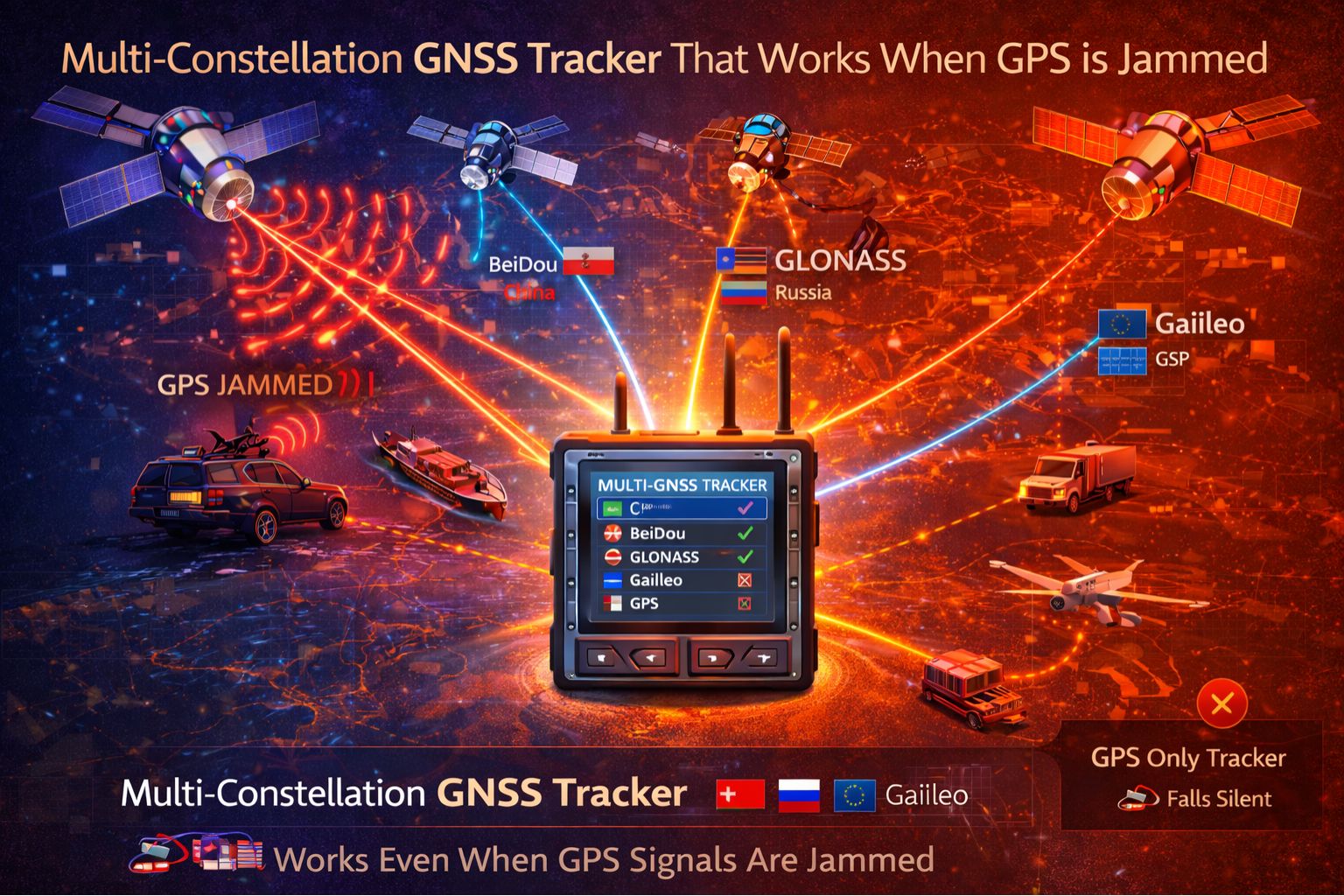
multi constellation GNSS tracker that works when GPS is jammed
When GPS is actively jammed, a standard tracker goes blind. Just like that—it creates a compliance and safety blackout. A multi-constellation GNSS tracker is designed to work by pulling signals from GPS, Russia's GLONASS, Europe's Galileo, and China's BeiDou, all at once. The thing is, jamming devices hardly ever block all four constellations simultaneously. That gives your fleet a critical fallback signal. This isn't really about getting better accuracy; it's about keeping a basic location fix when the primary system is under attack. And that's a scenario that's becoming more common, especially near ports, borders, and sensitive infrastructure.
What Multi-Constellation Really Means for Your Fleet
For fleet managers, "multi-constellation" means your asset has more than one way home when the usual path is blocked. It's the difference between seeing a truck stuck in a known jamming zone on your real-time vehicle tracking map and watching its icon just freeze and then vanish entirely. What people often miss is that each constellation orbits differently. GLONASS satellites, for example, have a higher orbital inclination, which can actually give you better coverage at high latitudes where GPS alone might be weak or even spoofed. That redundancy is your first real layer of defense against someone—or something—denying your signal, whether it's on purpose or just an accident.
The Real-World Gap When Jamming Starts
When the pressure's on, the gap shows up in your workflow. A slightly delayed geofence alert because your tracker briefly fell back to GLONASS? Maybe you can live with that. But a complete loss of location data for a hazmat truck entering a regulated zone? That's a reportable compliance event, full stop. A common misunderstanding is thinking all jamming uses sophisticated military gear. Often, it's just a $30 personal privacy device in the car next to you, creating these unpredictable local dead zones. Your fuel and performance monitoring will show the engine running, but without a location trail, you can't prove route adherence or idle time. Suddenly, your operational data turns into a liability.
Where Your Current Tracker Fails Under Jamming
The critical failure happens when you assume your single-constellation GPS tracker will "just reconnect" after the jamming stops. In reality, the tracker can enter this prolonged reacquisition state, sometimes taking 15, even 20 minutes to get a fresh lock—all while the vehicle is moving. That creates a massive blind spot in the trip log. The wrong assumption here is that jamming only causes a location "blip." It often corrupts the timestamp and sequence of the data packets it sends, too. That means your custom reports and analytics can show impossible jumps or duplicate records, which then forces a manual audit and correction. So much for automation.
Deciding Between an Upgrade and a Replacement
Your decision line is pretty clear: if your fleet operates in or near areas where jamming is a known risk—ports, border regions, major event venues, sensitive industrial sites—you need the redundancy of a multi-constellation GNSS device. The choice is whether to upgrade specific high-risk assets or replace the entire fleet's tracking hardware. The internal fixes stop working when the jamming is broad-spectrum, or when your compliance rules absolutely demand uninterrupted, verifiable location logs. At that point, trying to patch things with signal boosters or just hoping for the best isn't enough. You need hardware that's actually designed for signal resilience.
FAQ
Question: How does a multi-constellation GNSS tracker work when GPS is blocked?
Answer: It automatically—and pretty seamlessly—seeks signals from other global satellite networks like GLONASS, Galileo, or BeiDou. If one constellation is jammed, the device uses the others to compute and maintain a position fix, which prevents a total blackout.
Question: Is GPS jamming a real threat to my fleet operations?
Answer: Absolutely. It's not just in military zones. Cheap personal jammers are getting more common, used by drivers trying to hide their location. They create these unexpected dead zones on highways and near logistics hubs that completely disrupt tracking and geofence alerts.
Question: Will switching to a multi-constellation tracker affect my existing software?
Answer: No, it shouldn't. A modern multi-GNSS device transmits standard NMEA location data over cellular networks. It should plug right into your existing fleet management software without you having to change platforms.
Answer: The decision point is when the cost of a single compliance failure or a lost asset exceeds the cost of the new hardware. If your routes are predictable and low-risk, maybe just monitor for now. But if you're expanding into new regions or you're already seeing unexplained tracking gaps, then upgrading to a resilient device like a gps controller with multi-GNSS becomes a necessary operational hedge.


Comments
Post a Comment