Iranian GPS Jamming Causes Fleet Navigation Failures and Supply Chain Delays
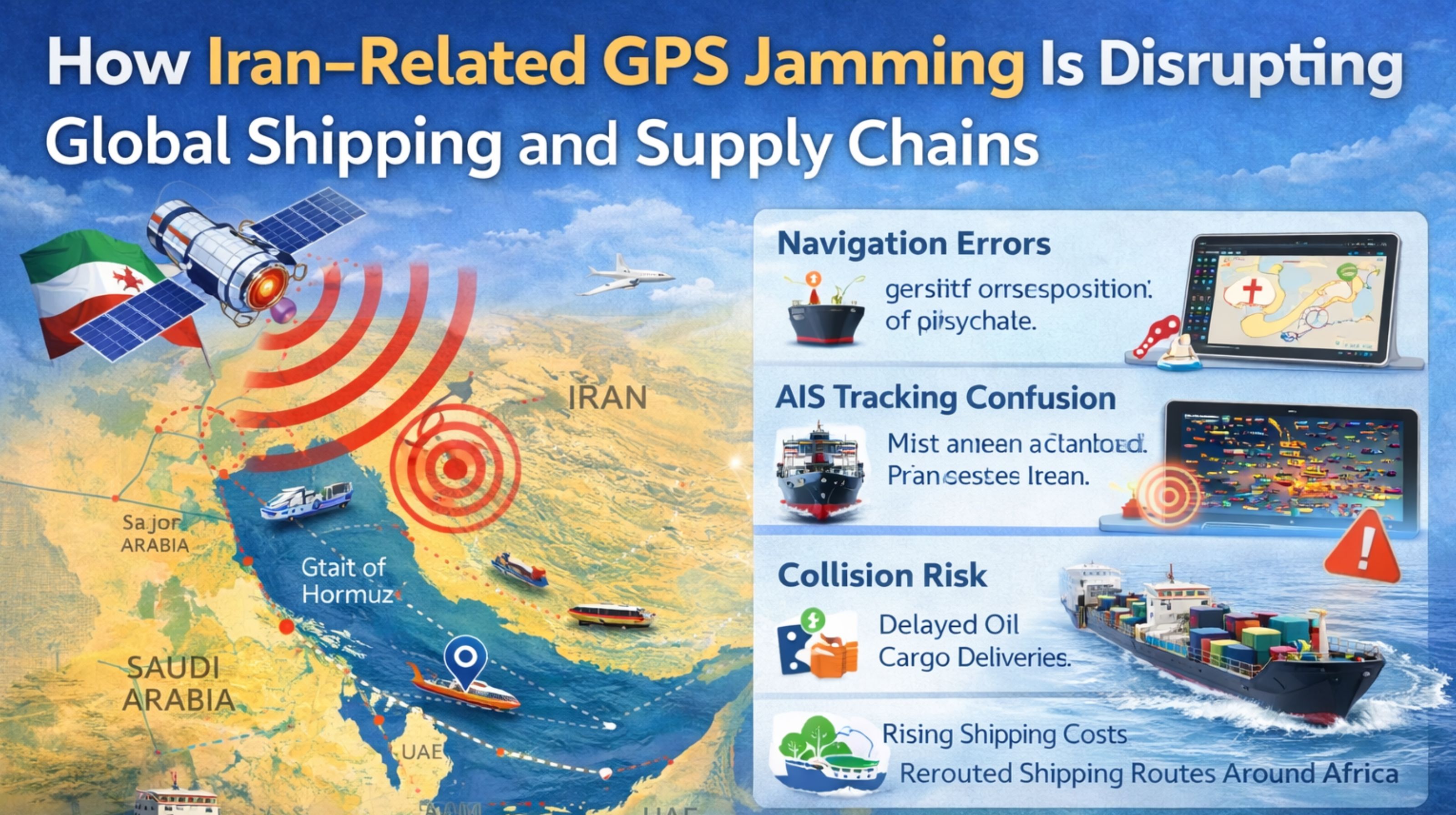
Iranian GPS Jamming Causes Fleet Navigation Failures and Supply Chain Delays
Fleet managers are dealing with sudden, unexplained navigation errors and delayed geofence alerts for vessels in key corridors. It's a direct symptom of state-sponsored GPS jamming. This isn't just a lost signal; it's a targeted disruption that kills real-time tracking, forcing ships onto fallback systems and creating cascading port delays. The core failure happens when a GPS controller gets spoofed location data, making a vehicle look miles off course, which then corrupts every piece of logistics data downstream.
What GPS Jamming Means for Live Fleet Tracking
Operationally, jamming doesn't just show "no signal." It often shows a plausible but completely false location—that's spoofing. A ship's tracker might show it stationary in a safe lane while it's actually drifting, or a truck's real-time vehicle tracking dashboard might plot a route miles from reality. Usually, the first warning is a mismatch: engine data says moving, but the GPS coordinate is frozen. That triggers a low-priority "stale data" alert that teams often miss until a schedule is already broken.
Reality Check Under Real Maritime and Trucking Scale
At scale, this gets messy. One spoofed container ship can delay a whole port's unloading sequence. But when dozens of assets get intermittent jamming, the entire dispatch system becomes unreliable. Controllers start averaging bad data, creating "ghost" traffic jams or showing convoys in the wrong order. The less obvious problem is the network time protocol sync failure. When GPS timing is jammed, it can desynchronize timestamps on sensor data across a whole fleet, which makes compliance audit trails basically useless.
Common Mistakes and Escalating Supply Chain Risks
The big mistake is treating this like an "outage" you just wait out. Jamming is an active attack; it needs active countermeasures. Teams that escalate the wrong fix—like just rebooting tracking devices or increasing ping rates—only drain batteries and create more corrupted data. The real risk pattern is a growing compliance gap. Without verified location logs, proving chain of custody or adherence to sanctioned trade routes becomes impossible. That's what invites real regulatory scrutiny.
Decision Help: When to Tune, Redesign, or Replace Systems
The boundary here is pretty clear: if your current system only uses standard GPS/GNSS, internal tuning won't cut it. You have to decide to augment with secondary verification. This is a redesign moment, not a repair job. Implementing a multi-source positioning strategy—cross-referencing GPS with inertial data or terrestrial signals—is now a baseline requirement for resilience. A modern gps controller platform should be able to handle this sensor fusion without forcing a full rip-and-replace of your existing hardware.
FAQ
q How can I tell if my fleet is being jammed versus a normal GPS loss?
a Look for impossible data. Things like sudden 100+ km location jumps, a consistent drift in one direction, or multiple assets in the same area all reporting the identical—but wrong—stationary coordinates. Normal loss shows "no fix." Jamming often shows a confident, wrong fix.
q What's the immediate operational risk if we ignore intermittent jamming?
a The biggest risk is navigational safety, for maritime and autonomous road ops. After that, it's irreversible schedule collapse. Delayed geofence alerts mean a ship could enter a restricted zone or a truck miss a critical cross-dock window. The delays cascade for days.
q Can this affect my fuel and idle time reporting accuracy?
a Absolutely. If the GPS location is spoofed to show movement while the engine is off, your fuel performance monitoring will log false "in route" miles and miscalculate idle times. That corrupts the whole dataset you use for efficiency reports and cost allocation.
q When is it time to replace our tracking system versus upgrading it?
a Replacement is needed if your platform can't integrate multi-source positioning data or lacks the API framework to handle alternative location feeds. If the core software is closed and only uses a single source, then just upgrading the devices won't solve the jamming vulnerability. You'd need a full system redesign for real resilience.


Comments
Post a Comment