HVAC Fleet Tracking Software Failing Under 2026 Service Demands
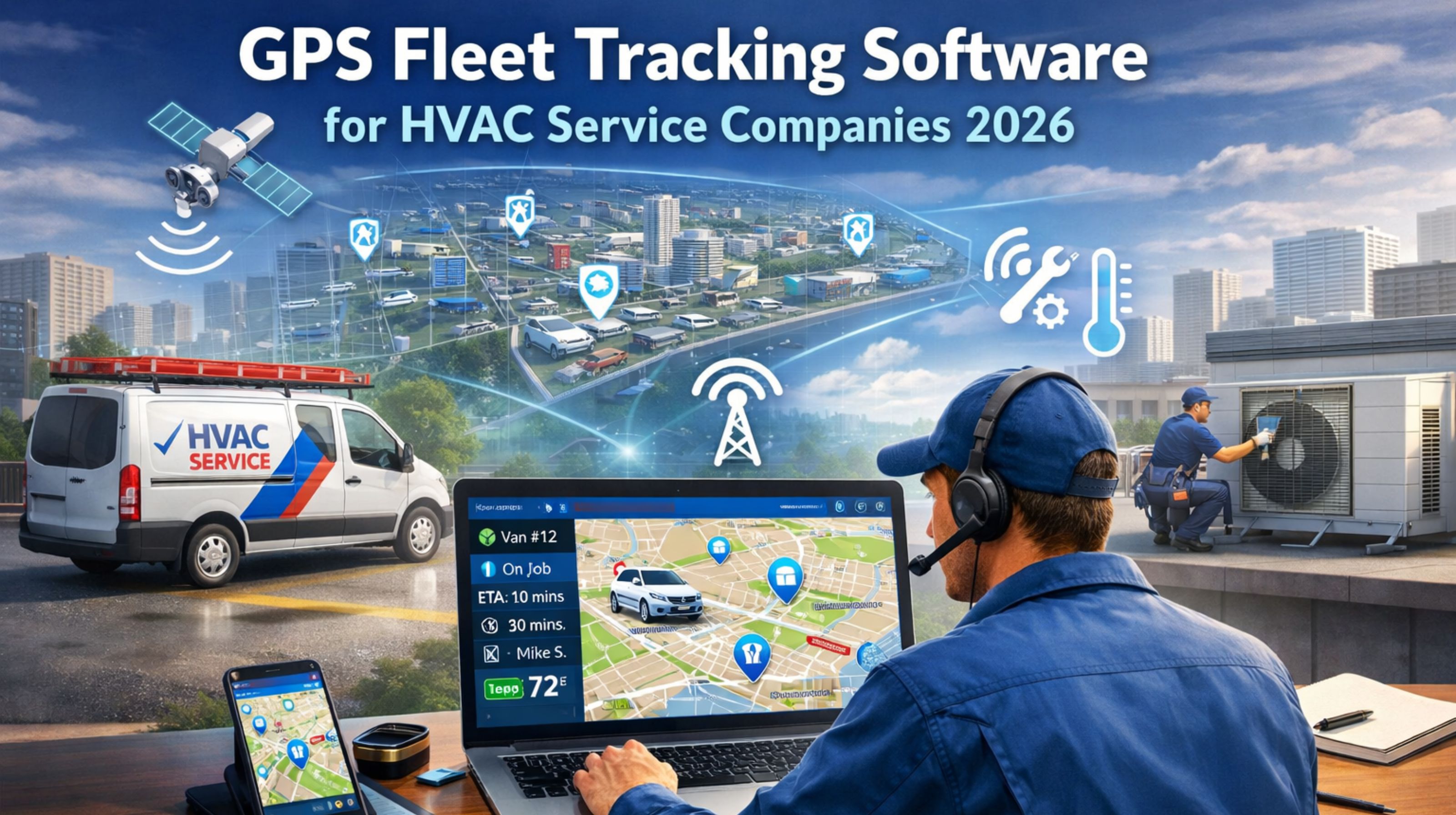
HVAC Fleet Tracking Software Failing Under 2026 Service Demands
You know something's wrong when your HVAC dispatch software starts dropping real-time location updates or misreporting truck idle time. It's not just a glitch—it feels like a signal your current system just can't handle the sheer density of daily service calls, parts runs, and emergency dispatches anymore. What you end up with is technicians arriving late because routing didn't account for a last-minute change, or your office manager getting audit flags for vehicle usage that somehow went unreported.
What HVAC Fleet Tracking Failure Actually Looks Like
In a live HVAC operation, failure isn't usually a total blackout. It's more subtle. It's that geofence alert for a completed maintenance call that pings your phone 20 minutes late, long after the tech is already headed to the next job, which completely breaks your chain of proof-of-service. Or it's pulling a fuel consumption report that shows identical usage for a truck running a compressor and one just sitting idle, which makes any real cost-per-job analysis pointless. Honestly, the first sign you'll probably notice is your dispatcher hearing "I'm on site" over the phone while the map on their screen still shows the vehicle three blocks away.
The Reality of Scale for HVAC Service Fleets
Under real load—like during a heatwave with 50+ emergency calls across a metro area—a lot of legacy tracking platforms just choke on the data volume. They'll batch location pings to save on server costs, which completely destroys any live ETAs. Here's a non-obvious detail: that OBD-II dongle. Most generic fleet trackers poll engine data every 2-3 minutes, which means they completely miss the short but critical cycles of an HVAC service truck's PTO engaging the lift gate or compressor. So you get a location, but zero context on what the vehicle is actually *doing*. That's exactly where integrated asset monitoring logic becomes essential.
Common Mistakes That Make the Problem Worse
The biggest misunderstanding here is treating this as a "more data" problem and just throwing more devices or reports at it. That just escalates cost without fixing the core issue: the software's decision engine can't actually correlate location, vehicle state (like engine on/off, PTO active), and scheduled job status in real time. I've seen companies waste months tweaking report formats or adding secondary Bluetooth tags, only to find their dispatch board still runs on phone calls. The real compliance risk sneaks in here, because those inconsistent logs fail to prove service duration for warranty claims or contractual billing.
Deciding to Fix, Reconfigure, or Replace Your System
The decision boundary gets pretty clear. If your team is manually reconciling service tickets with GPS logs more than once a week, or if your technicians routinely bypass the system because its alerts are just wrong, then internal tuning has probably failed. You're likely beyond a simple configuration issue at that point. The choice then is between a costly, ground-up redesign of your entire data workflow or replacing the core tracking platform with one actually built for real-time service logistics. A modern gps controller platform that integrates dispatch, parts inventory, and vehicle telemetry on a single timeline can eliminate that reconciliation gap that kills HVAC operational efficiency.
FAQ
q How accurate should HVAC truck tracking be for service calls?
a For reliable billing and dispatch, you really need location accuracy within about 50 feet and status updates—like on-site or in-transit—within 60 seconds. Anything slower or less precise tends to lead to double-booking and missed time-on-site documentation.
q What's the biggest hidden risk in older tracking software?
a It's compliance decay. Systems that batch data create timestamps that don't match your digital service records, which raises red flags during contract audits or warranty claim reviews. It can make your entire service log look unreliable.
q At what fleet size do most tracking systems start to fail?
a Failure is usually triggered by operational complexity, not just the vehicle count. If you're managing, say, 20+ trucks with same-day dynamic routing, multiple job types (install, repair, maintenance), and parts tracking, most generic platforms will crack under the strain of managing all those data relationships.
q When is it time to replace instead of repair our tracking software?
a It's time when the cost of manual data workarounds and missed service windows starts to exceed the subscription cost of a modern system. Or, more concretely, when you can't generate a unified report showing vehicle location, technician activity, and job completion status without having to edit a spreadsheet first.


Comments
Post a Comment