How to Track Raw Material Inbound Shipment in Real Time
How to Track Raw Material Inbound Shipment in Real Time
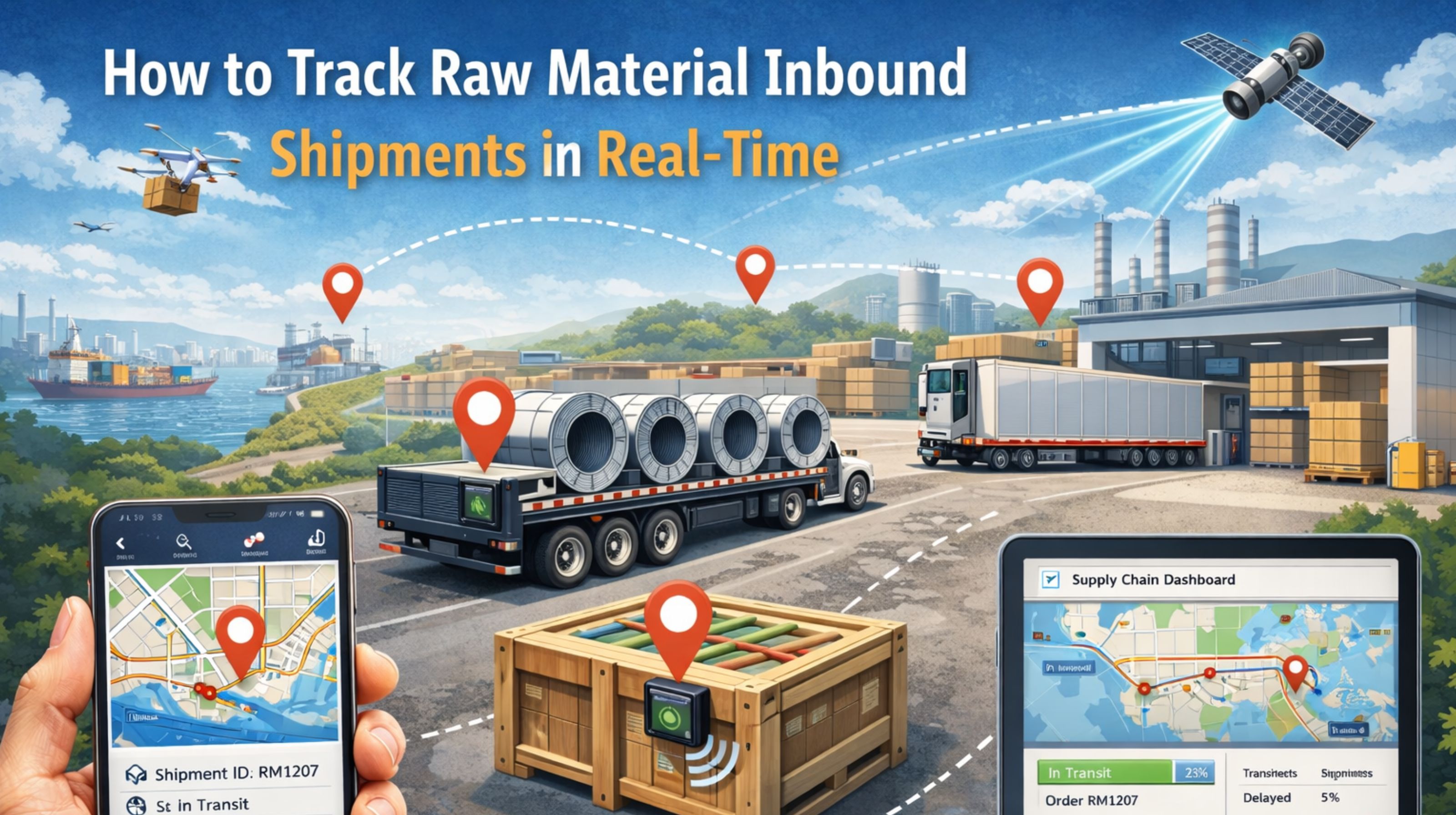
So, tracking raw material inbound shipment in real time. It's really about moving from those scheduled delivery windows to actually seeing live location, condition, and ETA. That shift is what directly stops your production line from halting. The tricky part isn't just getting a dot on a map—it's about getting that live data into your warehouse management and production scheduling systems. You need it to trigger alerts when, say, a temperature-sensitive pallet starts to drift or a truck gets stuck fifty miles out. Without this, your procurement team is basically operating on hope, and floor managers end up scrambling when a critical component is supposedly "in transit" but is nowhere to be found.
What Real-Time Inbound Tracking Actually Means for Raw Materials
Real-time tracking for inbound raw materials goes way deeper than a simple GPS ping. You're looking at a layered data stream: live location from the vehicle, sensor data for things like temperature or humidity on sensitive goods, and gateway scans at key points. All of that feeds into one dashboard. The thing people often miss is the data latency. A standard cellular tracker might update every 10 minutes, but in dense urban areas or during that final-mile delivery, that's exactly where delays can hide. A common mix-up is thinking carrier-provided tracking is the same as true real-time visibility. Those carrier portals often have multi-hour lags and don't integrate well, which creates a real compliance gap, especially for just-in-time manufacturing.
The Reality of Blind Spots in Material Logistics
When you're operating at scale, the blind spots become a real system problem. You might see that a truck left the supplier's yard, but you won't know it's been parked at a rest stop for three hours, or that someone opened the trailer door mid-route, risking theft of high-value materials. There's this thing in chemical logistics called "geofence lag"—an alert for arrival at the plant gate shows up 8 minutes *after* the truck actually checked in, which completely throws off the dock crew's schedule. This kind of invisibility during the last leg of the journey is where most inventory errors happen, and where standard geofencing alerts often fail to stop workflow from getting disrupted.
The Costly Mistake: Relying on Manual Updates and Carrier ETA
The big failure pattern here is assuming the carrier's call-in system or automated emails are enough for production-critical materials. It creates a totally reactive workflow where your team is constantly calling the driver or the dispatcher. That process just falls apart when you're trying to manage 20 or more inbound shipments at once. The risk gets even worse when you have no way to independently verify shipment integrity. A load of temperature-controlled resin could arrive at the perfect GPS location, but be completely ruined because a refrigeration unit failed and you had no way to monitor it. This mistake is what directly leads to line-down scenarios and those huge expedited freight costs to airlift in replacements.
Decision Help: Integrate, Sensor, or Redesign the Process
Your decision path is pretty clear. You can try to tune your existing processes with basic links to carrier APIs. You can reconfigure by adding active GPS and sensor tags to your high-value shipments. Or, you can redesign the entire inbound workflow with a dedicated IoT asset monitoring platform. Tuning might work if your delays are minor and your materials aren't critical. Adding sensors becomes necessary for perishable or high-cost items. You'll know you need to redesign and replace manual methods when internal fixes keep failing—specifically, when you have more than two production delays a month tied to inbound uncertainty, or when the carrier data just isn't detailed enough for dynamic dock scheduling. At that scale, a platform like gps controller gives you the independent verification you need to actually turn logistics data into a real asset for production planning.
FAQ
Question: What's the difference between carrier tracking and real-time inbound tracking?
Answer: Carrier tracking is usually batch-updated, stuck in a portal, and doesn't integrate with your production systems. Real-time inbound tracking gives you live location, sensor data, and automated alerts fed right into your warehouse software. It's about having independent verification and proactive control.
Question: How accurate are real-time ETAs for raw material shipments?
Answer: It really depends on traffic data integration and how often the system updates. The best setups can get ETAs accurate to within 15-30 minutes for the last 50 miles. But watch out for "static" ETAs that are just based on distance; live systems should factor in things like congestion and driver hours-of-service rules.
Question: Can I track raw materials without the carrier's cooperation?
Answer: Yes, you can. Using independent Bluetooth or cellular tracking devices attached to the pallets or containers is how it's done. This is pretty common for high-value or sensitive stuff, giving you a second data stream that doesn't rely on the driver's own telematics or reporting.
Question: When does inbound tracking become a compliance requirement, not just an efficiency tool?
Answer: It becomes mandatory for materials with strict chain-of-custody rules—think pharmaceuticals or aerospace components. Also for temperature-sensitive goods that need a full audit trail, or under just-in-time contracts where a late delivery means serious financial penalties. In those cases, manual tracking simply won't pass an audit.


Comments
Post a Comment