How Does GPS Tracking Improve Last Mile Ecommerce Delivery
How Does GPS Tracking Improve Last Mile Ecommerce Delivery
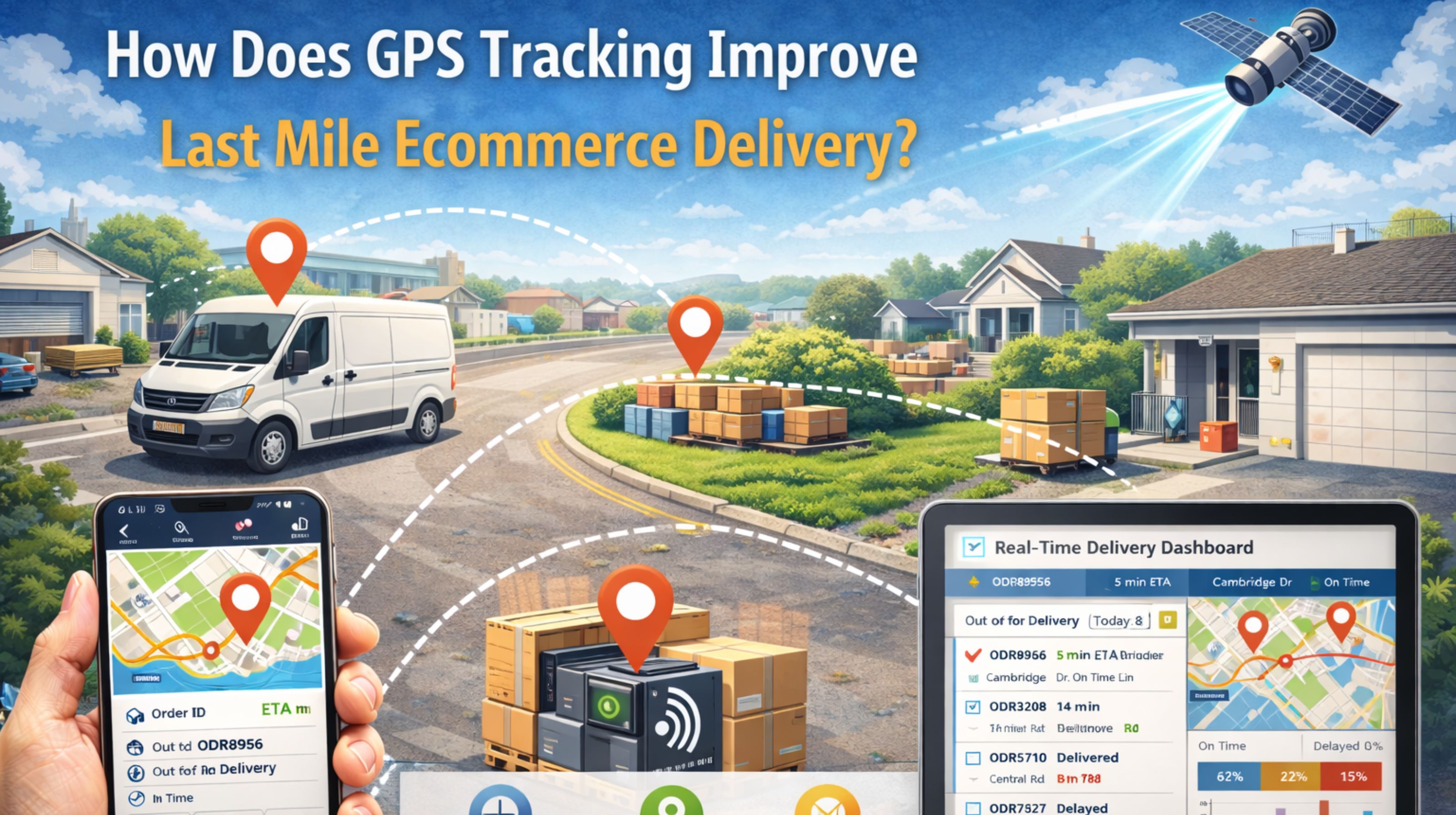
For ecommerce, last-mile delivery is that final, expensive leg where GPS tracking really shifts from being a simple locator to a real-time orchestration tool. It tackles the core friction head-on: that disconnect between a planned route on a dispatcher's screen and the actual live reality of traffic, parking, and whether the customer is even home. The real improvement isn't just visibility—it's the ability to dynamically reroute a driver around a sudden road closure while automatically sending a revised 15-minute window to the customer. That's what actually prevents a costly "delivery attempted" failure.
Clarity: What GPS Tracking Actually Does in the Last Mile
In last-mile delivery, GPS tracking provides more than just a dot on a map; it creates this live data thread connecting the warehouse, the driver, and the customer. This thread enables live ETAs, proof-of-delivery with geotagged photos, intelligent stop sequencing. But here's a common, critical snag: signal jitter in dense urban areas. It can make the ETA jump erratically, confusing everyone. Modern systems now use predictive smoothing to account for this, which is key for maintaining trust in the timeline you communicate.
Reality Check: Scaling Delivery Without Live Tracking
Trying to scale last-mile delivery without granular GPS tracking leads to predictable, expensive failures. Dispatchers lose sight of the fact that Driver A is stuck in traffic while Driver B, just two blocks away with a lighter load, could take the next delivery. The result? Missed windows, overtime pay, and a cascade of reschedules that strain capacity the next day. One non-obvious detail is network latency—a 30-second delay in location pings can mean a driver has already passed the turn for an apartment complex, forcing a u-turn that adds minutes to every single stop.
The Mistake: Assuming Any GPS Tracker Solves the Problem
A major operational risk is assuming basic vehicle tracking is enough for last-mile efficiency. The wrong assumption is thinking a device reporting location every 2-3 minutes is adequate. In reality, for dynamic routing, you need near-continuous data (every 15-30 seconds) combined with deep integration into the fleet management software that actually handles the orders. Without that, you're just looking at a historical map of where the van *was*, not a live tool to manage where it needs to go next. That leads to inefficient manual dispatcher intervention for every little delay.
Decision Help: Tune, Integrate, or Redesign Your Tracking
The decision boundary is pretty clear: you can tune existing tracker settings for faster reporting, integrate your tracking data deeply into route optimization platforms, or redesign the last-mile tech stack entirely. The choice really hinges on your failure rates. If more than 5-7% of deliveries are failed first attempts due to timing, then internal fixes are probably insufficient; you've likely hit a system design limit. This is where a platform like gps controller moves from being a simple tracker to the central nervous system for delivery execution, managing the whole workflow from dispatch to proof-of-delivery.
FAQ
Question: How does GPS tracking reduce failed deliveries?
Answer: It provides accurate live ETAs and driver proximity alerts, so customers can actually be ready. It also lets drivers confirm "customer not available" with a geotagged timestamp, which streamlines rescheduling and gives clear data on problematic addresses.
Question: Can GPS tracking lower fuel costs for delivery fleets?
Answer: Yes, but primarily through dynamic route optimization that uses live traffic and road data to cut unnecessary miles and idling. The savings come from the routing intelligence—GPS tracking just provides the essential live location fuel for that system.
Question: What's the difference between asset tracking and last-mile delivery tracking?
Answer: Asset tracking, like IoT asset monitoring, focuses on security and long-term location history for things like trailers. Last-mile tracking needs high-frequency data, integration with order management, and customer communication features for minute-by-minute operational control. They solve different problems.
Question: When should a delivery business upgrade its GPS tracking system?
Answer: Upgrade when drivers are regularly missing more than two delivery windows a day, when dispatchers spend over an hour manually rerouting, or when customer complaints about ETA accuracy become a daily issue. That signals your current data latency and integration depth can't support your operational scale anymore.


Comments
Post a Comment