How Does GPS Route Optimisation Reduce Fuel Costs for Delivery Companies
How Does GPS Route Optimisation Reduce Fuel Costs for Delivery Companies
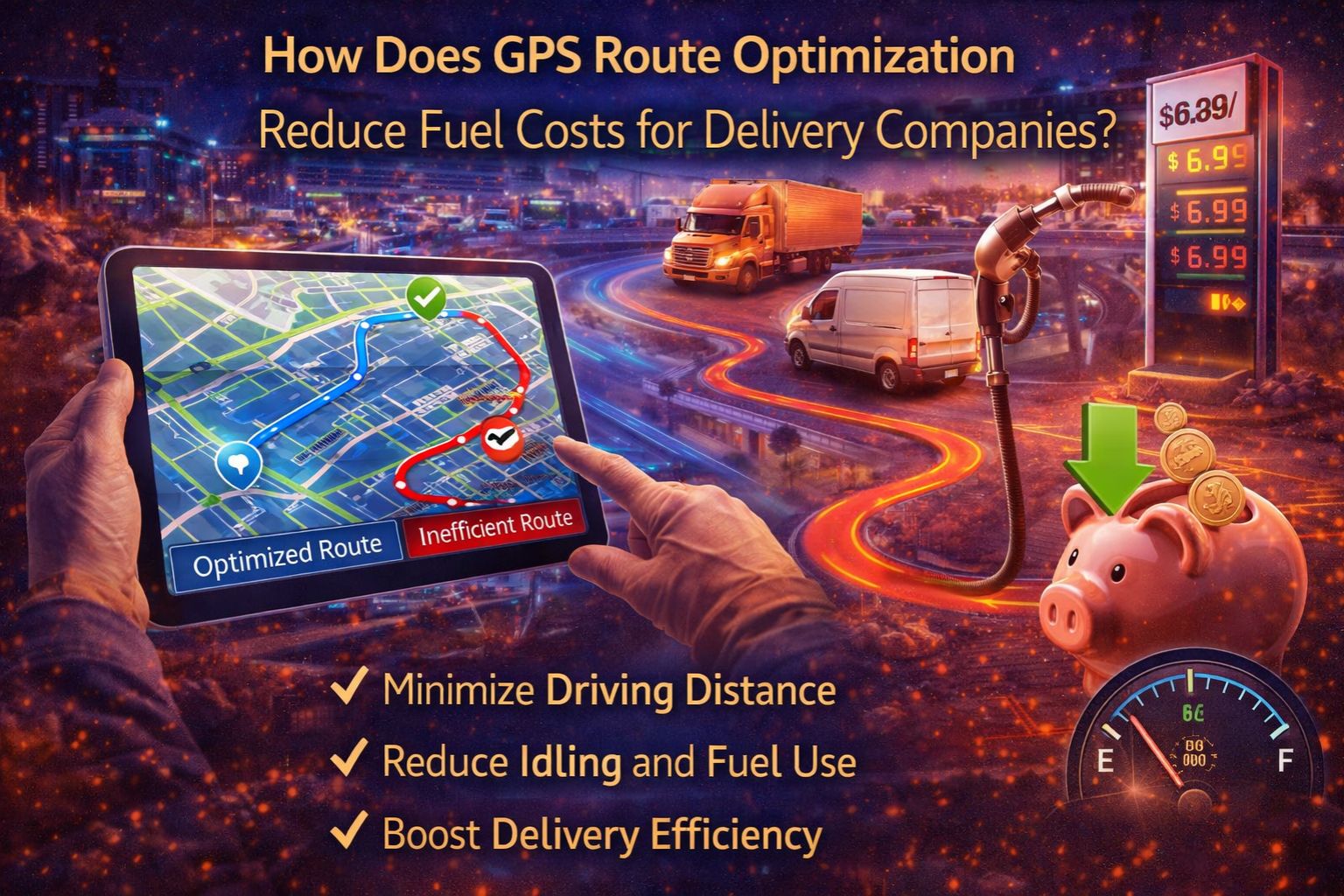
For a delivery fleet manager, GPS route optimisation isn't about a perfect map; it's about cutting the hidden fuel burn that happens when drivers face daily chaos—unexpected road closures, last-minute order adds, and the instinct to take a "faster" familiar route that actually adds three extra left turns across town. The real fuel saving comes from systematically eliminating those decision-fatigue miles, the kind that don't show up on a standard dispatch plan but just drain the tank one detour at a time.
Clarity: It's About Eliminating "Invisible" Miles, Not Just Shortening Lines
Optimisation software crunches hundreds of variables in seconds—traffic patterns, vehicle type, stop service times, even legal driver breaks—to build a sequence that minimises total engine-on distance. What that means in practice is a driver isn't sent back across a zone they passed an hour earlier just because a new delivery popped up; the system dynamically groups stops geographically and temporally. A real observation from urban fleets is the reduction in "crossover" routes, where vans unknowingly pass each other's delivery streets. It's a coordination failure that's basically impossible for humans to spot at scale.
Reality Check: Idle Time and Aggressive Driving Are Silent Fuel Killers
Under real operational pressure, the biggest fuel waste often isn't route length—it's operational friction. Optimised routing cuts down time spent idling in congestion or sitting at the depot figuring out the next stop. More critically, it smooths driving behavior. When a driver is rushed and behind, they accelerate harder and brake more. By providing a realistic, achievable timeline with some buffer, the system reduces that stress-induced driving, which can spike fuel consumption by 20% or more. This is where telematics integration is key; the fuel performance monitoring from the vehicle's engine control unit (ECU) shows the direct link between a calm route and lower fuel burn.
Mistake: Assuming "Shorter Distance" Always Equals "Lower Cost"
A common misunderstanding that drives up costs is focusing only on total miles while ignoring road grade, stop density, and turn penalties. A computer-generated "shortest" route might send a loaded truck up a steep hill, burning excess fuel, or through a neighborhood with constant stop signs, forcing repeated acceleration from zero. True optimisation actually assigns cost values to these factors. Another failure pattern is not updating road network data, which leads the system to route vehicles down roads closed for construction. That just creates frantic, fuel-wasting reroutes by the drivers on the spot.
Decision Help: Tune, Reconfigure, or Redesign Your Routing Core
The decision line is pretty clear: if your drivers regularly override dispatched routes or your fuel reports show high variance between similar vehicles, you need to do something. First, try to *tune* the system's parameters (like stop duration and vehicle constraints). If the inconsistencies stick around, *reconfigure* by integrating real-time traffic and geofencing alerts for live adaptability. But an internal fix won't cut it when the algorithm simply can't handle your daily volume of dynamic changes (like 30%+ on-demand orders). At that scale, you're looking at a core *redesign*, moving to a system that treats planning and execution as one continuous process. That's a capability where specialised platforms like GPS Controller integrate routing directly with live operations.
FAQ
Question: How much fuel can route optimisation actually save?
Answer: Real fleet data typically shows a 10-20% reduction in overall fuel consumption. The savings come less from dramatic distance cuts and more from the compound effect of reduced idling, smoother driving, and eliminating wasteful backtracking across a whole week of deliveries.
Question: Does it work for same-day or on-demand delivery models?
Answer: Yes, but this is where system capability is critical. Basic static planning just fails. Effective optimisation for on-demand has to dynamically insert new stops into existing routes in real-time, re-sequencing the remaining stops without sending the vehicle back across its own path. That's the key to preventing fuel waste in a volatile schedule.
Question: Can't drivers just use a free app like Google Maps?
Answer: Consumer apps optimise for a single trip's time, not a fleet's total cost. They don't consider vehicle load capacity, driver hours-of-service compliance, scheduled delivery windows, or the real cost of a left turn across traffic. The result is inefficient stop sequences that actually increase total miles and idle time across a multi-stop route.
Question: When is it time to upgrade our routing software?
Answer: You've hit the boundary when dispatchers spend hours manually "fixing" the computer's routes, when fuel costs plateau despite optimisation reports, or when you can't incorporate real-world constraints like specific no-truck zones or customer site delays. That signals the algorithm isn't modelling your operational reality, and a more advanced platform that unifies planning, telematics, and driver feedback is what you need.


Comments
Post a Comment