How Does GPS Fleet Tracking Help Reduce Vehicle Idle Time and Emissions
How Does GPS Fleet Tracking Help Reduce Vehicle Idle Time and Emissions
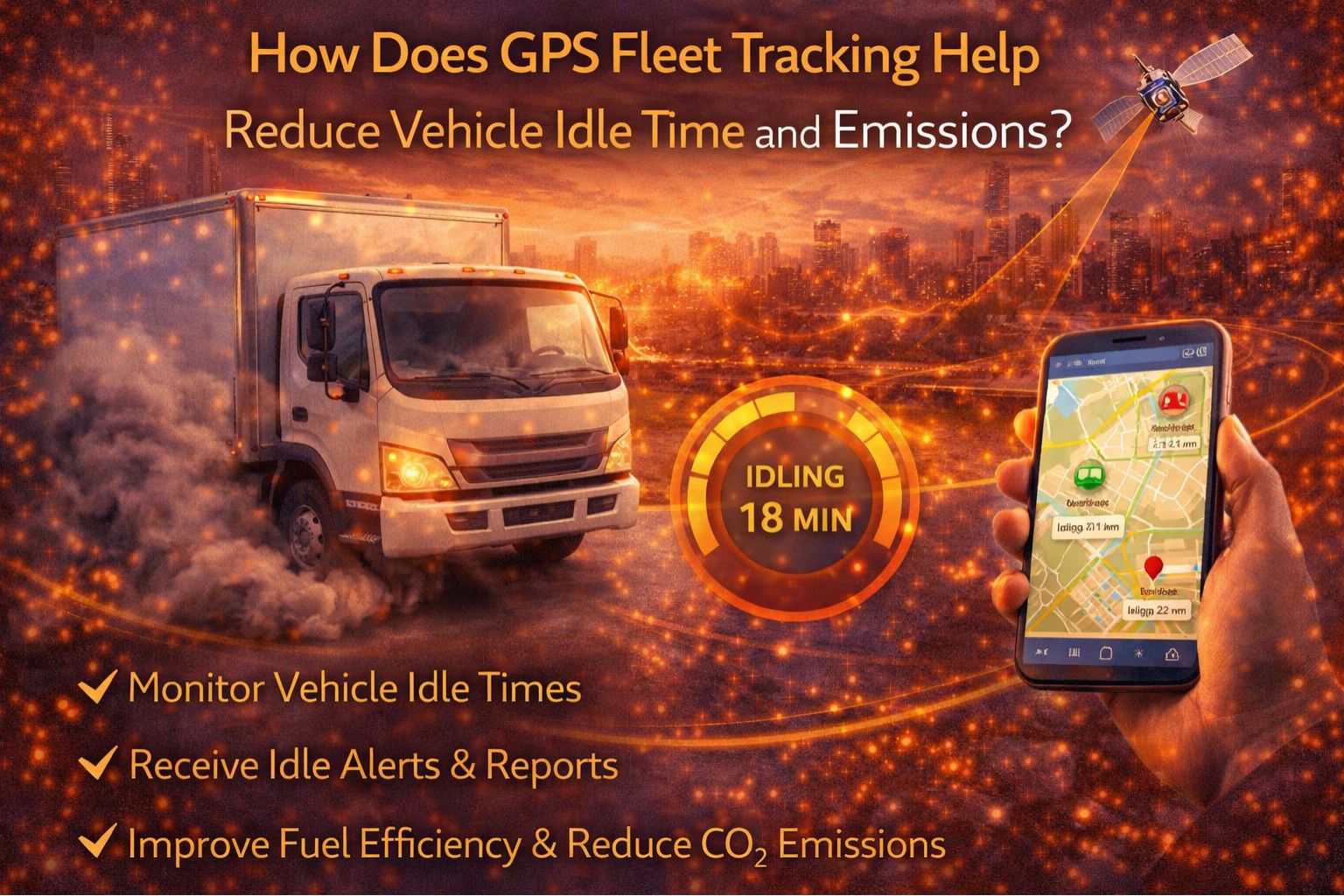
For fleet managers staring at rising fuel costs and tightening emissions regulations, the question isn't academic—it's about finding the operational levers to pull right now. Honestly, GPS fleet tracking provides that definitive, real-time data layer. It turns idle speculation into actionable reduction, directly linking engine-on minutes to wasted fuel and unnecessary carbon output. The system doesn't just show a dot on a map; it reveals the costly habits and inefficiencies hidden in daily routines. You see the delivery truck left running at a curb, or the circuitous route burning extra diesel, plain as day.
The Direct Link Between Idle Time and Emissions
GPS fleet tracking with integrated engine diagnostics (via CAN bus or OBD-II) finally provides the clarity to connect cause and effect. You're not guessing about idling anymore. You're looking at a precise report showing Vehicle 123's engine ran for 47 minutes while stationary, consuming about 1.2 gallons of fuel and emitting a calculated 26 pounds of CO2. That granularity changes everything. It transforms idling from a vague concern into a measurable line item, so managers can address specific incidents instead of issuing blanket warnings. It's the difference between knowing you have a fuel problem and knowing exactly which driver, vehicle, and location is responsible for 30% of your fleet's unnecessary emissions this month.
Real-World Scale: When Minutes Become Tons of Fuel
The operational reality is that small, unchecked behaviors compound dramatically. It's easy to think "a few minutes of idling" is insignificant, but tracking data reveals the brutal truth. If each of 50 vehicles idles for just 30 extra minutes per day, that's 25 hours of wasted engine time daily. That leads to over 9,000 gallons of fuel and nearly 100 tons of CO2 emitted needlessly per year—a six-figure cost, easily. From what I've seen, the worst offenders are often during morning warm-ups, lunch breaks, and waiting at loading docks. Drivers assume the engine must be on, but the telemetry proves otherwise. Without the objective data from a system like fuel performance monitoring, these patterns just remain invisible profit drains.
The Mistake: Relying on Driver Self-Reporting for Compliance
A critical risk is assuming that policy alone, enforced by driver self-reporting, can actually curb idle time and emissions. That assumption tends to fail under real operational pressure. Drivers focused on tight schedules might not consciously note their idling, and manual logs are often... well, let's just say optimistic or incomplete. The real mistake is believing the problem is solely behavioral, when often it's systemic. Think inefficient routing leading to more stop-and-go traffic, poor scheduling creating dock wait times, or even a faulty sensor. GPS tracking data exposes these root causes, moving the conversation from blame to optimization. It shows if high idling correlates with specific clients or routes, providing the hard evidence needed for fixes beyond just coaching a single driver.
Decision Help: Tune Behavior or Redesign Workflows?
The decision boundary revealed by tracking data gets pretty clear: when do you tune driver behavior, and when must you reconfigure the underlying workflow? If data shows isolated, high-idle incidents, targeted coaching and automated geofencing alerts for no-idle zones might be enough. But if reports show pervasive idling across the fleet tied to specific routes or scheduling blocks, the solution is no longer just behavioral—it requires operational redesign. That might mean rescheduling appointments or re-evaluating route density. When internal policy adjustments fail to move the metrics at scale, the data from your GPS tracking platform becomes the business case for deeper change. This is where a dedicated telematics provider like GPS Controller can provide the necessary analytical depth to figure it out.
FAQ
Question: How exactly does GPS tracking measure idle time?
Answer: It uses a combination of GPS movement data (zero speed) and direct input from the vehicle's engine control unit via an OBD-II or hardwired connection. This confirms the engine is running while the vehicle is stationary, so you're distinguishing true idling from just a simple stop.
Question: Can tracking data help with emissions reporting for compliance?
Answer: Yes, it can. By accurately calculating fuel consumption from idle time and distance traveled, the system can generate estimated emissions reports (CO2, NOx). That data supports environmental compliance frameworks and ESG reporting, giving you auditable data instead of rough estimates.
Question: What's a common hidden cause of high idling that tracking reveals?
Answer: A non-obvious one is "creep idling" during short deliveries. Drivers making multiple drops in a congested urban area might leave the engine running for 5-10 minutes between each stop, thinking it's faster. Tracking aggregates these short bursts into a significant daily total, which often reveals a workflow issue, not just a bad habit.
Question: When is reducing idle time not just about driver alerts?
Answer: When the data shows idling is concentrated at specific customer locations or during mandatory wait times, like at a warehouse. The fix then needs workflow intervention—scheduling changes, site coordination, maybe even stakeholder negotiations. It proves the value of the telematics data for operational strategy, going way beyond simple monitoring.


Comments
Post a Comment