how does GPS Controller work when GPS signal is jammed in war zone 2026
how does GPS Controller work when GPS signal is jammed in war zone 2026
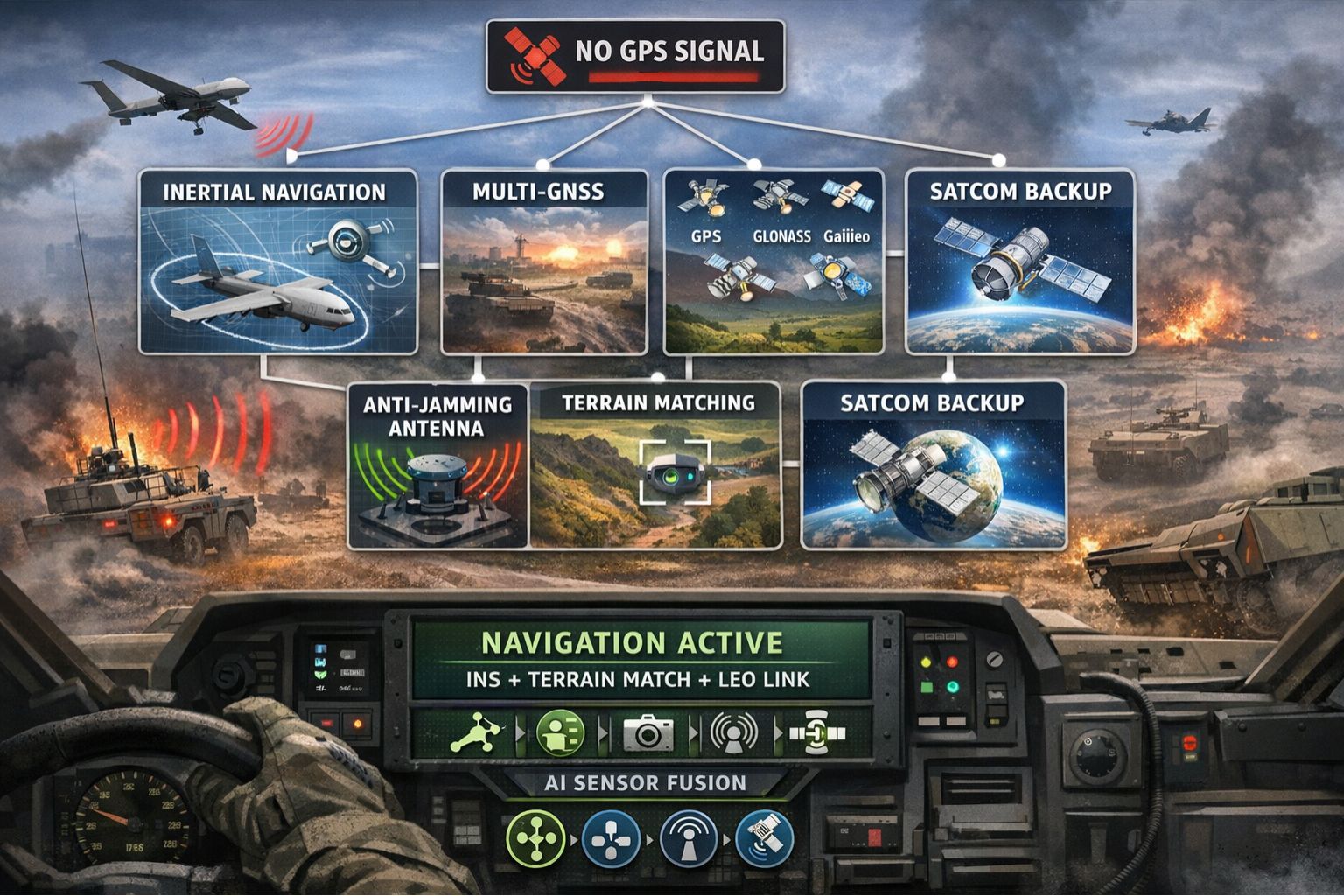
So, in a 2026 conflict where GPS jamming is everywhere, a fleet tracking system can't just give up—it has to switch to something else. GPS Controller is built for that. It shifts from just reporting a location to actively figuring out where a vehicle probably is, using other sensors when the satellite signal drops. The second jamming is detected, it kicks off a pre-set protocol, pulling in data from inertial sensors, wheel speed, and even cell tower pings to create a kind of synthetic position. Look, it's not about perfect accuracy here; it's about keeping some awareness of your assets when the main system is being attacked. You'll still see the vehicle icon moving on your fleet management dashboard, but with a clear visual cue that the confidence is lower. It stops a total blackout, basically.
Clarity: What Signal Jamming Means for Live Fleet Tracking
GPS jamming in a war zone... it doesn't mean your tracker shuts off. It means the main way it gets a precise lat/long is just drowned in noise. The device is still on, but its primary job is blinded. What happens then is a critical gap: live updates freeze, you might miss a geofence breach, and you can't check if a route is being followed. The system's first task is to recognize this instantly—figuring out it's not just a tunnel—and flip its logic. Instead of saying "no signal," it starts broadcasting a "GNSS DENIED" flag and kicks its internal dead reckoning into gear, using the last solid position, speed, and heading as a starting guess.
Reality Check: Operational Continuity Under Electronic Attack
At a real scale, with maybe dozens of vehicles in a contested area, the reality is messy. You get a mix of data confidence. Some trucks might have a weak, flickering signal; others could be in a total blackout. The fleet software has to handle this mixed bag without causing chaos. GPS Controller does it by tiering status: green for good GPS, yellow for sensor-based estimation, red for total comms loss. The less obvious part is the vehicle-to-vehicle (V2V) data sharing. If cellular is down too, they can use encrypted, short-range mesh networks. So a truck with a partial GPS fix can actually help calibrate the estimated position of a fully jammed vehicle nearby, creating a kind of makeshift local network. That's why just having an IMU sensor isn't the whole answer; the real intelligence is in linking data across the fleet to get a better overall picture.
Mistake: Assuming Redundancy Means Perfect Location Data
Here's the most common and dangerous wrong assumption: thinking the backup systems give you the same pinpoint accuracy as GPS. They don't. Dead reckoning builds up error—about 1-2% of the distance traveled without a correction. So after 50 km in a jammed zone, the reported position could be off by a full kilometer. That kind of error makes precise geofencing pointless and can lead to serious coordination mistakes. The failure happens when planners treat that estimated track as gospel, directing vehicles to tight pickup points or assuming they've cleared a secure corridor. The system tries to counter this by visually showing an "error ellipse" around the vehicle icon on the map and stamping every position as "ESTIMATED" in the compliance and audit trail, forcing dispatchers to actually account for the uncertainty in their orders.
Decision Help: When to Reconfigure Tracking vs. Redesign the Mission
This is where you have to make a call. You can *reconfigure* the tracking—maybe lower the update frequency to save battery for the sensors, tell drivers to manually report checkpoints via secure text when they can. That works for short jamming events or on predictable routes. But you have to *redesign* the mission and its tracking if assets will be operating for hours in known jamming zones. That means pre-planning routes on major roads (easier for dead reckoning), setting up manual reporting rules, maybe even adding secondary, non-GNSS positioning systems. The line is crossed when operational safety or mission success depends on meter-accurate location. If that's the case, and GPS is gone, then internal system fixes aren't enough; you'd need a hardened, military-grade PNT solution. A platform like GPS Controller is designed to plug into that kind of specialized hardware, managing the blend of data sources rather than being the hardened PNT itself.
FAQ
Question: Does the tracker store data when GPS is jammed?
Answer: Yeah, it keeps logging sensor data internally—accelerometer, gyroscope, cellular pings. Once it gets any network connection back, it sends that stored breadcrumb trail up, so you can piece together the estimated path from the blackout period.
Question: How long can it operate on dead reckoning alone?
Answer: Technically, it can estimate forever. But practically, it gets less useful after maybe 30 to 60 minutes without a position correction. The error just keeps building, so the data becomes less reliable for real-time decisions. Its value shifts more to figuring out where a vehicle *was* later, not tracking exactly where it *is* right now.
Question: Can jamming damage the GPS hardware in the tracker?
Answer: Usually not. Most commercial jammers just flood the receiver with noise. But high-power military jammers? Over a long time, they could potentially desensitize or even damage the receiver. The tracker's continuity protocols are there to keep it functioning, not necessarily to protect the GNSS chip from getting fried.
Question: What's the single biggest risk of relying on this system in a jammed environment?
Answer: Complacency. Honestly, the biggest risk is operators starting to trust the estimated position as the absolute truth. The system is a tool for continuity of awareness, not a GPS replacement. Using it successfully means accepting the uncertainty and building your operational procedures around that fact. That's a core design principle for GPS Controller in high-risk logistics.


Comments
Post a Comment