hardwired vs OBD GPS tracker which is better for fleet
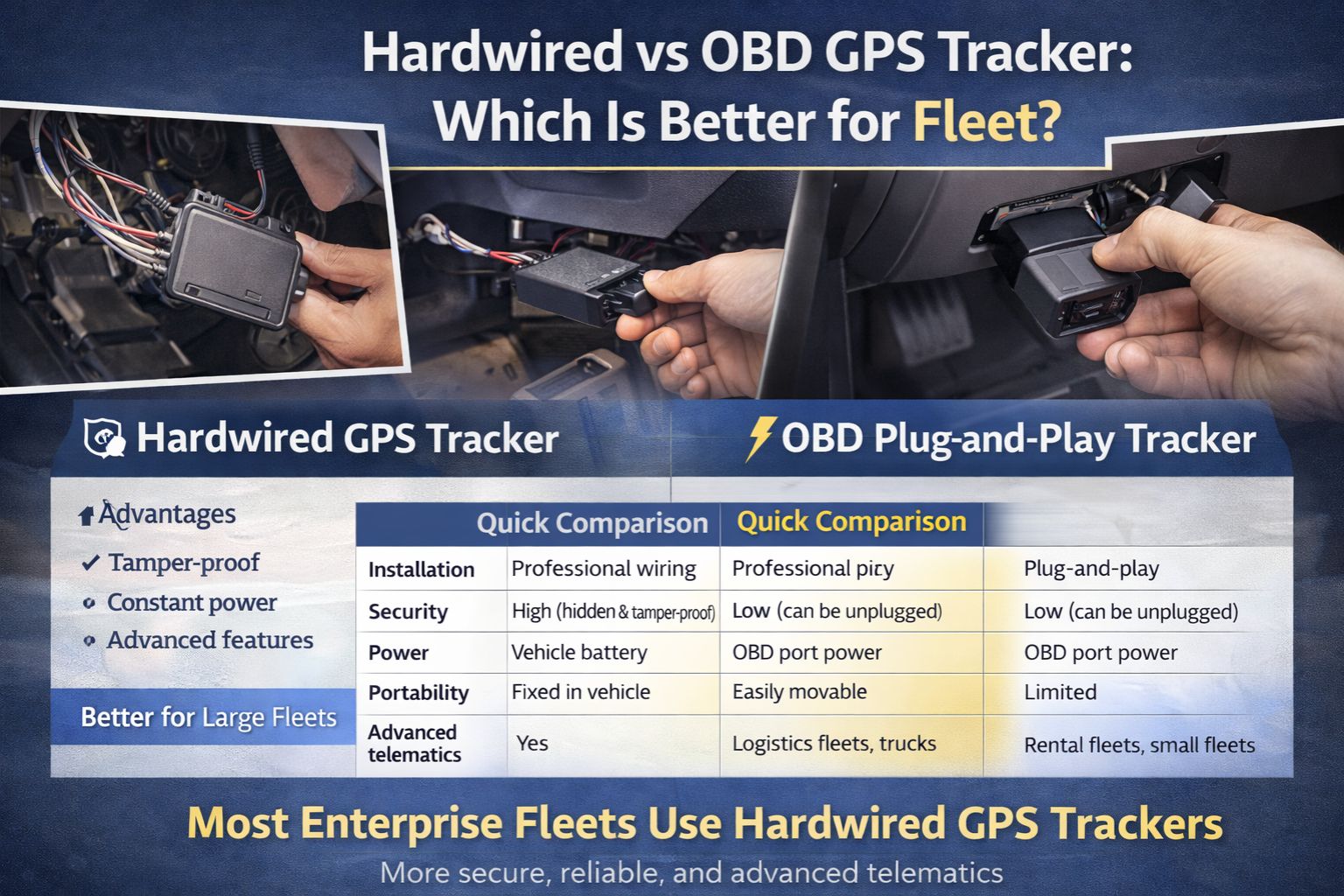
hardwired vs OBD GPS tracker which is better for fleet
The choice between a hardwired and an OBD GPS tracker isn't just about installation time. Honestly, it's a foundational decision that ends up determining data reliability, maintenance access, and your long-term fleet visibility. In real operations, the wrong choice leads to silent data gaps, missed geofence alerts, and compliance logs that just fail under audit. You really need to understand the trade-offs in live environments, not just what's on a spec sheet.
Clarity: What Hardwired and OBD Really Mean for Your Fleet
A hardwired tracker gets permanently connected to a vehicle's power system, usually behind the dashboard. That gives it continuous power and the potential for deeper vehicle data integration—things like ignition status or auxiliary sensors. An OBD tracker just plugs directly into the onboard diagnostic port. It's a simple, self-install solution that can also pull engine diagnostics. The core difference really comes down to permanence versus portability, which directly impacts data consistency and how flexible your fleet management can be.
Reality Check: How Each Performs Under Real Fleet Scale
At scale, OBD trackers introduce a silent risk: driver tampering. A driver can simply unplug the device, and that creates a data blackout. Your fleet management software might not immediately flag it as tampering; it could just look like a signal loss. Hardwired units avoid this, but they demand professional installation for every single vehicle, which means upfront downtime and cost. Another thing—OBD ports in some newer trucks are constantly powered, which can drain the vehicle battery if you're not careful. Hardwired kits can be configured to respect sleep cycles and avoid that.
The Hidden Mistake: Assuming Plug-and-Play Means Set-and-Forget
The most common operational mistake is treating the OBD tracker as a final solution. The convenience of plug-and-play leads managers to overlook critical failure points. OBD port compatibility actually varies by make and model, the physical connector can vibrate loose on rough routes, and the device is just sitting there, exposed to accidental damage during cabin cleaning or repairs. For hardwired units, the mistake is underestimating the wiring complexity across a mixed fleet. That can lead to incorrect installations, which then cause parasitic battery drain or unreliable ignition sensing.
Decision Help: When to Tune, Reconfigure, or Redesign Your Approach
Your decision boundary is pretty clear. Choose OBD trackers for mixed or leased fleets where rapid deployment and zero installation downtime are critical, and you can accept a higher risk of tampering or disconnection. Choose hardwired trackers for owned, long-term assets where tamper-proof, permanent installation and reliable auxiliary sensor integration—like for temperature or door sensors—are non-negotiable for compliance. The internal fix stops working when you need immutable data for safety or regulatory audits. At that boundary, the permanence and reliability of a professionally hardwired system become the only viable choice. It's a principle that's central to robust fleet telematics design.
FAQ
Question: Which type of GPS tracker is more accurate for location data?
Answer: Both types use the same GPS chipset, so the raw location accuracy is identical. The real difference is data continuity. A hardwired tracker, with its permanent power, provides more consistent reporting. This is especially true when a vehicle is idle or off, leading to more reliable geofencing alerts and a complete route history.
Question: Can drivers easily disable or tamper with these trackers?
Answer: Yes, and this is a key differentiator. An OBD tracker can be unplugged by a driver in seconds. A properly installed hardwired tracker is concealed behind the dashboard, making it difficult to find and disable without triggering a tamper alert. That's crucial for high-security or compliance-sensitive operations.
Question: How does installation cost and time compare for a large fleet?
Answer: OBD trackers have near-zero installation cost and time—you just plug them in. Hardwired trackers require a technician, averaging 30 to 60 minutes per vehicle and a significant upfront labor cost. For a 100-vehicle fleet, that translates to days of downtime versus minutes.
Question: What is the final deciding factor for a manager choosing between them?
Answer: The final factor is your tolerance for data risk versus your need for deployment speed and flexibility. If absolute data integrity and tamper-resistance for compliance or safety reporting are paramount, you hardwire. If you need to scale tracking immediately across a dynamic fleet and can manage the procedural oversight to prevent tampering, OBD is the pragmatic starting point. You just have to understand that a platform like GPS Controller can manage both device types within the same operational view.


Comments
Post a Comment