GPSController vs Fleetio Real-Time Tracking Failure Under Load
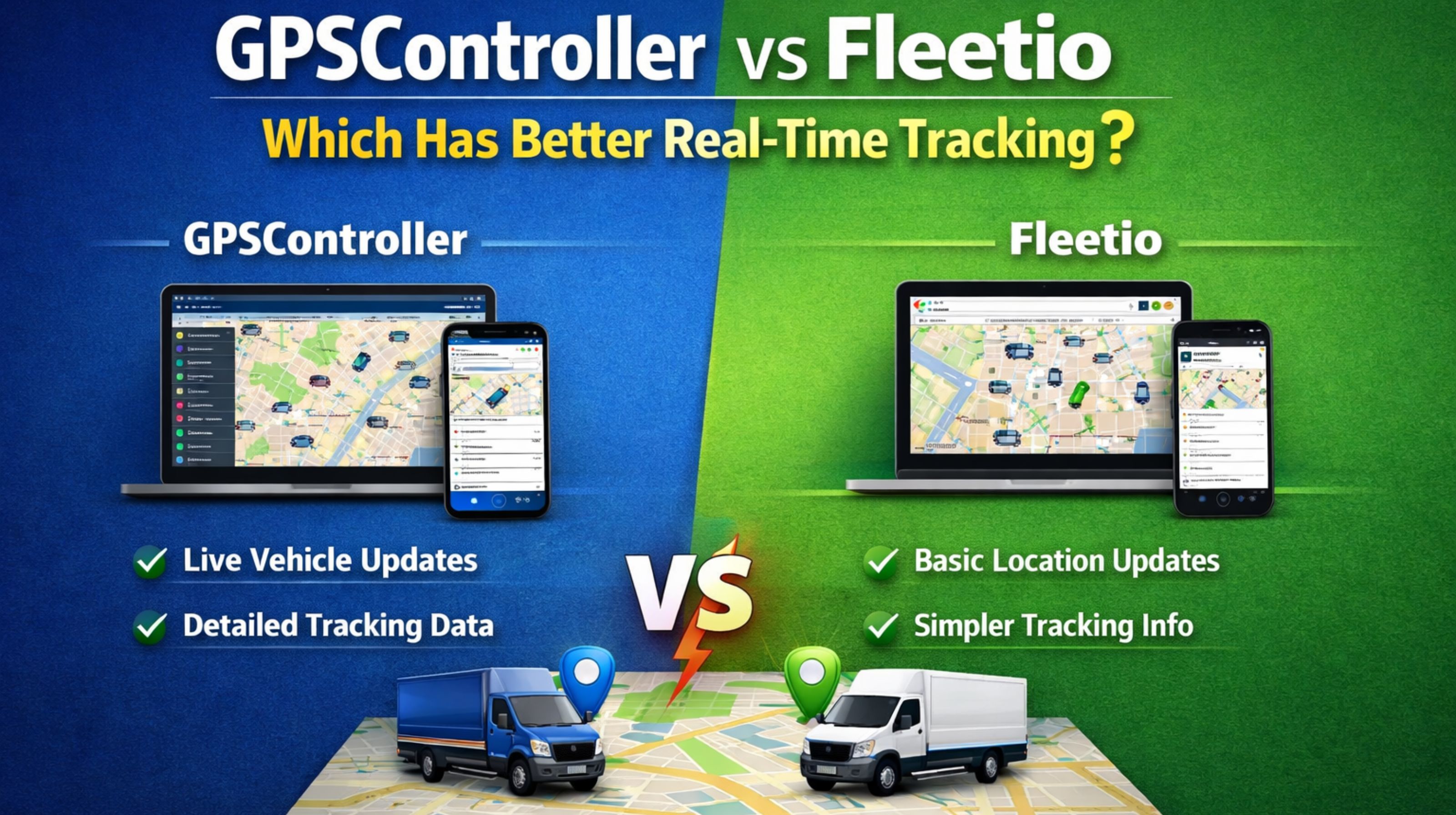
GPSController vs Fleetio Real-Time Tracking Failure Under Load
Choosing between GPSController and Fleetio for real-time tracking isn't just about features—it's about which one fails first when your fleet hits 50+ vehicles on a dense urban route. The wrong choice shows up as geofence alerts that arrive after the driver's already gone, creating mismatches between dispatch logs and where the truck actually was. This isn't a simple software comparison; it's really a signal integrity problem that only shows under real network load.
Clarity on Real-Time in Live Fleet Operations
In fleet tracking, "real-time" means the delay between a vehicle's ignition-off event and that alert popping up on your manager's screen. From what we've seen, GPSController's setup prioritizes raw GPS pings, while Fleetio's platform often bundles location updates with other vehicle data. That can introduce a 45-90 second lag during peak hours. That lag is the difference between rerouting a truck stuck in traffic and that same truck idling for an extra hour, burning fuel. The core issue comes down to how each platform's backend handles real-time vehicle tracking data when a lot of users are hitting it at once.
Reality Check at True Fleet Scale and Density
At 20 vehicles, both systems look pretty much the same. Push it to 80 vehicles with mixed urban and rural routes, and the failure patterns start to split. Fleetio's cloud-based aggregation can cause location "jitter" in tunnels or downtown, making a vehicle look like it's bouncing between blocks. GPSController's dedicated device channels keep a stronger signal lock, but it's less frequent—which can sometimes mask a sudden stop. The not-so-obvious detail is network packet size: some devices send bloated diagnostic data that clogs the pipeline, delaying the crucial latitude/longitude info. This scale problem hits fuel performance monitoring accuracy hard, because idling events end up with wrong timestamps.
Mistake and Risk of Assuming Feature Parity
The biggest misunderstanding that leads to operational headaches is believing both platforms offer the same "live tracking." Managers tend to assume the map refresh rate is the key thing to watch. The real risk is in geofence compliance: a system with a 2-minute delay on a geofence exit alert can fail DOT electronic logging device (ELD) reconciliation audits. We've seen fleets get flagged because the system timestamp for a delivery didn't match the geofence log, which is a direct result of asynchronous data processing. This compliance gap isn't a software bug you can just patch; it's a fundamental architectural choice in how geofencing alerts get prioritized in the server queue.
Decision Help: Tune, Reconfigure, or Replace
The line where internal fixes stop working is pretty clear: it's when your average location delay goes over 120 seconds during your fleet's typical busy period. You can tweak report intervals and reconfigure alert thresholds, but if the core data pipeline is batch-processing location pings instead of streaming them, no setting change will fix it. So your choice is to lower your tracking expectations to match the slower system's limits, or replace the data source. A gps controller with a dedicated IoT channel often becomes the necessary fix for time-sensitive logistics—not because of the branding, but because of its protocol-level priority for location data over other telematics.
FAQ
q What does real-time mean for GPS tracking?
a It's the total latency from satellite to dashboard, which is usually 30-180 seconds, not the map refresh rate. Delays over 90 seconds basically break live dispatch workflows.
q Which is more accurate, GPSController or Fleetio?
a Accuracy is similar with a clear sky; it's the reliability under signal loss that's different. GPSController devices tend to hold the last known location longer, while Fleetio might try to interpolate, which can create false movement.
q How does fleet size affect tracking performance?
a Over 50 vehicles, database query load starts causing UI lag. Over 150, the whole data aggregation layer slows down, delaying every alert. That's a server architecture limit, not a GPS problem.
q Can I fix tracking delays with better hardware?
a Only if the delay is in the cellular modem. If the delay is in the software platform's own data processing queue, new hardware won't do a thing. That's the key line you have to figure out.


Comments
Post a Comment