GPS Tracking Software Without Internet and the Risk of Data Loss
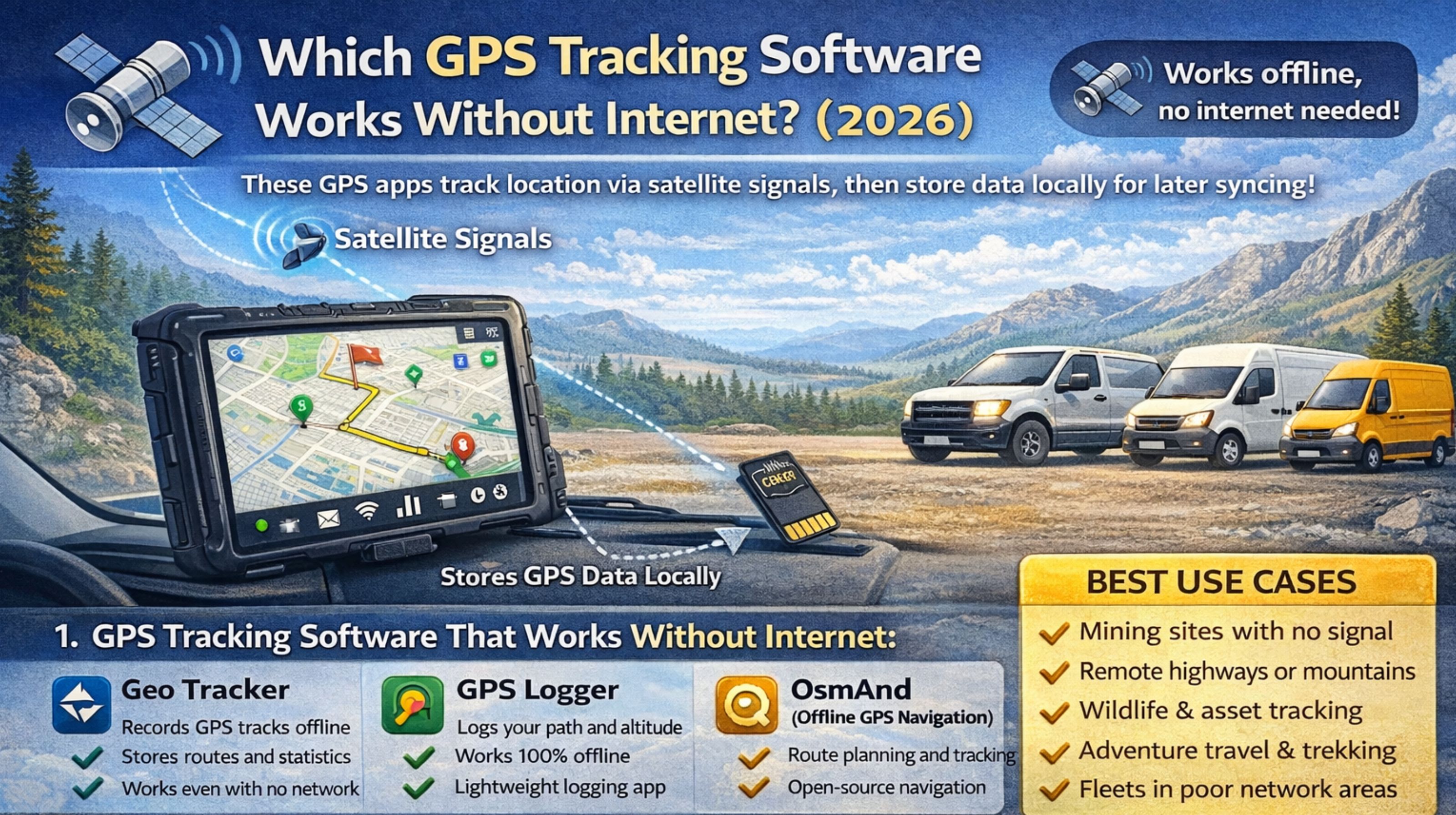
GPS Tracking Software Without Internet and the Risk of Data Loss
When a GPS tracking software is described as working without internet, it typically means the device stores location logs internally when cellular data is unavailable. That creates a critical gap in real-time visibility, one that can easily lead to operational failures.
Clarity on Offline GPS Tracking in Fleet Operations
In live fleet tracking, "works without internet" really just refers to a device's ability to cache location pings, speed, and ignition data when it can't connect to the cellular network—which is the primary conduit to your fleet management software. The software itself is inaccessible; you're relying entirely on the hardware's memory.
Reality Check Under Real Vehicle Scale and Load
With a mixed fleet of 50+ vehicles, you'll encounter daily signal dead zones. Urban canyons, rural routes, industrial sites. The common misunderstanding is that cached data is instantly synced upon reconnection. But in reality, network congestion or even a device sleep cycle can delay that data dump for hours. That masks a vehicle's true midday location and can create audit mismatches for hours-of-service logs.
Mistakes and Risks in Offline-Only Assumptions
The primary failure pattern is assuming offline mode equals continuous tracking. It doesn't. You lose geofence alerts, live route deviations, and real-time engine diagnostics. Think about a truck idling for two hours in an unauthorized zone while offline—that creates a compliance gap you won't discover until the data syncs, long after the costly behavior happened.
Decision Help: When to Fix, Redesign, or Replace
The clear boundary is if your operations frequently enter areas with poor cellular coverage for extended periods. Internal fixes, like just adjusting report schedules, are insufficient. The real decision is to redesign the tracking solution by integrating satellite-based devices for critical assets, or to accept the data delay risk. A proper gps controller platform should clarify these limitations upfront, not obscure them.
FAQ
q How does GPS work without internet?
a The GPS receiver gets location from satellites, but without a cellular data connection, that data can't transmit to the software platform in real-time. It just gets stored locally on the device.
q Can I see live location without internet?
a No. Live tracking requires a constant data connection. Without internet, you only see the historical breadcrumb trail after the device reconnects and uploads its stored logs.
q What happens to geofence alerts offline?
a They're lost. Geofence breaches detected while offline are typically logged locally, but the alert notification is delayed until connectivity resumes. That defeats the whole purpose of real-time security or geofencing alerts.
q When should I consider satellite tracking instead?
a If your assets operate outside reliable cellular coverage for mission-critical tracking, compliance, or safety, then the internal fix of relying on cached data isn't enough. The decision is to replace cellular devices with satellite-capable units.


Comments
Post a Comment