GPS Tracking Software vs Hardware Failure: The Real-Time Data Gap
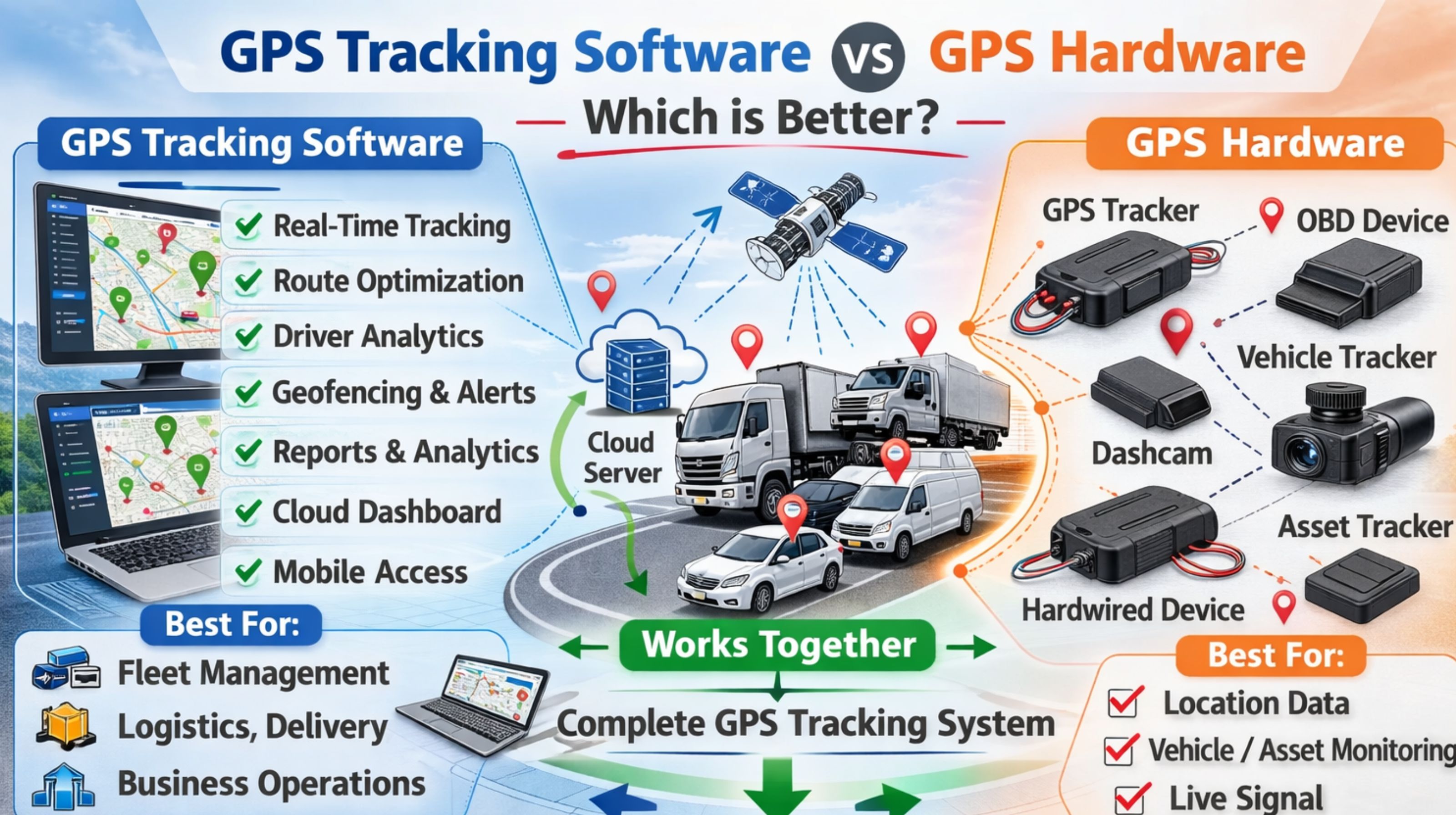
GPS Tracking Software vs Hardware Failure: The Real-Time Data Gap
Honestly, framing the choice as GPS tracking software or hardware is a bit of a trap. Teams end up chasing the wrong problem, and that's what leads to compliance misses and alerts that come too late. The real issue is almost always the data gap in between.
Clarity: The Live Fleet Tracking Gap
In practice, the gap isn't really about software versus hardware. It's about the lag—and sometimes complete loss—between what the device reports and what your dashboard finally shows you. I've seen it myself: the software shows a vehicle idling for half an hour, but the hardware's log clearly says ignition was off the whole time. That kind of mismatch throws off everything from fuel reports to driver hours.
Reality Check: Under Real Vehicle Scale and Load
When you scale up to hundreds of vehicles, things get messy. The software's polling rate and the hardware's reporting logic don't always play nice, creating a kind of cascading data jitter. In dense urban areas, network congestion can cause batches of hardware data to arrive completely out of order. So your real-time vehicle tracking dashboard ends up showing a stale position, and a geofence exit alert fires long after the truck has left.
Mistake: The Wrong Assumption Causing Escalation
Here's the most common, costly misunderstanding: blaming "bad GPS signal" on the hardware. A lot of the time, the real culprit is the software's API layer, which starts throttling or even dropping incoming data packets when the system is under heavy load. Teams can waste weeks swapping out devices, only to discover the API integrations queue was silently discarding location pings during peak dispatch. The result? Audit trails full of unexplained stops that never actually happened.
Decision Help: Fix the Integration or Redesign the Stack
The clear first step is to audit your data pipeline. Tune the reporting intervals, verify the API is actually acknowledging every packet. But there's a boundary. If your hardware uses proprietary protocols that your software can't natively decode, you hit a wall. Internal fixes fail, and you're forced into a stack redesign. That's the point where a unified gps controller platform becomes the necessary context—you're no longer just choosing between two parts that don't talk to each other.
FAQ
q What is the main difference between GPS tracking software and hardware?
a The hardware collects the raw location and sensor data; the software is what interprets and displays it. The failure usually happens in the translation—data formats get mangled or network delays create gaps in the reporting.
q Can I use any GPS tracker with any tracking software?
a No, you really can't. Compatibility hinges on specific communication protocols (like Teltonika FMB) and API standards. If there's a mismatch here, you get permanent data loss, not just spotty performance.
q Why does my tracking software show delayed locations even with new hardware?
a This is typically a software-side bottleneck. It's often a data processing or database indexing issue under load, not a problem with the hardware's GPS fix. The delay happens *after* the device has already sent the data.
q How do I know if my GPS hardware or software is failing?
a You have to compare. Pull the raw device logs using diagnostic tools and stack them up against the processed data in your software dashboard. If the logs show continuous reporting but your dashboard has gaps, the failure point is in the software or the integration layer.


Comments
Post a Comment