GPS tracking software selection failure and fleet data collapse
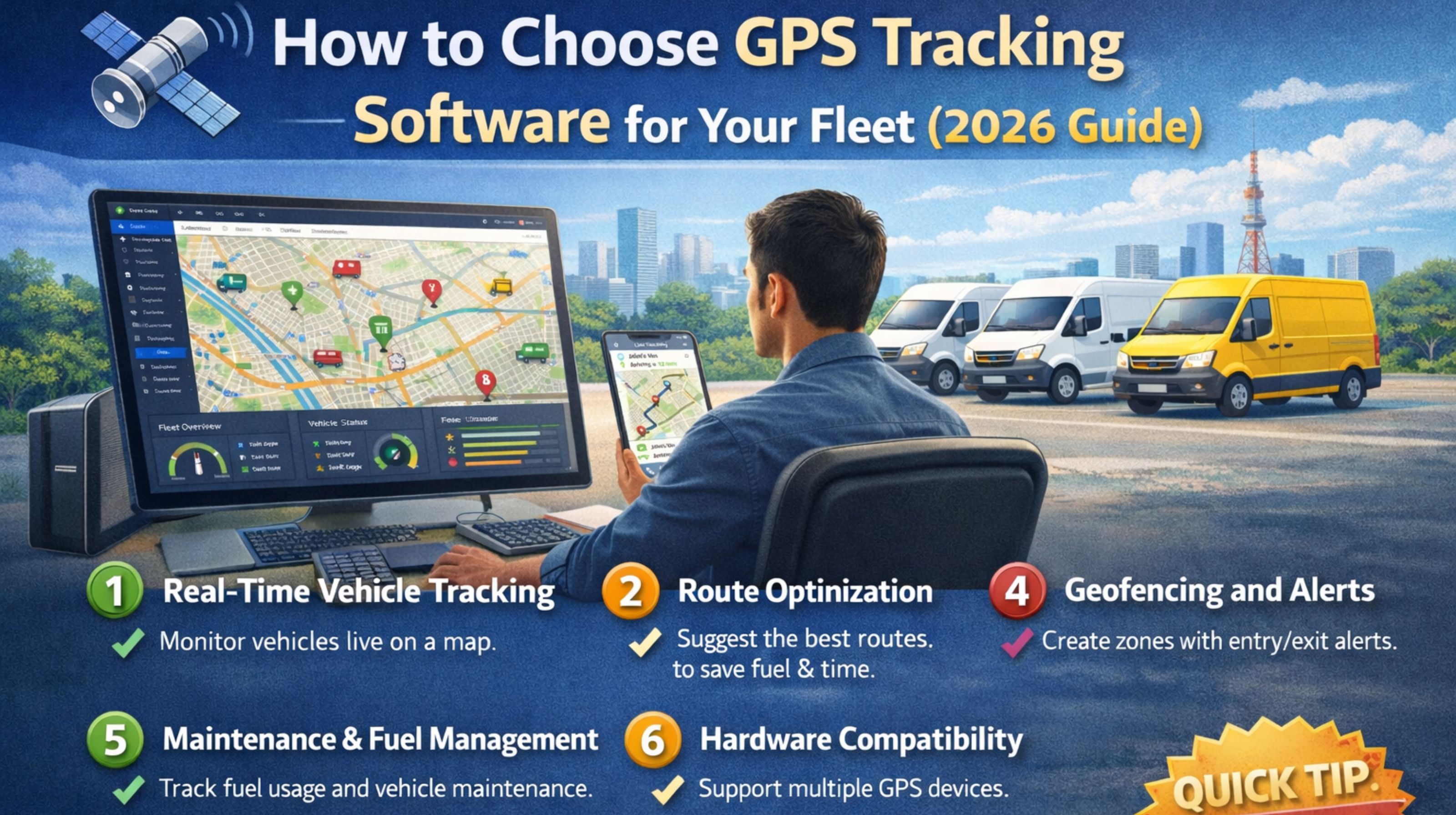
GPS tracking software selection failure and fleet data collapse
You usually don't see the problem with the wrong GPS tracking software during the demo. It shows up months later, when a DOT audit finds engine hour logs missing, or a driver argues about a location report because a geofence alert came through twelve minutes late. Honestly, the real failure isn't about the feature checklist. It's whether the system can actually keep data clean and alerts useful under the specific stress of your daily routes, your vehicle types, your compliance needs. That mismatch just silently eats away at how much you trust your own operations and decisions.
What software clarity means for live fleet tracking
Here, clarity means an unbroken line from a real event—say, a truck rolling onto a job site—to a verified alert popping up in a manager's queue. The gap? It's in the tiny details. Like how the platform deals with signal jitter in a city. It might log the vehicle as "stationary" when it's actually just crawling through a depot yard, which then throws off all your idle time reports. Or there's the classic mismatch: a driver's paper log doesn't line up with the software's "engine on" report because of the device's polling rate at ignition. It's a non-obvious detail that creates huge headaches every time you do payroll or a compliance check.
The reality check under actual fleet scale and load
Once you hit 50 or more vehicles, the idea that "real-time" means the same thing for every unit at once just falls apart. Network latency and server queues create a spread. Some vehicles update every 30 seconds; others might stall for two, three minutes during peak transmission times. This isn't a failure of the real-time vehicle tracking idea itself. It's a scaling reality. When location pings get processed in batches, it can delay a critical geofence exit alert for the first truck in a convoy while correctly tagging the last one. The system isn't crashed, but its usefulness for live dispatch? That erodes fast.
Common mistakes and hidden risk patterns in selection
The most expensive mistake is going for flashy map visuals over data you can actually rely on and export for an audit. Teams just assume all platforms handle ELD mandates or state reports the same, only to find their software's "compliance module" needs manual data cleaning before you can submit anything. A promised automated process becomes a weekly spreadsheet chore. Another trap is thinking that because a platform has an API, integrating it with your existing fleet management software will be simple. You might not realize the API's rate limits or webhook delays make it useless for triggering real-time workflows.
Decision help: when to tune, reconfigure, or replace
The line is pretty clear. If your core data—location, ignition, odometer—is consistently accurate, but the alerts or reports are set up wrong, you're in tuning territory. If the data itself is unreliable (like frequent gaps in areas with good coverage, or engine hours that don't match the diagnostic data), then you need to reconfigure devices or network settings. But if the system's basic architecture can't do your primary job—whether that's audit-proof logging, sub-minute safety alerts, or scaling with an integration—then no amount of internal fixing will work. That's the point where you have to redesign the whole tracking setup or replace the software. It's a scenario where you really have to understand what a dedicated gps controller platform can do as part of your evaluation.
FAQ
q: What is the most important feature in fleet tracking software?
a: It's data reliability and a solid audit trail, not how many features it has. A system that gives you 99% accurate, timestamp-consistent logs for location and engine status is the foundation for everything—compliance, operations, all of it. Everything else is built on that trust.
q: How does bad GPS software create compliance risks?
a: It creates gaps or just plain wrong data in legally required records, like HOS or IFTA reports. If an audit finds your GPS mileage doesn't match your fuel receipts, or there are missing ELD edits, the fault is with the software's data capture. And that leads straight to fines.
q: Can tracking software handle mixed fleets with cars and heavy trucks?
a> Scale complexity trips a lot of people up. Software that works for light vehicles might completely fail to process heavy truck data correctly—things like PTO hours or trailer tracking. Or its custom reports and analytics might not separate vehicle types properly, blending all the metrics together and ruining your cost-per-mile calculations.
q: When is it too late to fix my current tracking software?
a: When the core way the software is built can't support your main business rules. Like if you need real-time alerts but the system only does batch updates, or you need automated report filing but the process is totally manual. No configuration change can fix a fundamental design mismatch.


Comments
Post a Comment