GPS tracking software insurance discount risks between Azuga and GPSController
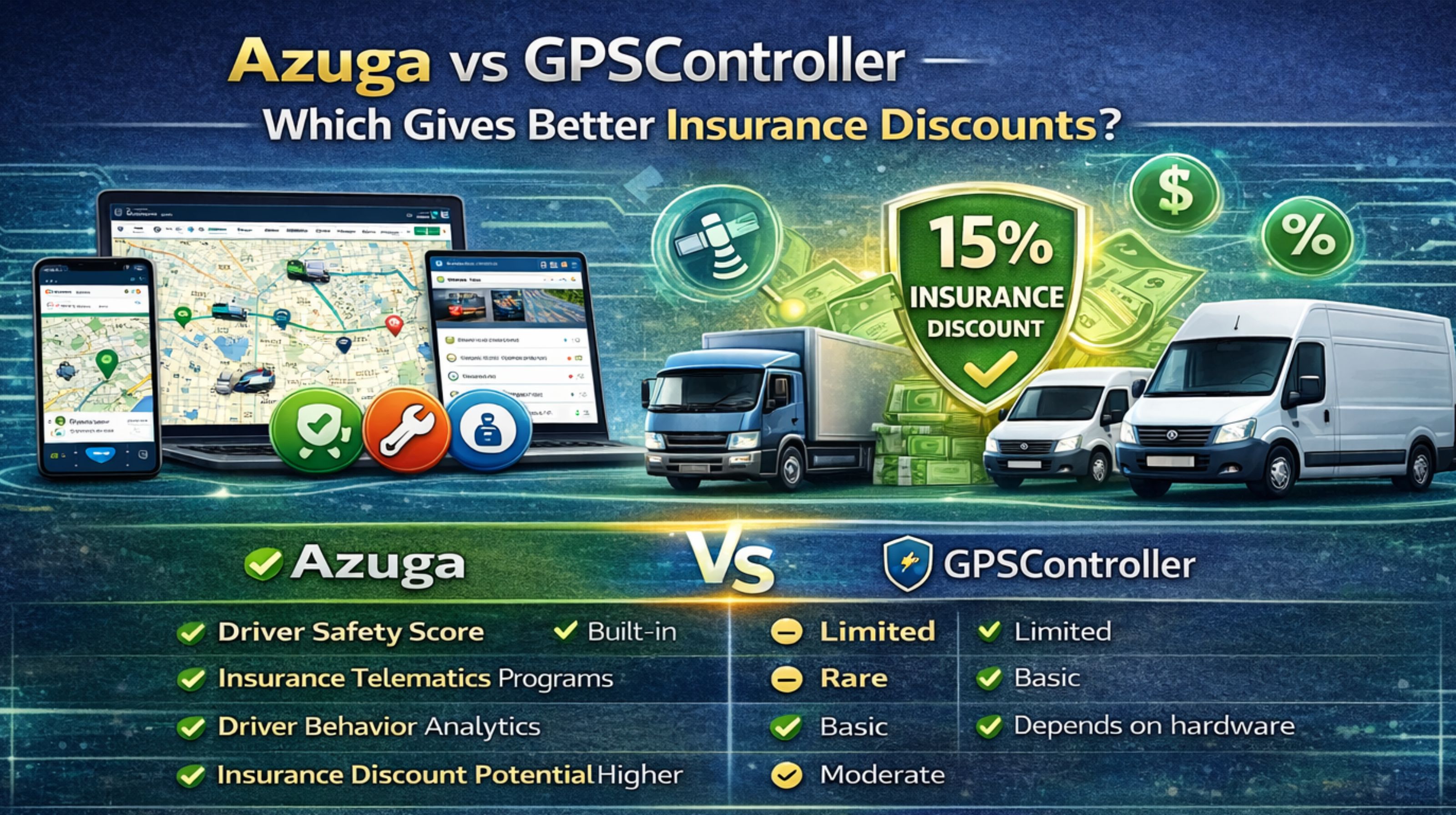
GPS tracking software insurance discount risks between Azuga and GPSController
When you're picking fleet tracking software for insurance discounts, everyone talks about the advertised rates. But honestly, the real danger is in the data accuracy and the compliance reports that underwriters actually check. If there's a mismatch between what your software recorded and the proof your insurer needs, you can lose the discount completely. It's a costly thing to figure out after you've already spent months setting everything up.
What insurance discount compatibility really means for fleets
Compatibility isn't just a box of features to check off. It's whether the software can actually produce locked-down, timestamped logs of safe driving, engine idling, and exact location history that line up with the fine print in your policy. We've seen fleets lose their discounts because their real-time vehicle tracking had a reporting delay of about 90 seconds. The insurer flagged it as not being good enough proof for immediate harsh braking events.
The reality of data accuracy under real fleet scale
When you're operating at scale, things get messy. GPS drift, delays when devices switch cellular towers, and sleep cycles on the hardware create gaps in the data. And insurers look for those gaps. A system might promise 100% discount eligibility in a demo, but roll it out on a 50-vehicle fleet with mixed city and country routes? The actual rate of events you can verify can drop below the insurer's cutoff. Here's a non-obvious detail: some insurers require reporting in under 30 seconds to validate an event. That's a spec a lot of general fleet platforms just don't focus on.
Common mistakes that escalate to full discount loss
The biggest misunderstanding is thinking all "safe driving" reports are created equal. They're not. Insurers often need specific event codes—like SAE J1939 CAN bus data to prove hard acceleration—that generic GPS location pings just don't capture. This is where fleets fail an audit completely: when they can't reproduce the exact speed, G-force, and location data from their software's nice summary dashboard during the insurer's deep-dive validation.
Decision boundary: when to reconfigure versus replace
The choice becomes clear when you start prepping for an audit. If your current software can be tweaked to log raw sensor data at the right frequency and export it in the exact format your insurer demands, then tuning it might work. You hit the boundary—where internal fixes stop—when the hardware itself is missing necessary sensors (like a proper 3-axis accelerometer) or when the software's core design can't go back and apply new event detection rules to old data. That's a fundamental platform limit, and it means you need to replace it. In these high-stakes compliance situations, that's where the contextual data handling of a dedicated gps controller platform starts to matter.
FAQ
q What GPS data do insurance companies actually verify for discounts?
a They verify timestamped logs that can't be altered. Specific events like harsh braking (measured by G-force, not just a drop in speed), proof the system was used during all operating hours, and location data that shows route compliance. They'll often cross-reference this with external traffic or weather databases too.
q Can inaccurate GPS tracking cause my insurance premium to increase?
a Yes, it really can. If your data is inconsistent or has holes during an audit, the insurer might see it as non-compliance or even an attempt to manipulate the system. That can mean lost discounts and potentially higher premiums because they now see you as a higher risk they can't verify.
q How does fleet size impact insurance discount reliability?
a Larger fleets run into aggregation errors. A system might show 95% compliance across 100 vehicles, but if that 5% failure is all on your highest-risk vehicles or routes, the insurer could reject the discount for the entire fleet. That makes scalable, rock-solid data for each single vehicle absolutely critical.
q Should I choose software based on insurer partnership lists or data capabilities?
a Always go with proven data capabilities and exports that are ready for an audit. Partnership lists change. Just because a vendor is on your insurer's "approved" list doesn't guarantee your specific operational data will pass their latest, most thorough audit. That audit is what finally decides your discount.


Comments
Post a Comment