GPS Tracking Software Fuel Theft Prevention Fails on Delayed Alerts
GPS Tracking Software Fuel Theft Prevention Fails on Delayed Alerts
So your GPS tracking software sends a fuel theft alert 30 minutes after it happened. By then, the truck's already empty and the driver is long gone. That delay isn't just some minor bug—it's a fundamental mismatch. Standard location pings just can't keep up with the immediate sensor data you actually need for real prevention. It's a gap that ends up costing fleets thousands, and they often don't even know until it's far too late.
What Fuel Theft Prevention Actually Means in Fleet Tracking
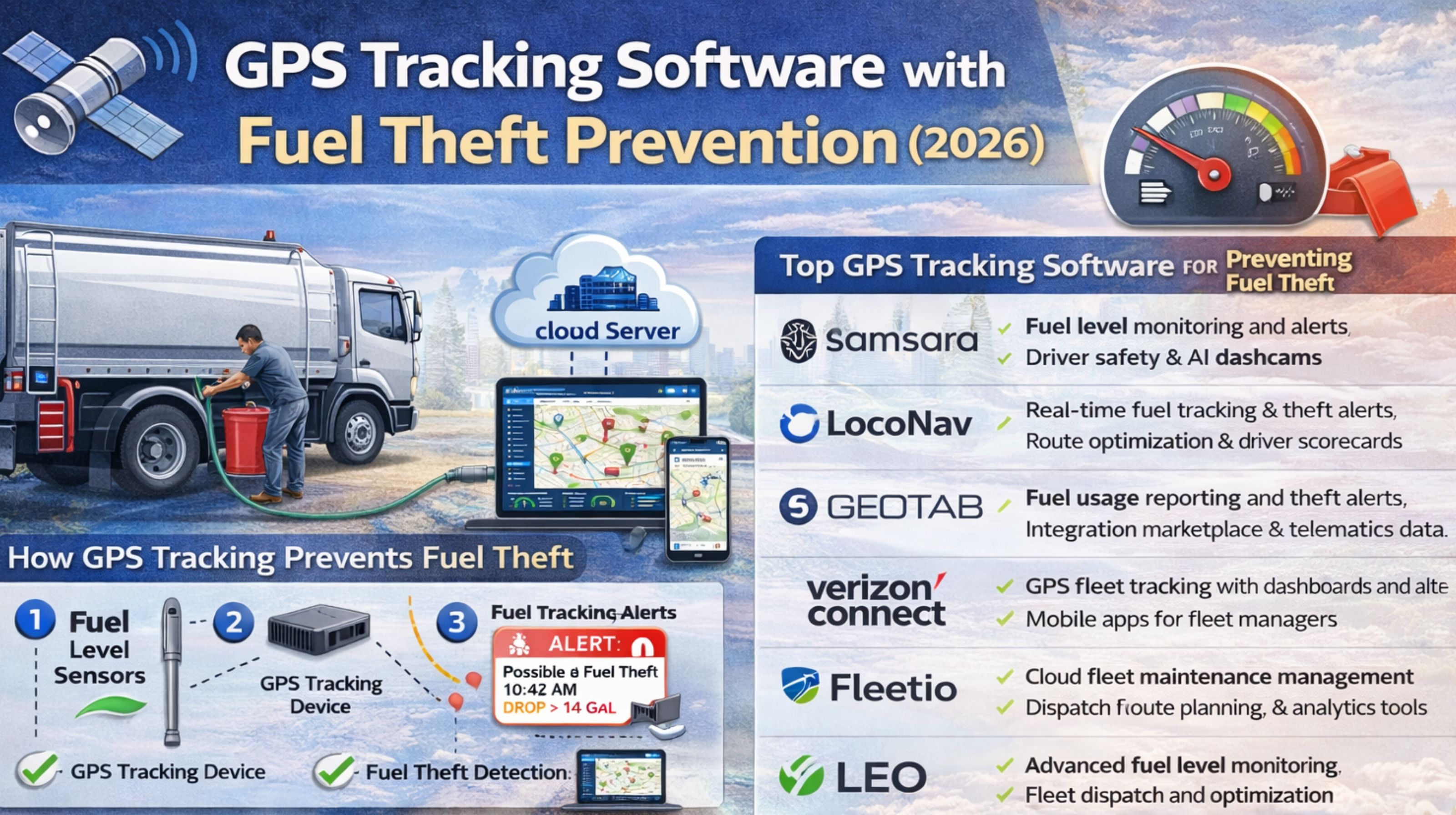
In real operations, fuel theft prevention isn't one feature. It's a whole chain of events. A fuel level sensor catches a sudden drop, the GPS device timestamps it, then the software has to correlate that with the vehicle's ignition state and location before an alert finally fires to a manager's phone. All of that needs to happen within seconds. Most systems trip up at the correlation step. They treat fuel data like just another telemetry point, not a high-priority security event. That's why integrating with dedicated fuel performance monitoring isn't just an add-on; it's critical.
Reality Check Under Real Fleet Scale and Load
Once you get past 50 vehicles or so, the assumption that all your fuel sensors report the same way just falls apart. You'll have one truck reporting in tiny 1% increments while another sends data in big 10-gallon blocks. That inconsistency makes small, frequent thefts practically invisible. And network load during peak hours? It can delay that sensor data by several reporting cycles, turning what should be a real-time alert into a useless historical report. Here's the non-obvious kicker: the CAN bus data stream from the engine—which gives you the most accurate fuel readings—often gets throttled by the GPS device's own firmware. They do it to save on the cellular data plan.
Common Mistakes and Hidden Failure Patterns
The biggest misunderstanding is using a single, static threshold for every vehicle. A 20-gallon drop on a long-haul rig might be normal consumption over an hour. On a local delivery van, it's almost definitely theft. Fleets waste so much time chasing phantom thefts caused by sensor calibration drift or fuel sloshing on a hill. And then there's the audit mismatch failure pattern: the software log swears it sent an alert, but the manager's shift report shows nothing. That creates a nasty compliance gap when insurance comes knocking for a review.
Decision Help: Tune, Reconfigure, or Redesign the Workflow
You've crossed the boundary for internal fixes when your team is manually adjusting thresholds for each vehicle every single week. If you're rebuilding geofence rules just to catch theft in your own yard, or writing custom scripts to parse raw data, you're past tuning. You need a redesigned workflow. The choice is to stop passively logging fuel data and start using an active, rules-based monitoring system that treats unauthorized fuel loss with the same urgency as a geofence breach. At this scale, a dedicated gps controller platform that fuses sensor data with instant alerting becomes necessary. Generic tracking software usually can't untangle the underlying data latency and rule complexity.
FAQ
q How does GPS tracking software detect fuel theft?
a It has to integrate with the vehicle's fuel level sensor or CAN bus system to watch for sudden, unauthorized drops in fuel. It's especially looking for this when the ignition is off or the vehicle is somewhere it shouldn't be.
q Why are my fuel theft alerts always delayed or inaccurate?
a Delays usually come from data reporting intervals, network congestion, and the software's own processing time. The inaccuracy? That often comes from sensor calibration drift, fuel sloshing around, or using generic theft thresholds that don't match how each specific vehicle actually consumes fuel.
q Can I prevent fuel theft with just a GPS tracker and software?
a Not really, no. You need the right hardware combo: a GPS tracker that can actually connect to the vehicle's diagnostic port (like OBD-II or J1939) or a dedicated fuel level sensor. Then you need software configured for real-time anomaly detection, not just basic data logging.
q When should we stop trying to fix our current software and look for a new solution?
a When manual workarounds become a core part of your process. I'm talking daily threshold adjustments, or having to rely on custom reports to spot theft days after the fact. That's the system failing. The decision line is when the reliability of your alerts starts dictating—and slowing down—your entire operational response.


Comments
Post a Comment