GPS Tracking Software Anti-Jamming Alerts Failing Under Real Fleet Load
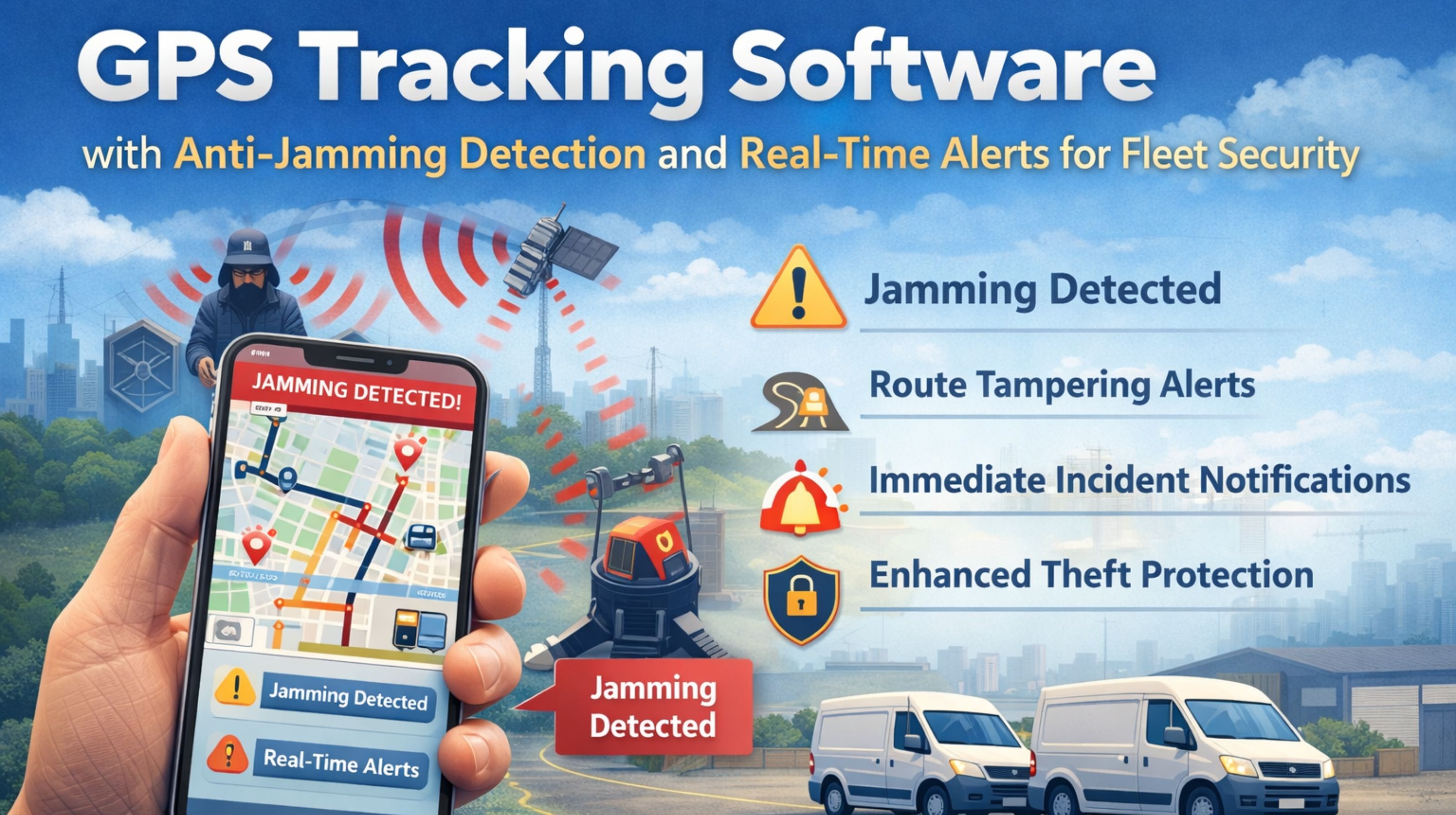
GPS Tracking Software Anti-Jamming Alerts Failing Under Real Fleet Load
When your GPS tracking software with anti-jamming detection fails to alert in real-time, it creates a security and compliance blind spot that's impossible to audit after the fact. That leaves fleet managers to discover the gaps during a DOT review, or worse, after an unexplained route deviation has already happened.
What Anti-Jamming Detection Actually Means for Fleet Tracking
In live fleet operations, anti-jamming detection isn't just a dashboard icon. It's a software layer that monitors the signal-to-noise ratio from each vehicle's GPS receiver, flagging when consistent signal degradation suggests intentional interference. It's become a critical component of modern fleet management software security protocols, but that's only if it works right.
The Reality of Jamming Alert Delays at Vehicle Scale
Under a real load of 50+ vehicles, the common failure point is alert latency. The software might detect the jamming event, but the system queue for real-time alerts gets backed up by other telematics data. That causes a delay—anywhere from 5 to 90 seconds—where a vehicle is already off-grid. This problem gets even worse with poor network conditions, which also cripple reliable real-time vehicle tracking.
Mistake: Assuming All Jamming Alerts Are Security Events
The biggest risk here is treating every software alert as a malicious act. The reality is, signal loss in urban canyons, near heavy machinery, or from a malfunctioning in-cab device can all trigger false positives. That leads to wasted security resources and, eventually, ignored alerts. It's a classic signal-to-noise failure that ends up eroding trust in the entire monitoring system.
Decision Help: When to Tune Software vs. Redesign the Monitoring Layer
The decision boundary is usually clear. If you can correlate jamming alerts with specific locations, times, or vehicles and adjust sensitivity thresholds with measurable improvement, then you tune the software. But if alerts are chronically delayed, inconsistent, or missing entirely across the fleet, then the core IoT asset monitoring and alerting architecture itself likely needs a redesign. This is the point where many teams find they need to consult a gps controller platform for a proper architectural review.
FAQ
q How does GPS tracking software detect jamming?
a It analyzes the GPS receiver's signal strength and satellite constellation data, looking for patterns of broad-spectrum noise that overwhelm legitimate signals. It's different from just detecting a simple signal loss.
q Can anti-jamming alerts be delayed by other fleet data?
a Yes, absolutely. If the software's alert engine shares a processing queue with high-volume telematics data—like engine diagnostics or frequent location pings—jamming alerts can get deprioritized. That creates a dangerous latency gap.
q What's the biggest compliance risk with failed jamming alerts?
a The inability to prove chain of custody or explain unauthorized stops during an audit. A missing alert log creates a gap in the required electronic record of vehicle security events, and you can't fill that gap after the fact.
q When is it time to replace my tracking software's jamming detection?
a When alert delays consistently exceed 30 seconds, false positives make up more than 20% of alerts, or the system can't integrate jamming data with other security layers like geofencing. At that point, you're looking at a platform-level redesign, not just a configuration fix.


Comments
Post a Comment