GPS tracking for micro mobility scooter and bike sharing fleet 2026
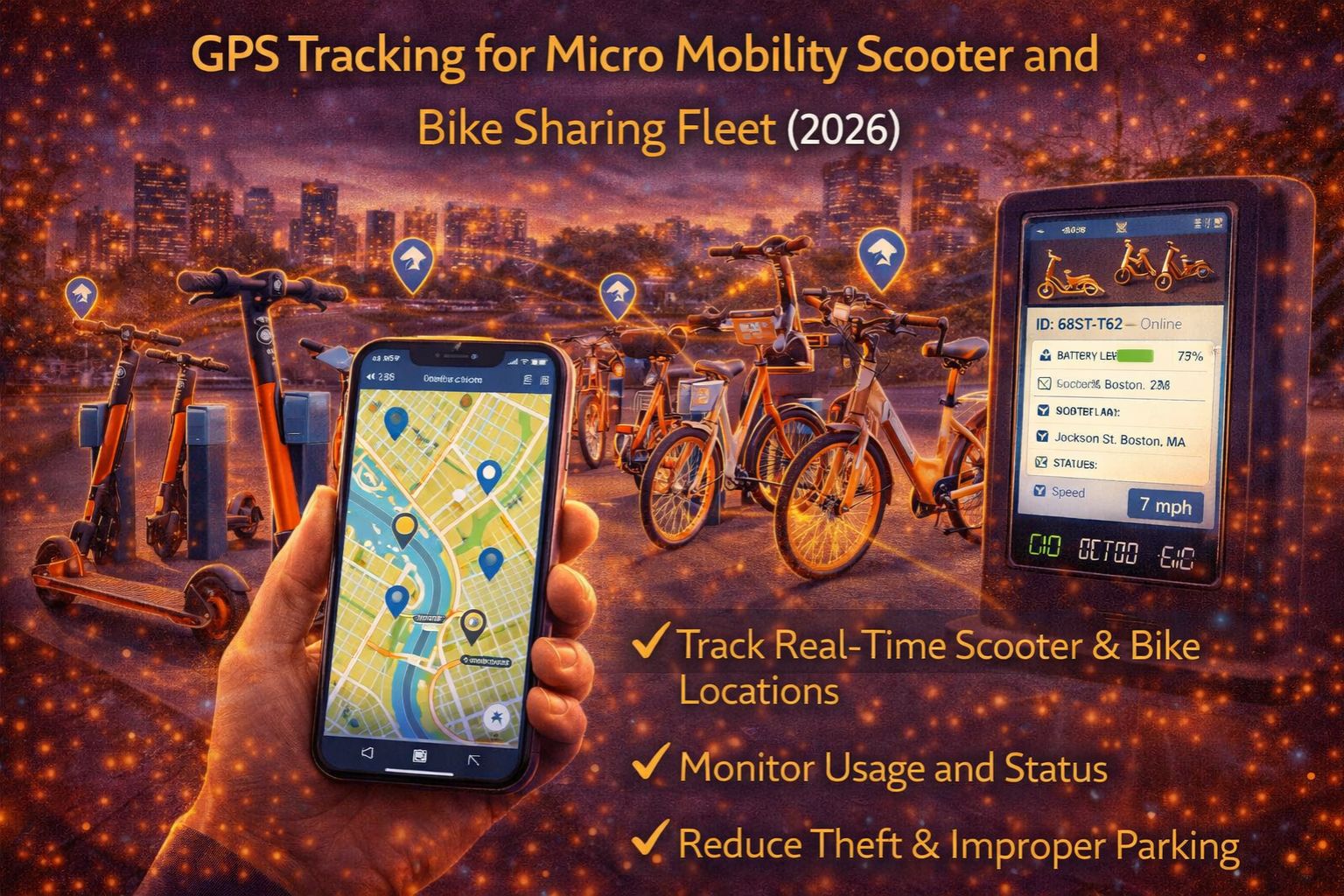
GPS tracking for micro mobility scooter and bike sharing fleet 2026
So in 2026, the real failure for micro mobility GPS tracking usually isn't the device breaking. It's the signal blackout in dense urban corridors where your scooters and bikes are actually used. That's what leads to phantom trips and unverifiable compliance logs—the kind auditors will just reject outright.
What GPS signal loss really means for a scooter fleet
Here's the thing: when a GPS tracker on a scooter loses signal for 90 seconds downtown, the system doesn't just show a gap. It often *interpolates* location, creating a "ghost path" that shows the vehicle moving smoothly down a street it never actually traveled. I've seen this cause inaccurate trip-end billing, where a rider gets charged for three extra blocks, and it triggers false geofence alerts for restricted zones. The non-obvious detail? Many trackers default to Wi-Fi or cellular tower triangulation when GPS fails, which in a packed city can be off by several hundred meters. That's enough to place a scooter on the wrong side of a compliance boundary.
The real-world scale problem in 2026 operations
At scale, with hundreds of units deployed, these micro-signal drops don't average out—they compound. A fleet manager might see 95% location accuracy on a dashboard, but that missing 5%? That represents all the high-value, high-traffic zones where trip density and revenue are actually highest. The boundary condition is battery life: trying to fix this by cranking up the GPS polling rate can drain the scooter's battery 30-40% faster. Then you've got a different operational crisis with dead units needing recovery mid-shift. So you can't really solve the tracking problem in isolation from your power management and swap logistics.
The compliance mistake that escalates silently
There's a common and costly misunderstanding here: assuming that aggregated "location pings" are enough for municipal compliance audits. In 2026, many city permits require verifiable, *continuous* location logs to prove scooters aren't left blocking sidewalks or operating in prohibited areas. If your IoT asset monitoring system has gaps filled by estimated data, the entire log for that vehicle can be deemed invalid during an audit. This isn't just a data quality issue; it's a permit revocation risk. The failure pattern is treating GPS data as a fleet efficiency tool rather than a legal record of operation.
How to decide: tune, upgrade, or replace your tracking
The decision line is pretty clear. If signal loss is sporadic and confined to known urban canyons, you can tune the system. That means implementing redundant Bluetooth beacon positioning at choke points and adjusting your software to mark interpolated data as "low confidence." But if you're seeing systemic drift across 15% or more of your daily trips, and it's affecting billing integrity and compliance reporting, then a hardware upgrade to multi-constellation (GPS + GLONASS + Galileo) receivers is the minimum viable path. When the core tracking architecture can't provide a verifiable chain of custody for each vehicle's location, you're in redesign territory. That's where a platform like gps controller would evaluate the entire data pipeline, not just the device.
FAQ
Question: How accurate is GPS for scooters in 2026?
Answer: In open sky, modern chipsets can be within 3-5 meters. The accuracy problem is environmental, not really technological. In urban canyons, signal reflection and blockage can cause errors of 50-150 meters, which is enough to misplace a scooter onto a different street entirely for billing and compliance purposes.
Question: Why do my scooters show "trip in progress" after the rider ends it?
Answer: This is often a signal delay and software logic failure. The rider parks in a signal-poor area, the "trip end" signal gets delayed by 2-3 minutes, and your fleet software, not receiving a definitive end ping, just continues the trip logic. The fix isn't just better GPS; it's integrating a secondary motion sensor to detect inactivity as a trip-end trigger.
Question: Can better software fix bad GPS hardware on my fleet?
Answer: No. Software can smooth data or flag inaccuracies, but it cannot create signal where none exists. If the hardware's receiver can't get a satellite lock in your operating environment, all the software in the world is just making educated guesses. This is a critical hardware-boundary issue.
Question: When should a micro mobility operator replace their entire tracking system?
Answer: Replace when the cost of location errors—customer refunds, compliance fines, inefficient recovery operations—exceeds the cost of new hardware, and when your current system can't log verifiable, audit-ready location data for municipal reporting. At that point, incremental fixes become a financial drain, and a system redesign focused on data integrity is necessary.


Comments
Post a Comment