GPS Tracker with Remote Engine Immobilizer Failure in Indian Fleet Operations
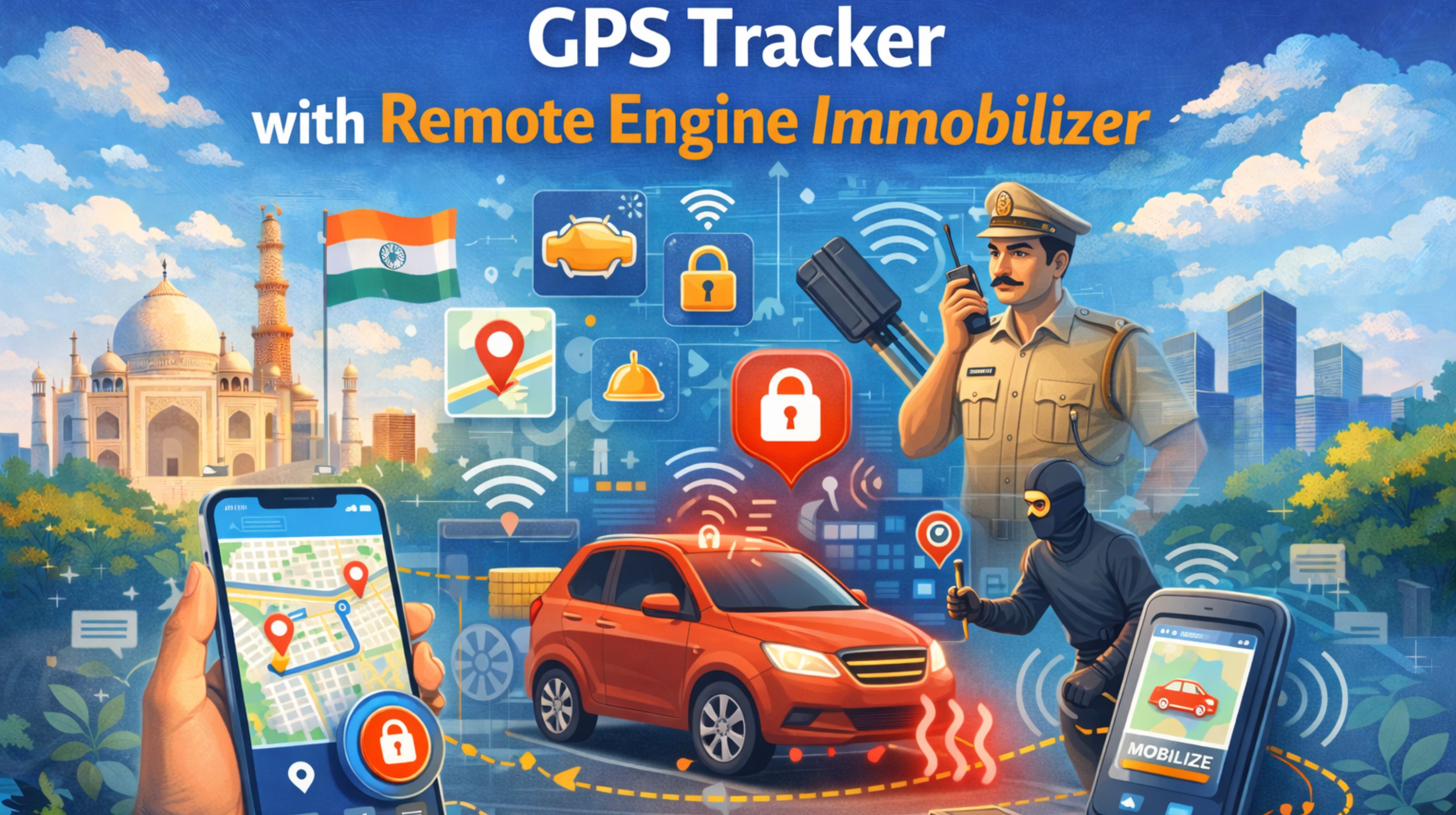
GPS Tracker with Remote Engine Immobilizer Failure in Indian Fleet Operations
When a GPS tracker with a remote engine immobilizer fails, it's not just a lost signal—it's a security breach and a compliance event that leaves a vehicle vulnerable and your fleet data incomplete. Honestly, the real risk for Indian fleet managers lives in that gap, the one between the command sent and the engine actually cutting off.
What Remote Engine Immobilizer Failure Actually Means
In live tracking, failure means the immobilizer relay just doesn't trigger, even when your dashboard says "success." A lot of the time, that's down to voltage drops from aging vehicle batteries or signal jitter in urban canyons. So you see the ignition kill command sent, but the engine keeps running. It's a critical flaw, especially during a theft. That gap directly undermines the security promise of your tracking hardware.
Reality Under Indian Network and Vehicle Load
At scale, with hundreds of vehicles across states, network latency on 2G fallback bands can delay immobilization by 45-90 seconds. That's an eternity during a theft. And from real-world observation, monsoon humidity often corrodes the immobilizer's wiring harness connections, which leads to intermittent failures that logs just don't capture until an audit happens. The system assumes network continuity, but India's varied cellular landscape can't always guarantee that.
Common Mistakes and Escalating Security Risks
The biggest misunderstanding is treating the immobilizer as a standalone feature. It's not. It's a system dependent on GPS fix, cellular data, and a vehicle ECU handshake. Managers often blame "bad GPS," when actually the root cause is something like a misconfigured heartbeat interval that puts the tracker to sleep right during the command window. This leads to escalated risks—think failed recovery operations and insurance report discrepancies that hinge on you proving the immobilization worked.
Decision Help: Reconfigure, Redesign, or Replace
The boundary is pretty clear: if failures are from network jitter or a configuration issue, you can tune alert thresholds and command timeouts. But if the failures stem from hardware-relay fatigue, chronic power issues, or an inability to meet new compliance logs, then a hardware redesign or replacement is necessary. You know it's time when internal fixes stop working, when the immobilizer delay exceeds any actionable security window and the feature becomes a liability. A robust fleet management platform should give you the diagnostic depth to make this call.
FAQ
q How does a GPS tracker immobilizer work in India?
a It uses a cellular command to trigger a relay that cuts ignition or fuel pump power. But its success depends on a stable network and proper installation near the vehicle's ECU—a detail that's often overlooked.
q What causes remote immobilizer delay?
a Primarily cellular latency when switching towers, low signal strength that forces retries, and voltage sag in the vehicle's electrical system the moment the relay tries to engage.
q Can a jammer stop my immobilizer?
a Yes, a GSM jammer will block the command signal. But a well-configured tracker should at least log the jamming attempt and trigger a secondary alert based on the last known GPS and ignition state.
q When should I replace my tracker immobilizer?
a When delays become consistent, when hardware diagnostic reports start showing relay fatigue, or when it just can't meet updated compliance requirements for tamper-proof logging. That's where evaluating a modern gps controller platform becomes a technical necessity, not just a sales pitch.


Comments
Post a Comment